
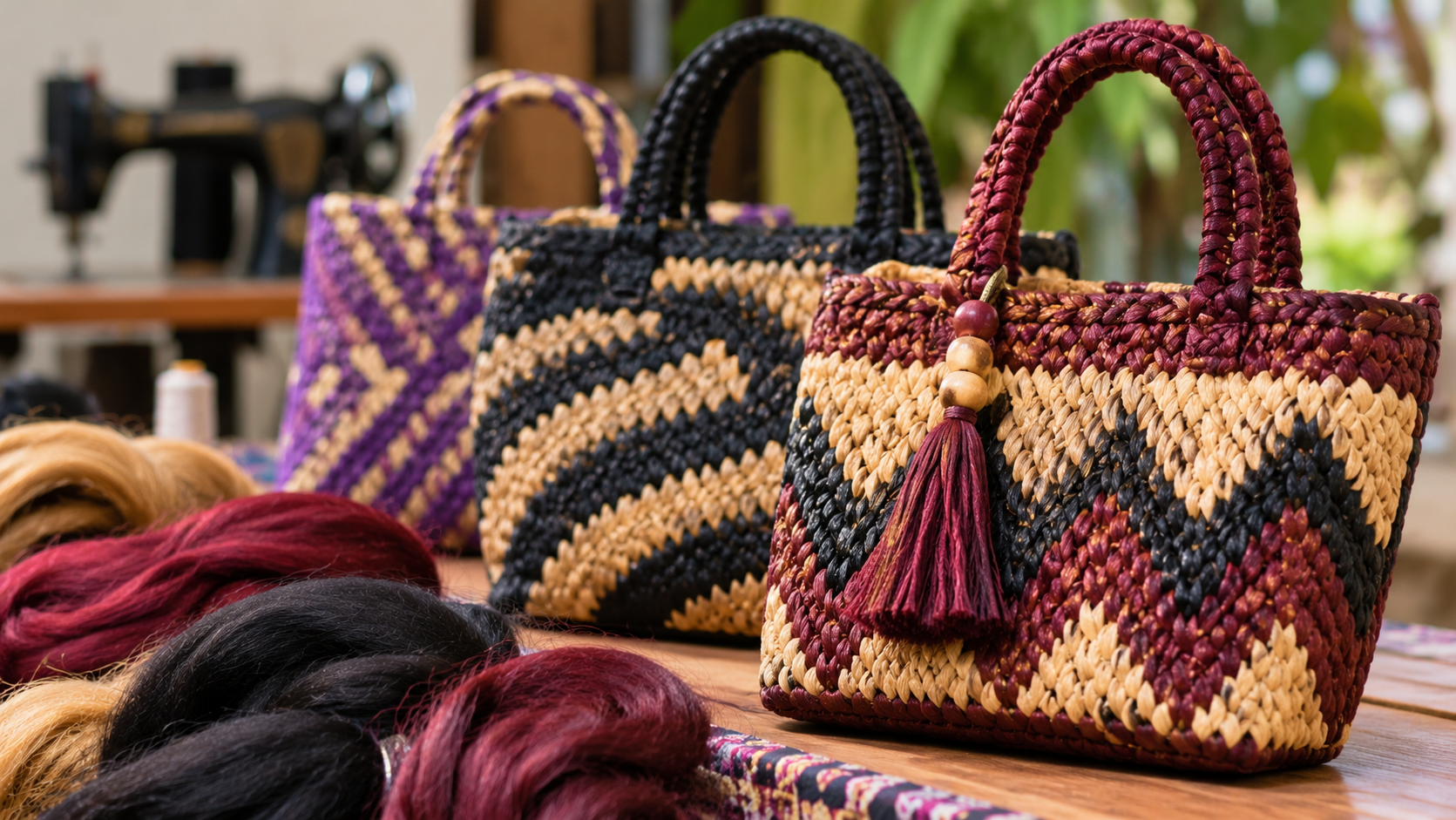
Kenyan women recycle synthetic hair into handmade bags, creating jobs while reducing waste. The project gives discarded hair extensions a new purpose.
The social enterprise Queening Afrika collects used hair from salons. Workers then clean, sort and weave the strands into colourful products.
According to Africanews and the Associated Press (AP), the initiative helps women earn money and learn valuable skills.
Kenyan women recycle synthetic hair from salons
Synthetic hair is popular for braids and other hairstyles in Kenya. However, once removed, much of it ends up in rubbish dumps.
Some discarded strands also enter drainage channels during heavy rainfall.
Queening Afrika aims to reduce this waste.
The organisation gives salons special bags to collect used hair. Its team then transports the material to a workshop.
First, workers sort the hair by colour and texture. Next, they wash the reusable strands. Finally, they weave them into handmade bags.
Damaris Kuria, co-founder of Queening Afrika, says the process helps turn unwanted hair into useful products.
However, not all collected hair can be reused.
Recycling creates jobs for Kenyan women
The project also helps women earn an income.
At the workshop, experienced weavers teach younger workers how to make handmade products.
Veronica Musyoka, a mother of six, has worked with Queening Afrika for two years.
She has more than 20 years of weaving experience. She also mentors young mothers and helps them develop practical skills.
Meanwhile, Rose Auma says the project has improved her financial situation.
The mother of one told AP that her earnings help pay school fees and support her family.
As a result, the recycling initiative offers both employment and training opportunities.
Kenya’s informal economy supports millions
Small businesses play an important role in Kenya’s economy.
According to the Kenya National Bureau of Statistics, the informal sector created 87.2% of the country’s 822,100 new jobs in 2025.
However, many women still face difficulties finding stable employment.
Joyce Gitau, a youth adviser with Plan International Kenya, says recycling projects can offer new opportunities.
She told AP that around 10 young women currently earn money through Queening Afrika.
Their income helps them pay rent, buy food and cover school expenses.
Turning waste into opportunity
The project shows how recycling can support local communities.
By collecting used hair, Queening Afrika reduces the amount of synthetic waste entering the environment.
At the same time, workers create products that can generate income.
Although the initiative remains small, it offers a practical example of sustainable business.
For these Kenyan women, discarded hair is becoming a source of skills, employment and financial independence.