
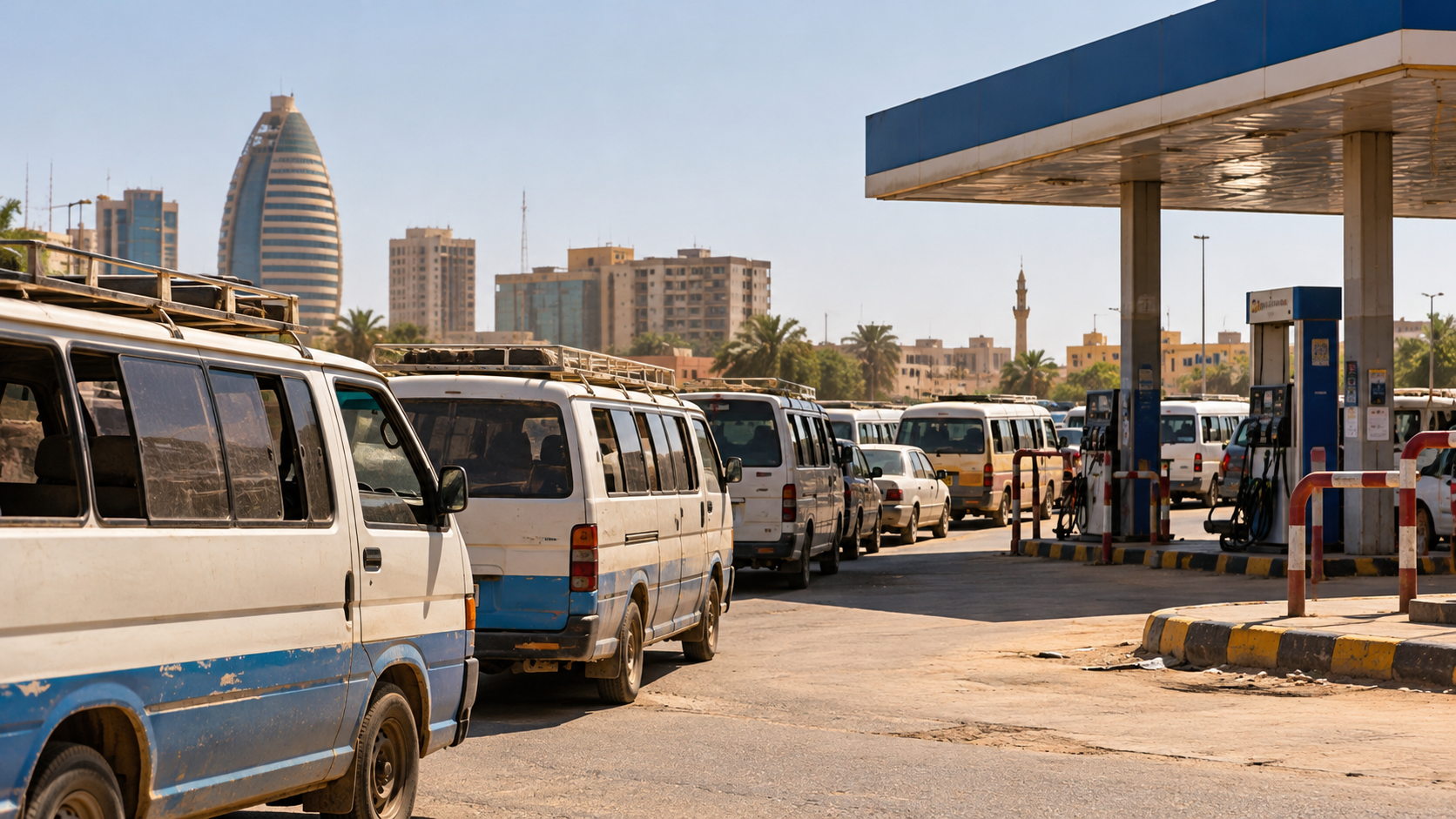
Public transport fares on several routes in Sudan’s capital, Khartoum, have reportedly more than doubled as fuel shortages and rising operating costs place additional pressure on residents.
Commuters say some minibus operators have increased prices beyond officially approved fares, making daily travel increasingly expensive for workers and families.
According to local Sudanese media reports, passengers have also complained about changes to established transport routes that require them to pay additional fares.
The reported increases come as Sudan’s continuing conflict contributes to economic hardship, cash shortages and rising living costs.
Khartoum transport fares rise on major routes
The reported fare increases have affected several busy transport routes across Khartoum.
These include Libya Market–Arab Market, Al-Thawrat–Al-Shuhada and Umbadda–Arab Market.
Passengers say fares on some journeys have risen by more than 100%, although the exact prices and the extent of the increases have not been independently confirmed.
Some commuters have accused minibus operators of charging above officially approved rates.
However, the available reporting does not establish how widespread these practices are or whether all fare increases violate transport regulations.
The complaints highlight growing concerns about the affordability of public transport in the capital.
Fuel shortages disrupt transport services in Khartoum
Fuel shortages have added to the difficulties facing public transport operators and passengers.
Long queues at petrol stations have reportedly reduced the availability of vehicles serving major routes.
Drivers also face rising operating costs, which can affect the prices charged to passengers.
For commuters, reduced transport availability can mean longer waiting times and higher daily expenses.
The shortages come amid broader economic challenges linked to Sudan’s continuing conflict.
Households already facing rising food prices and limited access to cash may find additional transport costs particularly difficult to manage.
Commuters report shorter routes and additional charges
Passengers have also raised concerns about changes to established minibus routes.
According to the reports, some drivers have allegedly divided longer journeys into shorter sections.
This can require passengers to pay multiple fares to reach destinations previously served by a single trip.
Commuters argue that the practice increases travel expenses without providing additional transport services.
However, the allegations have not been independently verified, and the available reporting does not include responses from the operators involved.
Transport disruptions and fuel availability may also affect how routes are organised.
The complaints have nevertheless prompted calls for greater oversight of public transport services.
Rising transport costs add pressure on Khartoum families
Affordable public transport is important for residents travelling to workplaces, markets and essential services.
Sharp fare increases can place additional pressure on household budgets, particularly for people who depend on minibuses for regular journeys.
Workers who travel across Khartoum may face higher commuting expenses.
Families may also find it more difficult to reach healthcare facilities, shops and other essential destinations.
The reported increases come as Sudanese households continue to face economic difficulties associated with the conflict.
Limited access to cash and higher living costs have further complicated everyday activities.
For residents with fixed or irregular incomes, additional transport expenses can reduce the money available for other necessities.
Residents call for enforcement of official fares
Affected passengers have urged transport authorities and traffic police to address the reported increases.
They want officials to enforce approved fares and ensure passengers receive clear information about transport prices.
Some residents have also called for fare notices to be displayed inside public vehicles.
They argue that greater transparency could help prevent disputes between drivers and passengers.
Additionally, commuters have requested action against operators found charging unauthorised prices or deliberately changing routes to collect extra fares.
However, the available reporting does not include an official response from Khartoum’s transport authorities.
It is also unclear whether enforcement measures have been introduced following the complaints.
Sudan’s transport challenges continue
The reported fare increases illustrate the difficulties facing public transport services in Khartoum.
Fuel shortages, economic pressures and disruptions to transport networks have affected both passengers and operators.
While commuters have raised concerns about unauthorised charges, the full scale of the increases remains unclear.
Improving fuel availability and ensuring transparent fare arrangements could help ease pressure on residents.
For many households, access to affordable transport remains essential as Sudan continues to face the economic consequences of its prolonged conflict.