
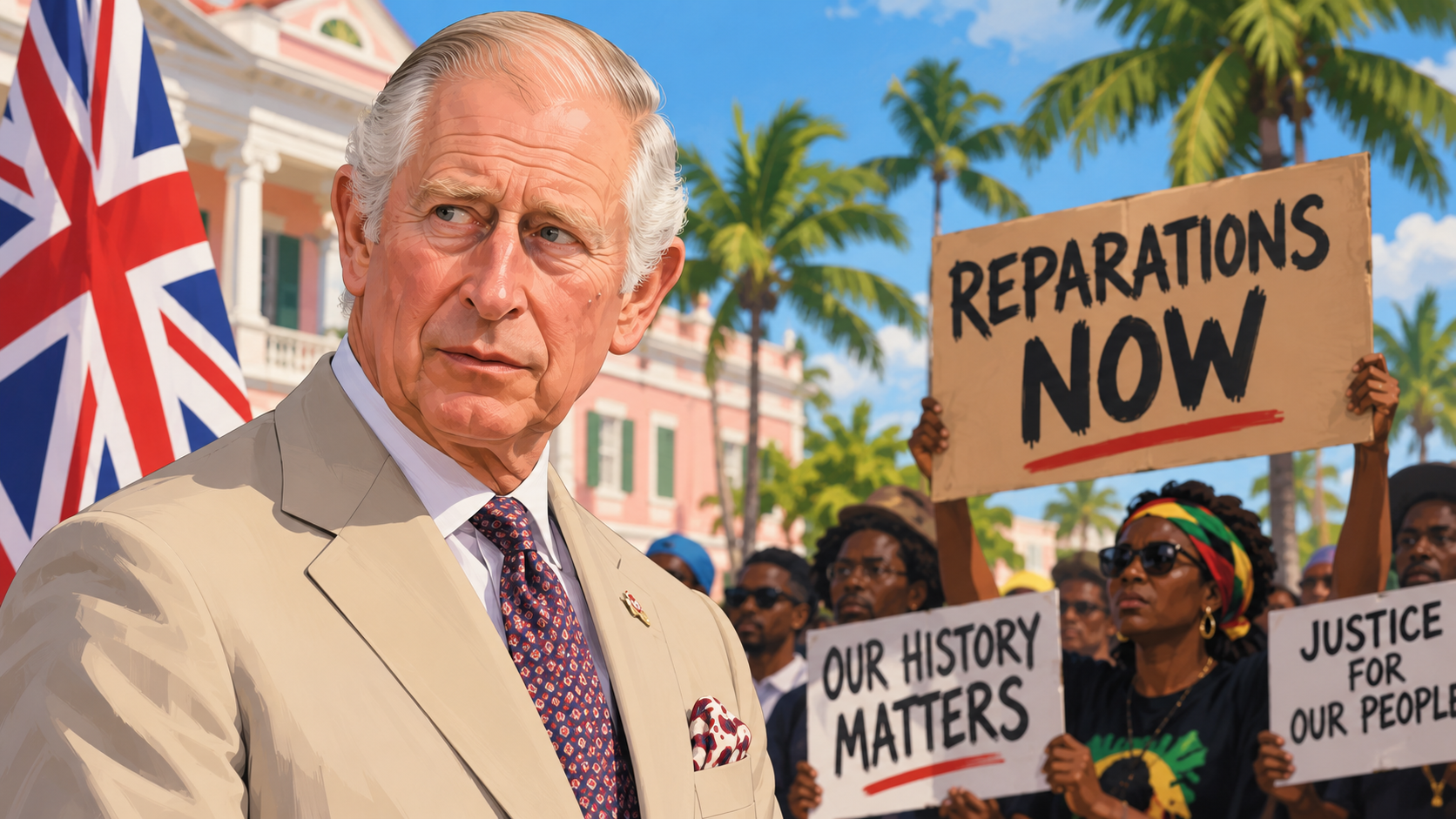
King Charles III is facing growing calls for slavery reparations as his visit to the Caribbean brings renewed attention to Britain’s historical involvement in the transatlantic slave trade.
Protesters gathered in the Bahamas on Wednesday, October 28, demanding financial compensation and a formal apology from the British monarchy.
The demonstrations come as Caribbean governments increase pressure on the United Kingdom to address the lasting consequences of slavery.
Although King Charles acknowledged the injustices of slavery during his visit, he stopped short of issuing an official apology.
King Charles faces slavery reparations protests in Bahamas
According to Africanews, citing the Associated Press, demonstrators gathered at Clifford Park in Nassau as King Charles continued his nine-day Caribbean tour.
Protesters carried banners demanding reparations and a public apology from Britain.
Some demonstrators argued that expressions of regret were insufficient without concrete action.
Jevon Thompson, chairman of the Ethiopia Africa Black International Congress, called for full compensation and measures to address the historical injustices of slavery.
Thompson criticised the British monarchy’s reluctance to issue an apology, arguing that responsibility for historical abuses should not disappear with time.
The protests reflect growing frustration among Caribbean campaigners who believe Britain has yet to adequately address its role in the slave trade.
British king acknowledges slavery but stops short of apology
During his first day in the Bahamas, King Charles acknowledged the injustices associated with slavery.
He also indicated that Commonwealth leaders would discuss the issue at their upcoming summit.
However, the British monarch did not offer a formal apology or announce financial reparations.
The distinction between acknowledging historical wrongdoing and accepting responsibility has become central to the debate.
Reparations campaigners argue that an apology should be accompanied by practical measures addressing the economic and social consequences of slavery.
For many activists, symbolic recognition alone does not constitute reparatory justice.
Caribbean nations increase pressure on Britain
The debate over slavery reparations has gained momentum across the Caribbean.
Last month, the Caribbean Community, known as CARICOM, called for reparations to be included on the agenda of the upcoming Commonwealth summit.
The regional organisation has long advocated measures addressing the historical consequences of slavery and colonialism.
Its renewed push comes as Caribbean governments seek greater international recognition of the economic inequalities associated with the slave trade.
Campaigners argue that reparations should involve more than direct financial payments.
They also call for measures supporting education, economic development and historical accountability.
However, the question of what reparations should include, how they should be calculated and who should provide them remains politically contested.
Britain’s role in the transatlantic slave trade
The calls for reparations are rooted in Britain’s extensive involvement in the transatlantic slave trade.
Between the 15th and 19th centuries, an estimated 12.5 million Africans were forcibly transported across the Atlantic by European slave traders.
Britain was among the largest participants in the trade.
British ships transported approximately 3.2 million enslaved Africans to the Americas, where they were forced to work under brutal conditions.
The profits generated by slavery contributed to the wealth of slave owners, merchants and businesses connected to the British Empire.
The historical legacy continues to shape discussions about economic inequality, racial discrimination and relations between Britain and its former colonies.
Slavery reparations debate reaches Commonwealth summit
The upcoming Commonwealth summit is expected to provide another opportunity for Caribbean governments to raise their demands.
King Charles’ acknowledgement of slavery has attracted attention, but campaigners continue to press for a more substantial response.
For reparations advocates, the issue is not simply about historical recognition.
They argue that meaningful justice requires addressing the enduring consequences of slavery through concrete commitments.
As the British monarch continues his Caribbean tour, the growing debate highlights the challenge of reconciling historical responsibility with present-day political and economic demands.