
Libya’s Chief of General Staff, General Mohammed Ali Ahmed al-Haddad, has been killed in an air crash in Turkey, Libya’s prime minister confirmed on Tuesday night, hours after the aircraft disappeared from radar following takeoff from Ankara.
Al-Haddad was travelling aboard a Falcon 50 business jet that departed the Turkish capital on Tuesday evening bound for Tripoli. He was killed along with four other senior Libyan military officials and three crew members, according to Libyan authorities.
Turkey’s Interior Minister Ali Yerlikaya said contact with the aircraft was lost at 20:52 local time (17:52 GMT), around 42 minutes after takeoff from Ankara’s Esenboğa Airport. The jet had earlier issued a request for an emergency landing.
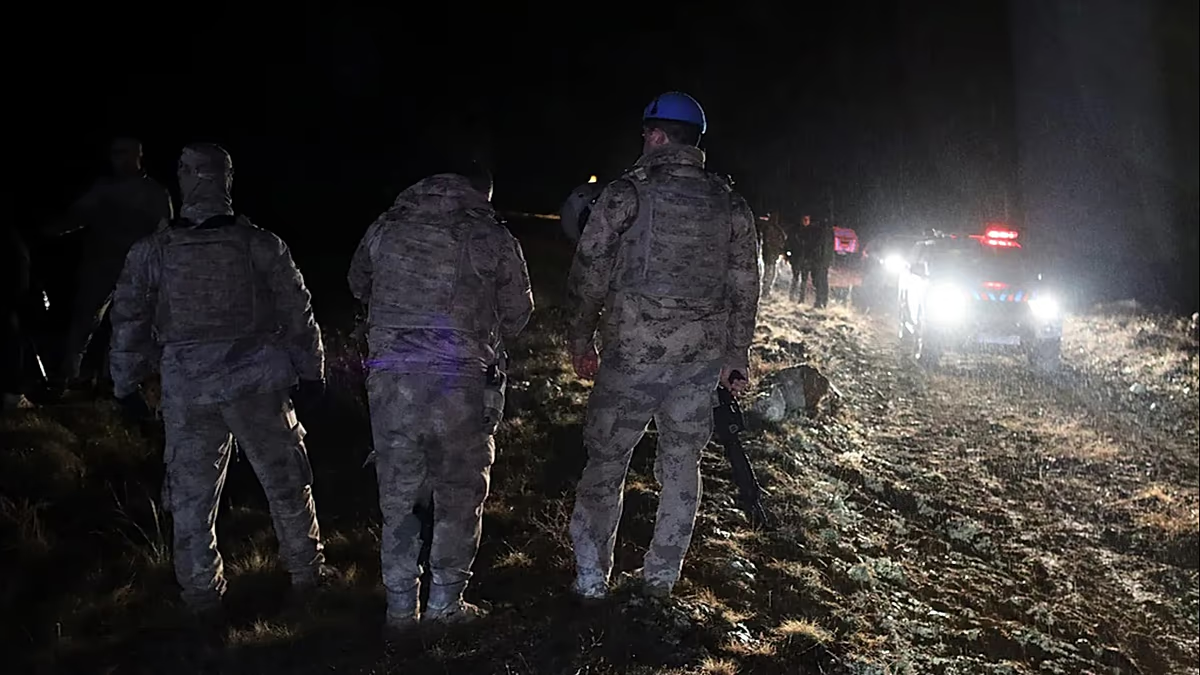
Search and rescue teams later located the wreckage south-west of Ankara, near the village of Kesikkavak in the Haymana district. Turkish officials said the aircraft’s flight data recorder and cockpit voice recorder have been recovered, while emergency crews continue efforts to retrieve the bodies from the crash site.
An investigation has been launched to determine the cause of the crash.
In Tripoli, Prime Minister Abdulhamid Dbeibah of the internationally recognised Government of National Unity said he had received confirmation of the deaths, describing the incident as a “great loss” for Libya.
“Libya has lost men who served their country with sincerity and dedication,” Dbeibah said, mourning al-Haddad and the other officers killed in the crash.
Al-Haddad and his delegation had been in Ankara earlier on Tuesday for talks with Turkish Defence Minister Yaşar Güler, discussions that focused on deepening military and security cooperation between the two countries. Photographs released earlier in the day showed the Libyan general meeting Turkish officials just hours before the flight.
Turkey has played a decisive role in Libya since intervening militarily in 2019 to support the Tripoli-based government against forces led by eastern commander Khalifa Haftar. Since then, Ankara has built close political, military and economic ties with western Libyan authorities.
Libya remains deeply divided between the GNU in Tripoli and the rival Government of National Stability in the east, aligned with Haftar. The country has struggled with chronic insecurity since the 2011 uprising that toppled and killed longtime ruler Muammar Gaddafi, leaving a fragmented landscape dominated by armed groups and competing power centres.
The crash is likely to have political and security repercussions in Libya, where al-Haddad was a central figure in coordinating military affairs and foreign partnerships.