
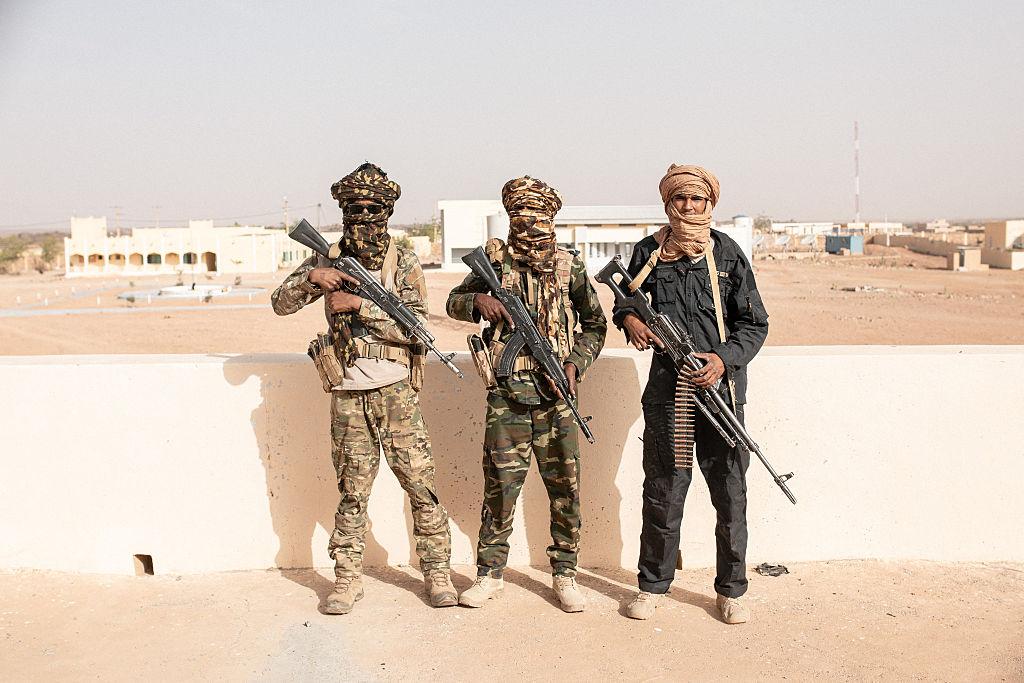
A prisoner exchange in northern Mali has exposed a rare direct line of communication between the military authorities in Bamako and Azawad rebels, suggesting that contacts remain possible despite months of intense fighting.
On Sunday, August 23, 22 Malian soldiers held by the Azawad Liberation Front were released in Anefis, in the northern Kidal region, in exchange for nine civilian detainees linked to the rebel movement, according to Malian sources.
Some of the civilians had reportedly been imprisoned for as long as five years.
Unlike previous exchanges, the operation was arranged without foreign mediation. Malian officers based in the Gao region reportedly contacted Azawad commanders with whom they had dealt in the past, opening negotiations that ultimately led to the swap.
Bamako initially submitted a list of six detainees who were due to be transferred to the central prison. The Azawad Liberation Front recognised only one of them as a member of the movement, after which the Malian authorities added two more names to the proposed exchange.
The agreement followed another major prisoner release days earlier in which 82 Malian soldiers captured during fighting on April 25 were freed. Their return was celebrated in Bamako by the military and the soldiers’ families.
Strategic importance of Anefis
Anefis is far more than a symbolic venue for such negotiations.
Located around 100 kilometres from the city of Kidal on National Road 18, the town sits along the strategically important route connecting Gao and Kidal. It also provides access towards positions farther north, including Aguelhok.
Control of Anefis can therefore allow forces to disrupt access to Kidal or provide a staging point for attempts to retake the city, which fell to Azawad fighters in April 2026.
The town has also recently been the scene of heavy clashes between Malian forces, supported by Russia’s Africa Corps, and armed groups operating in the north.
Against that backdrop, representatives of the opposing sides returning to the same area only weeks after fighting there to organise a prisoner exchange is significant.
The repeated exchanges indicate that communication channels have survived despite the continuing military confrontation.
Analysts caution, however, that prisoner swaps should not be interpreted as evidence that the broader political and military dispute is close to being resolved.
The Azawad Liberation Front continues to challenge Bamako’s authority across parts of northern Mali, while the Malian military remains committed to recovering territory outside government control.
Still, such exchanges can help create a limited degree of trust between adversaries and demonstrate that practical negotiations remain possible even as fighting continues.
The latest deal also comes shortly after two Russian military contractors linked to the Africa Corps were released after spending around two years in Azawad captivity.
The two men, former members of the Wagner Group, were captured on July 27, 2024 during fighting near Tinzaouaten. Their release was reportedly secured following mediation involving Moscow and senior Libyan military officials.
Taken together, the exchanges show that while northern Mali remains deeply divided, behind-the-scenes contacts between the rival camps have not completely disappeared.