
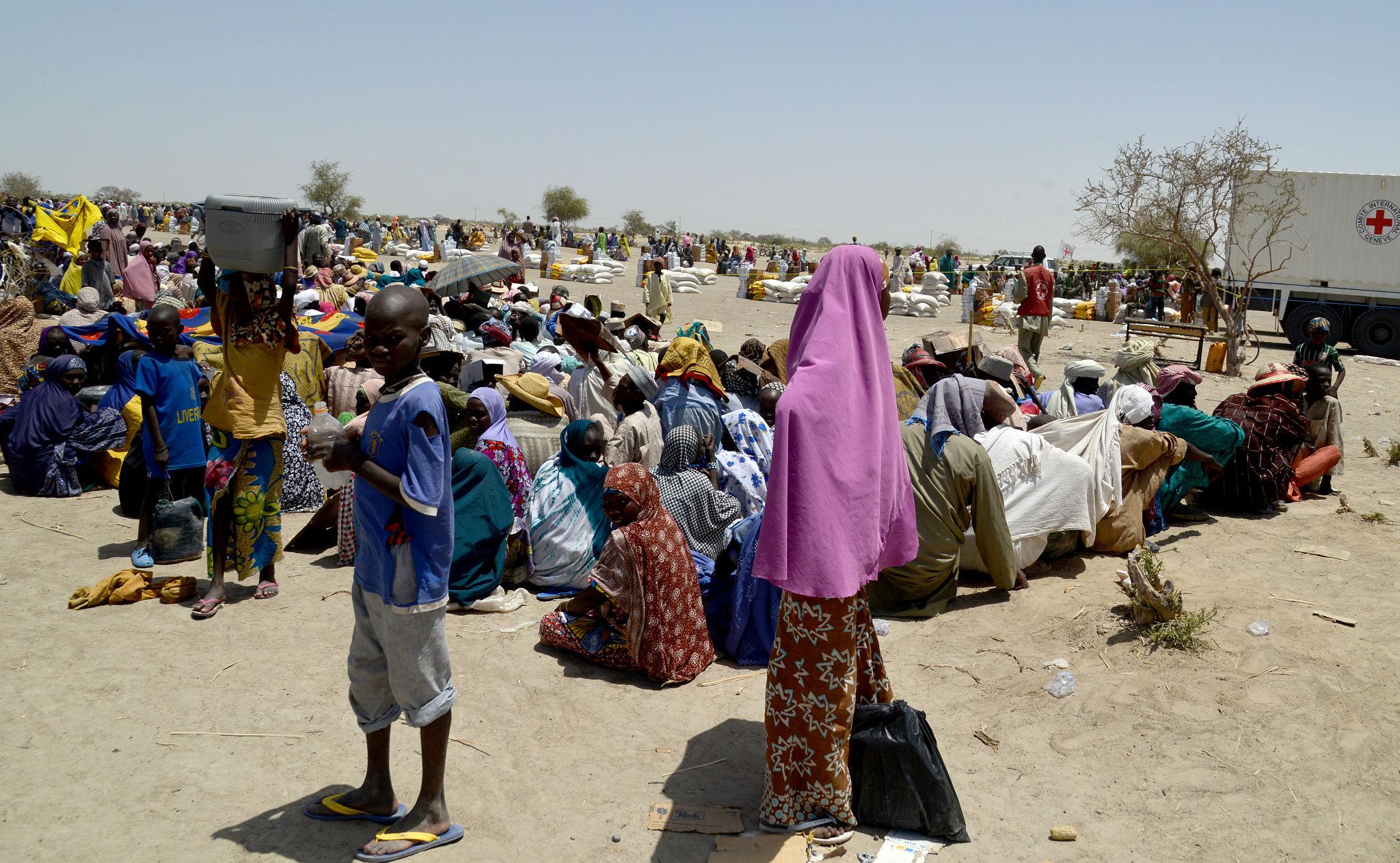
Hundreds of civilians have fled villages in southwestern Niger and crossed into neighbouring areas following a series of militant attacks in recent weeks, adding pressure to a region already struggling with insecurity and mass displacement.
The movement of large convoys of displaced families is unprecedented in the Dosso region, near Niger’s borders with Nigeria and Benin. The area has emerged since 2025 as a new hotspot for attacks attributed to groups linked to al-Qaeda and Islamic State, according to conflict-monitoring organisations.
Television footage showed survivors arriving in the neighbouring Tahoua region, which also borders Nigeria. Hundreds of others reportedly settled in Dogondoutchi, about 100 kilometres from Loga.
More than 450,000 people were internally displaced across Niger in 2025, according to United Nations figures. Most were concentrated in three regions that have endured militant violence for much of the past decade.
The western Tillabéri region, bordering Burkina Faso and Mali, hosts around 48% of Niger’s displaced population, followed by Diffa in the southeast and Tahoua in the central-west.
The latest displacement follows a sharp escalation in attacks on military and civilian targets.
On July 17, an attack on a military unit in western Niger killed 16 soldiers and wounded 23 others, according to the army. Nigerien authorities said 15 attackers were also killed.
Militants also raided and looted military bases in Inates and Banibangou on June 15. Three days later, fighters linked to Jama’at Nusrat al-Islam wal-Muslimin, an al-Qaeda affiliate, attacked Niamey’s international airport, which also houses the military’s Air Base 101 and personnel from Russia’s Africa Corps.
Niger has faced repeated attacks for nearly a decade, particularly from Islamic State in the Sahel and the rival al-Qaeda-linked JNIM coalition.
The worsening violence is also deepening tensions between Niger’s military authorities and neighbouring governments.
Niger’s military ruler, General Abdourahamane Tiani, has accused Benin and Ivory Coast of acting under instructions from French President Emmanuel Macron to support or facilitate militant operations against Niger, Mali and Burkina Faso.
Tiani has not publicly presented evidence supporting the allegations, which have been rejected by governments targeted in similar accusations.
He also claimed that JNIM attacks in Mali in April were planned from neighbouring coastal states, including northern Benin and Ivory Coast.
Security researchers say persistent gaps remain across the region despite increased cooperation between Sahel governments. They point to repeated attacks on strategic facilities in Niger and the deteriorating military situation in Mali as evidence that armed groups retain significant operational capacity.
The Mali-based Timbuktu Institute has warned that insecurity in the central Sahel is increasingly spreading south towards Gulf of Guinea states, particularly Benin and Togo.
The institute argues that close economic, commercial and demographic ties make it impossible for coastal states to remain insulated from instability farther north.
Millions of citizens from Sahel countries live in coastal West Africa, including an estimated five to six million Burkinabè in Ivory Coast, three to four million Malians and two to three million Nigeriens.
Cross-border trade, migration and family networks mean that prolonged instability in the Sahel could have lasting consequences across West Africa, the institute said.
Security threats are already expanding beyond traditional conflict zones, stretching from border areas around W National Park to regions connecting Mali, Mauritania and Senegal.
The growing displacement convoys are therefore not only a humanitarian crisis for Niger but also a warning of broader regional instability that could place increasing pressure on neighbouring states.