
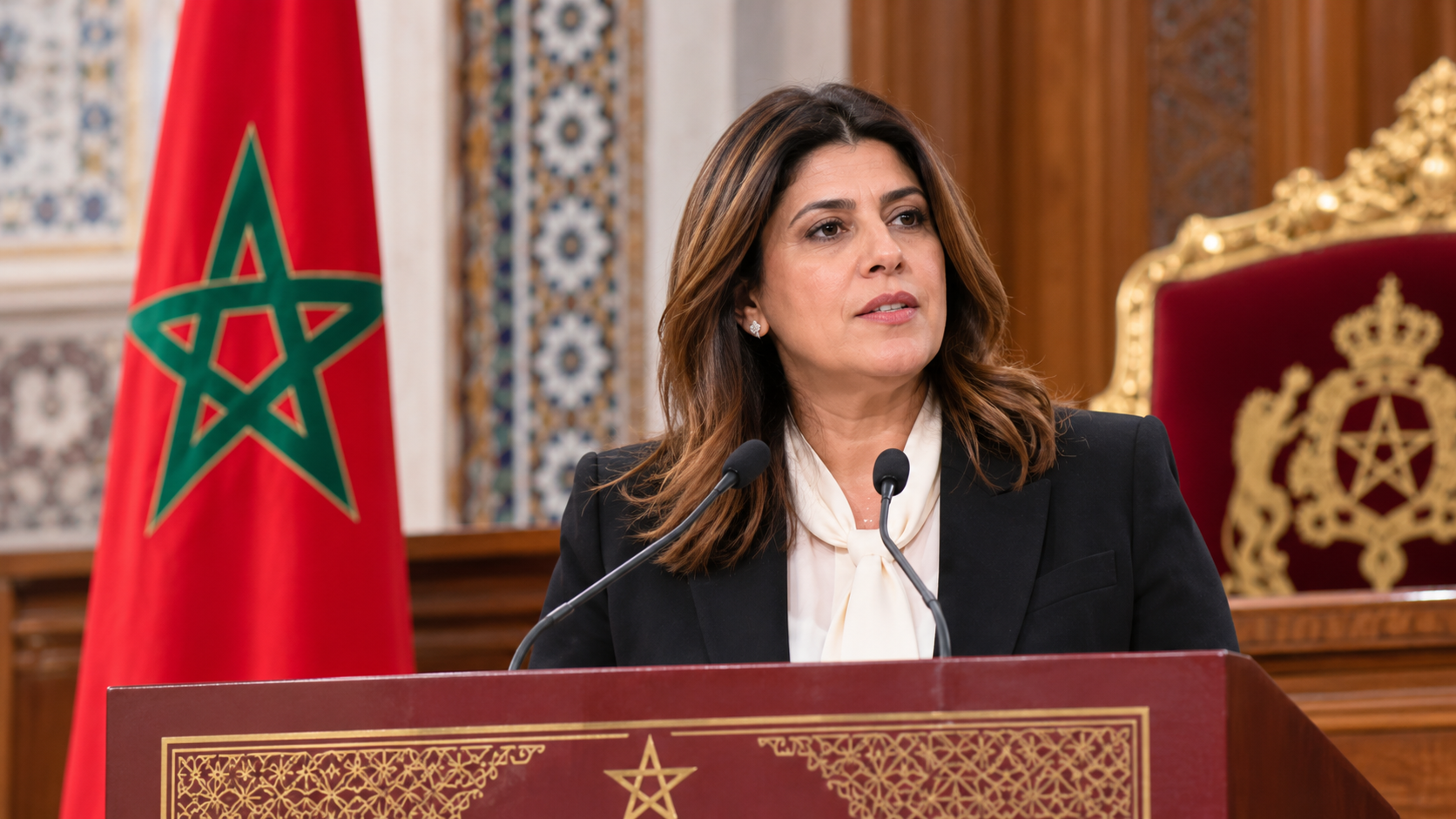
Morocco’s King Mohammed VI has formally appointed the country’s first government led by a woman.
Prime Minister Fatima Ezzahra El Mansouri and her new cabinet were appointed on Friday, October 16.
The appointment marks a historic moment in Morocco’s political history.
According to AFP, El Mansouri’s government will focus on economic challenges, public services and preparations for the 2030 FIFA World Cup.
Morocco’s first female prime minister takes office
El Mansouri leads the centre-right Authenticity and Modernity Party (PAM).
Her party won the most seats in September’s parliamentary elections.
Following the vote, PAM formed a coalition with the Istiqlal party and two smaller left-wing parties.
Together, the four parties hold 210 seats in Morocco’s 395-member parliament.
As a result, the coalition has secured a parliamentary majority.
El Mansouri now leads a government facing growing public demands for economic improvements.
New Moroccan cabinet includes familiar ministers
The new government includes several ministers who served in the previous administration.
Thirteen of the 31 ministers have kept their positions.
Among them is Foreign Minister Nasser Bourita.
Interior Minister Abdelouafi Laftit has also remained in office.
Meanwhile, Fouzi Lekjaa has been appointed economy minister.
Lekjaa previously served as budget minister.
He is also known for his role as president of the Royal Moroccan Football Federation.
The cabinet includes seven women, including El Mansouri.
This is the same number of women who served in the previous government.
El Mansouri promises ambitious government programme
Following her meeting with King Mohammed VI, El Mansouri outlined her government’s ambitions.
She said the new administration would pursue an ambitious programme aimed at meeting citizens’ expectations.
However, the government faces several major challenges.
These include rising living costs, employment concerns and economic inequality.
Many voters raised these issues during the September election campaign.
Therefore, improving household finances and creating jobs could become key priorities.
Low voter turnout highlights political challenges
September’s parliamentary elections recorded the lowest voter turnout in nearly two decades.
The result raised questions about public engagement in Morocco’s political system.
Economic concerns also shaped the campaign.
Many citizens expressed frustration over the cost of living and limited employment opportunities.
As a result, the new government faces pressure to deliver practical improvements.
Its performance could play an important role in rebuilding public confidence.
Morocco prepares for 2030 World Cup
Alongside domestic challenges, Morocco is preparing to co-host the 2030 FIFA World Cup.
The country will organise the tournament with Spain and Portugal.
The event will require major planning and investment.
Infrastructure, transport and public services will be important areas of preparation.
Meanwhile, the government must balance these commitments with wider economic needs.
Historic appointment brings new expectations
El Mansouri’s appointment marks an important milestone for women’s political leadership in Morocco.
However, the new government’s success will depend on its policies and results.
The administration must address economic concerns while preparing for a major international sporting event.
For now, Morocco has entered a new political chapter with its first woman-led government.