
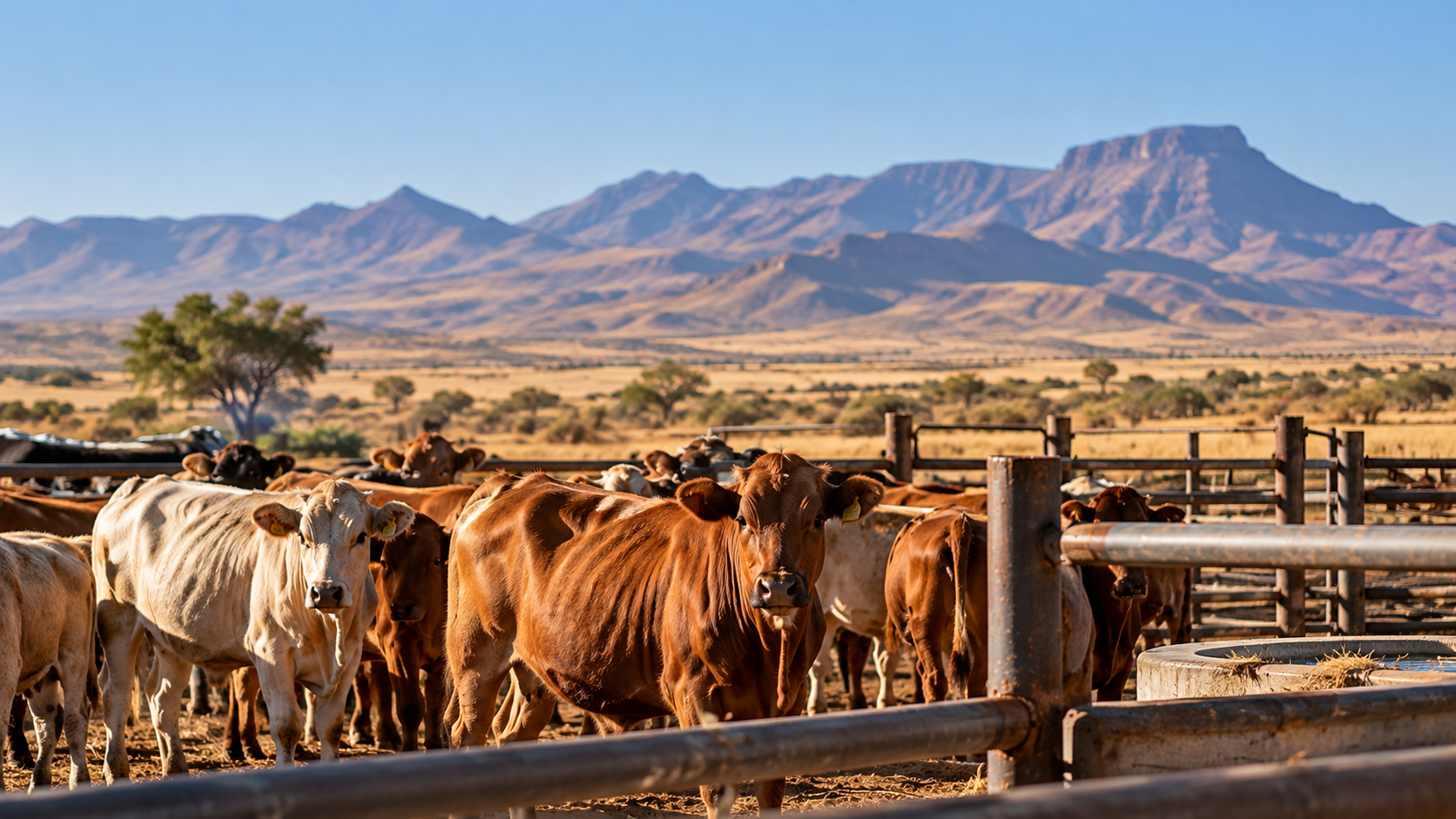
The European Union has temporarily suspended imports of several meat products from Namibia following an outbreak of foot-and-mouth disease.
The decision affects fresh meat from cattle, sheep and goats. It also covers meat from certain farmed and wild hoofed animals and some processed products.
Namibia confirmed the outbreak last month. It was the first recorded foot-and-mouth disease outbreak in the country’s main commercial livestock zone in 60 years.
Africanews, citing AFP, reported that Namibia responded by introducing a nationwide ban on livestock movement and meat exports.
EU is Namibia’s largest beef market
The suspension could have a significant economic impact because the EU is Namibia’s largest market for beef.
More than 80% of the country’s beef exports go to the European Union, according to the report.
Around 10 million kilograms of Namibian beef are exported to Europe annually, EU Ambassador Ana Beatriz Martins told Namibia’s NMH media.
She said about a quarter of the 40,000 direct jobs linked to exports to Europe could be affected by the suspension.
However, some processed meat products remain eligible for the European market. The EU said products that undergo the strictest risk-reducing treatment can still enter the bloc.
Foot-and-mouth disease spreads to 11 farms
Namibia declared the outbreak in the country’s south on September 22.
Officials said the disease has since spread to 11 farms.
The government has intensified surveillance, testing and contact tracing. Authorities have also introduced livestock movement controls, veterinary roadblocks and additional biosecurity measures.
Agriculture ministry spokesman Romeo Muyunda told AFP that these measures form part of the government’s response to contain the outbreak.
Disease affects livestock across southern Africa
Foot-and-mouth disease is a highly contagious viral disease affecting animals including cattle, sheep and goats.
It can cause fever and blisters around the mouth and hooves, making it difficult for affected animals to feed. In some cases, animals can die.
Several other southern African countries have also faced the disease, including Botswana, Eswatini, Lesotho, Mozambique, South Africa, Zambia and Zimbabwe.
The EU highlighted the potential consequences of major outbreaks. During Europe’s major foot-and-mouth disease outbreak in 2001, more than six million animals were culled.
Namibian authorities are now working to contain the current outbreak while one of the country’s most important agricultural export markets remains restricted.