
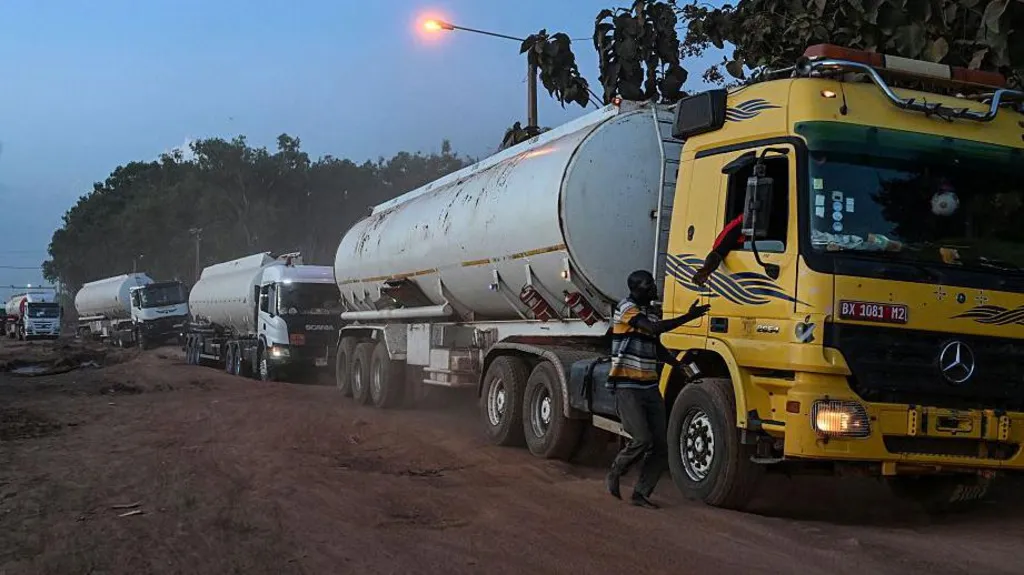
Niger has revoked the licences of dozens of transport operators and tanker drivers who refused to deliver fuel to neighbouring Mali, citing security fears linked to ongoing jihadist attacks.
The decision comes as Mali struggles with a months long fuel blockade imposed by an al Qaeda linked armed group, which began targeting fuel convoys and petrol tankers on major routes in September. Several vehicles have been torched and drivers abducted, raising fears among transport workers.
Mali, a landlocked country heavily dependent on fuel imports, signed an agreement with Niger in July to supply 85 million litres of fuel over six months, mainly to northern desert regions where armed groups are active. Niger, an oil producing country and a close ally of Mali, has been a key supplier despite the risks.
Fuel convoys travelling the roughly 1,400km route from Niger to Mali have faced repeated attacks, even when escorted by the military. In November, Niger managed to deliver 82 fuel tankers, helping stabilise Mali’s energy supply after alternative routes from Senegal and Ivory Coast were also hit by attacks.
Further deliveries were planned but were disrupted after drivers and transport companies refused to continue the journeys, prompting Niger’s transport ministry to take disciplinary action.
In a statement dated 6 January, Niger’s transport minister Abdourahamane Amadou said the refusal to transport fuel amounted to a serious breach of legal and regulatory obligations. As a result, the licences of 14 transport operators and 19 drivers were revoked, while another operator was suspended for one year. Those sanctioned were ordered to surrender their transport documents to the ministry.
The blockade has been enforced by Jama’at Nusrat al Islam wal Muslimin, known as JNIM, which has expanded its insurgency in Mali to include economic warfare. The fuel shortage last year forced the temporary closure of schools and universities and disrupted daily life across the country.
The crisis has also drawn international concern, with the US and France previously warning their citizens against travel to Mali or urging them to leave the country.
Mali has been ruled by a military government since a 2020 coup led by Gen Assimi Goïta, who pledged to restore security amid a long running insurgency that began with a separatist rebellion in the north and later spread under Islamist armed groups. UN peacekeepers and French forces have since withdrawn, while the authorities have turned to Russian mercenaries, though large areas of the country remain beyond government control.