
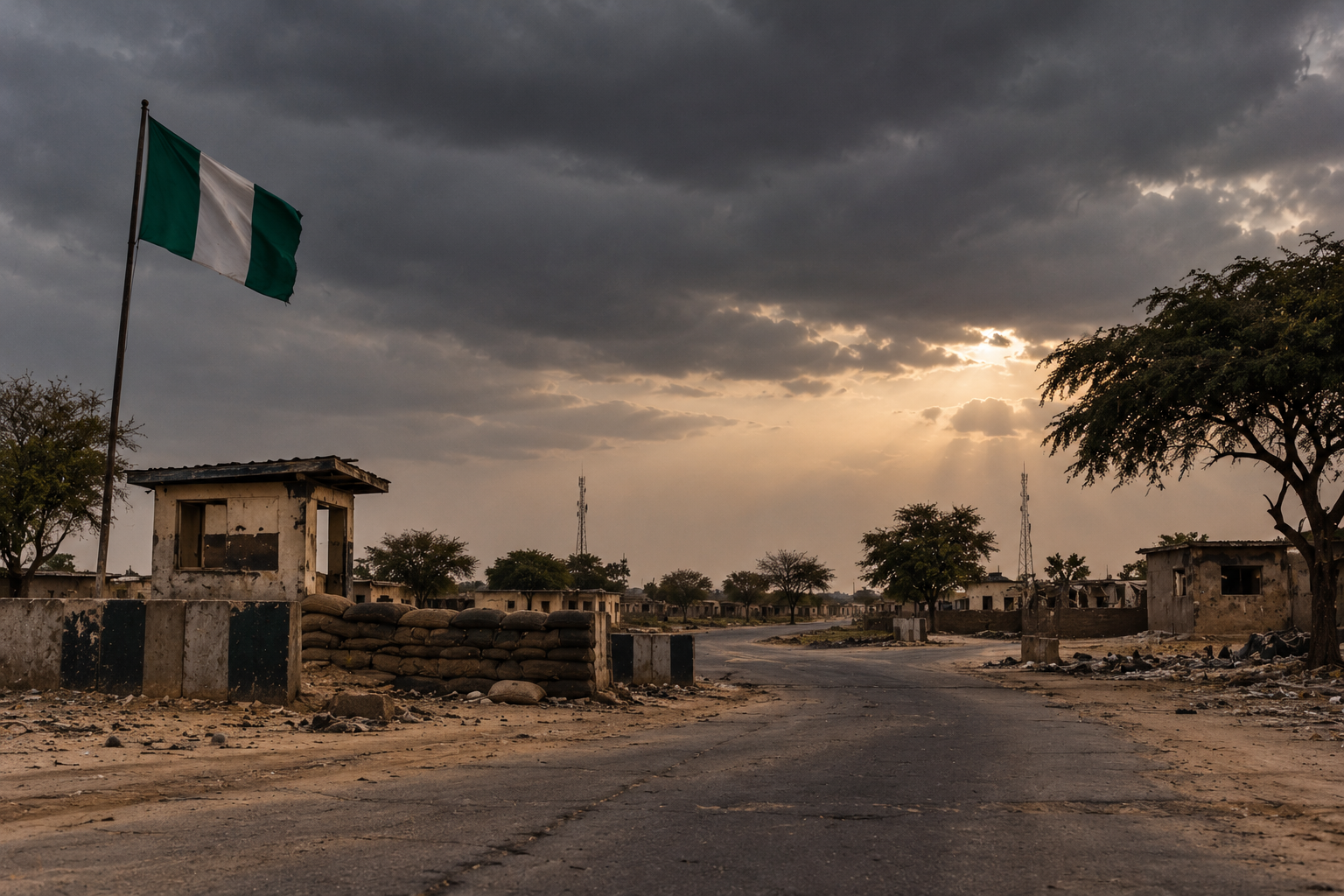
Nigeria’s army chief visited troops in Borno state on Saturday, days after an attack reportedly killed 15 soldiers and five militia members in the country’s northeast.
The visit followed an assault on a military base in Mairari village, near Lake Chad. Suspected fighters from the Islamic State West Africa Province (ISWAP) reportedly carried out the attack.
According to AFP, the fighters overran the base, seized weapons and set fire to military facilities.
The incident has raised fresh concerns about security in northeastern Nigeria, where armed groups have remained active for more than 17 years.
Nigeria army chief visits troops after deadly attack
Nigeria’s Chief of Army Staff travelled to the northeast on Saturday following the deadly assault.
The visit came as security forces continued to face attacks from armed groups operating around Lake Chad.
Military and local sources told AFP that 15 soldiers and five members of a local anti-ISWAP militia were killed.
However, the reported death toll has not been independently verified.
Several soldiers were also reported missing after the attack.
The incident highlights the security challenges facing troops stationed in remote areas of Borno state.
ISWAP fighters reportedly overrun military base
The attack took place overnight from Tuesday, October 13, to Wednesday, October 14.
According to military sources, a large group of suspected ISWAP fighters entered Mairari village and attacked the military position.
Fighting continued for several hours before government troops withdrew.
The attackers reportedly seized weapons and other equipment before burning the base.
A Nigerian military officer told AFP that soldiers retreated towards Monguno, a nearby garrison town.
Monguno lies approximately 18 kilometres from the attacked position.
The officer requested anonymity because he was not authorised to discuss the incident publicly.
Meanwhile, local residents described extensive damage to the base.
Residents describe hours of fighting
Grema Butari, a resident of Mairari, told AFP that the attackers arrived at around 22:00 GMT.
He said fighting continued through the night.
According to Butari, the attackers took equipment and other valuable items before setting fire to the remaining facilities.
Another resident, Ahmad Sherif, also reported extensive destruction.
He said the attackers were believed to have travelled from Gudumbali, in neighbouring Guzamala district.
However, their exact movements have not been independently confirmed.
Borno faces renewed security challenges
Borno state has been at the centre of Nigeria’s long-running insurgency since 2009.
Boko Haram initially led much of the violence in the region.
Later, ISWAP emerged as a separate armed organisation.
Both groups have carried out attacks against military positions and civilian communities.
Although violence declined from its earlier peak, security incidents have increased again in recent years.
The latest attack follows another deadly confrontation in Kukawa, a neighbouring area.
According to military and local sources cited by AFP, approximately two dozen militants and soldiers were killed during that earlier fighting.
ISWAP fighters reportedly attacked a military outpost and seized weapons before Nigerian forces pushed them back with air support.
Nigeria records rising levels of violence
Nigeria has experienced a sharp increase in reported conflict-related violence.
According to data cited from the Armed Conflict Location & Event Data project, the second quarter of 2026 recorded the country’s highest level of violence in the dataset dating back to 1997.
The figures reflect broader security challenges across the country.
In northeastern Nigeria, military forces continue to confront ISWAP and Boko Haram.
Meanwhile, armed violence in other regions has added to pressure on national security resources.
The United Nations estimates that the insurgency in northeastern Nigeria has killed tens of thousands of people.
Around two million people have also been displaced from their homes.
Many affected communities continue to face difficulties accessing food, healthcare and other essential services.
Security concerns remain after Borno attack
The latest assault demonstrates the continuing threat posed by armed groups in northeastern Nigeria.
Although government forces maintain military positions across the region, remote bases remain vulnerable to attacks.
The reported loss of soldiers and equipment has raised further concerns about military security.
Meanwhile, the army chief’s visit comes as troops continue operations against armed groups.
For communities in Borno, the wider challenge remains restoring security and allowing displaced families to rebuild their lives.
The situation around Lake Chad continues to require close attention as military operations and security threats persist.