
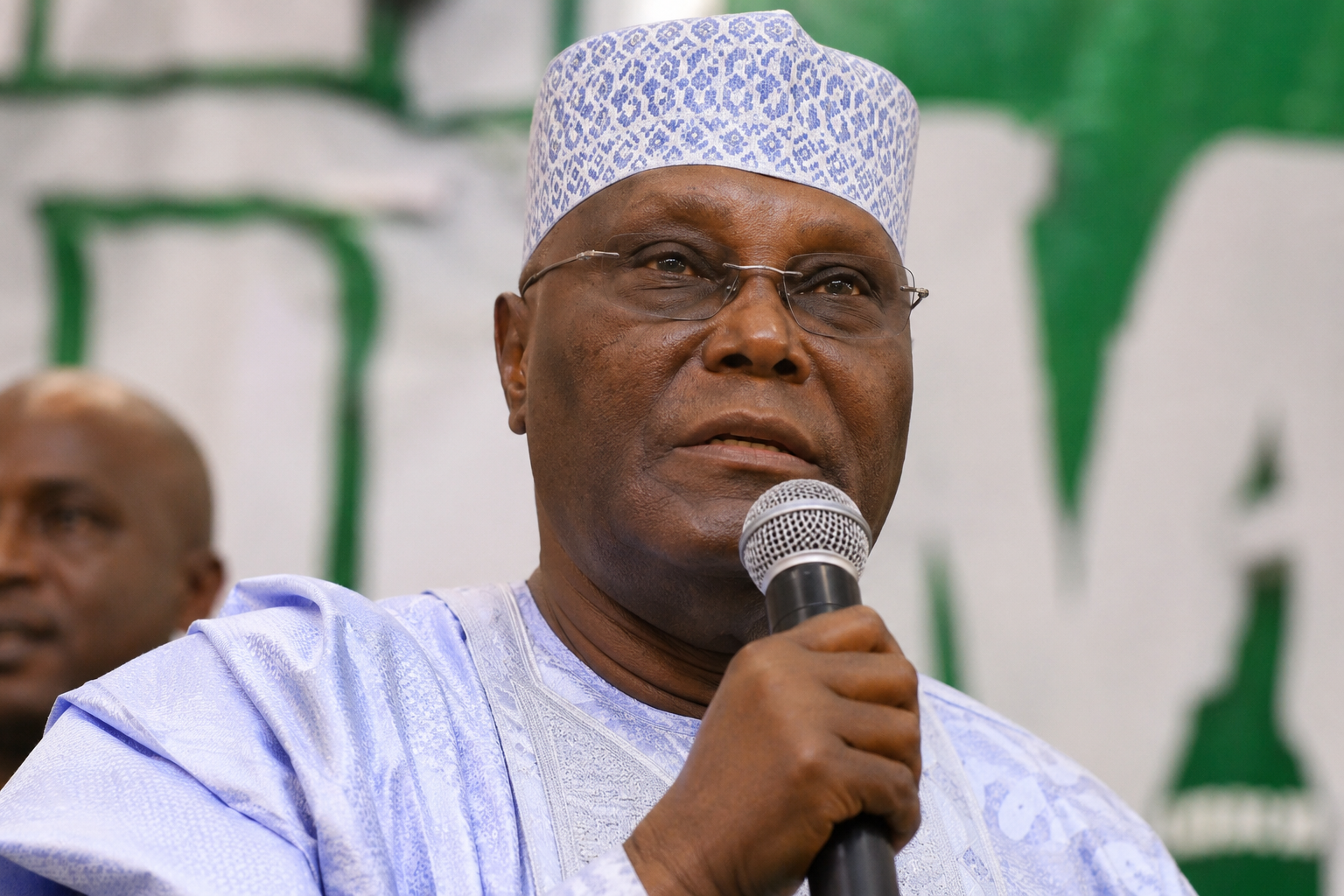
A Nigerian court has invalidated the nomination of opposition politician Atiku Abubakar as the African Democratic Congress (ADC) presidential candidate, creating uncertainty ahead of the country’s 2027 elections.
The Federal High Court in Abuja ruled against the party leadership under David Mark, whose authority had been challenged in a dispute over control of the ADC.
The decision also invalidated Abubakar’s nomination, according to Nigerian media reports cited by Africanews and AFP.
The ADC said it would appeal the ruling and accused the governing All Progressives Congress (APC) of attempting to weaken the opposition.
However, the APC denied involvement in the legal dispute.
Court ruling deepens ADC leadership crisis
The dispute centres on competing claims to the leadership of the ADC by David Mark and Nafiu Bala Gombe.
Mark’s leadership had overseen Abubakar’s nomination as the party’s presidential candidate.
According to Africanews, citing Nigerian media reports, the court’s decision against Mark also undermined the validity of the nomination made under his leadership.
The ruling comes as the ADC attempts to challenge President Bola Tinubu in the presidential election scheduled for January 16, 2027.
The party has faced several legal disputes over its leadership and eligibility to participate in the elections.
Opposition accuses ruling party of interference
ADC spokesman Bolaji Abdullahi condemned the ruling, describing it as an attempt to prevent Nigerians from choosing their preferred leaders.
He accused the governing party of involvement in the legal challenges facing the ADC.
Abubakar also questioned the timing of the decision, which followed the launch of his presidential campaign in Sokoto state.
However, presidential spokesman Daniel Bwala rejected accusations of APC involvement.
Speaking to AFP, Bwala said the ruling party was not involved in the leadership dispute that led to the court’s decision.
The Independent National Electoral Commission (INEC), which had previously validated Abubakar’s candidacy, had not commented on the ruling at the time of the original report.
Legal disputes raise concerns ahead of elections
Nigeria’s political parties have frequently faced internal leadership disputes that have reached the courts.
During the 2023 general elections, European Union observers raised concerns about extensive pre-election litigation.
Their final observation report recorded at least 1,200 election-related court cases, including disputes involving political parties and candidates.
The observers warned that excessive litigation could weaken public confidence in the electoral process.
The latest ruling against the ADC has renewed concerns about the potential impact of legal disputes on political competition.
Meanwhile, the party supporting another major opposition figure, Peter Obi, accused the APC of interfering with its political meetings.
It cited last-minute hotel cancellations in Abuja as evidence of alleged obstruction.
Bwala denied the accusations, pointing out that hotels in the Nigerian capital are privately owned.
Atiku faces uncertainty over presidential bid
Abubakar, widely known as Atiku, finished second in Nigeria’s 2023 presidential election, receiving approximately 29% of the vote.
He has remained one of the country’s most prominent opposition politicians and is seeking the presidency again in 2027.
At a campaign rally in Sokoto, Abubakar promised to improve security across Nigeria and restore fuel subsidies.
His proposals come amid public concern over living costs and insecurity in several parts of the country.
The court ruling now creates uncertainty over whether he can remain the ADC’s presidential candidate.
It could also affect the regional balance of the presidential race, given Abubakar’s political influence in northern Nigeria.
For now, the ADC’s planned appeal could determine whether its nomination of Abubakar can be restored before voters go to the polls.