
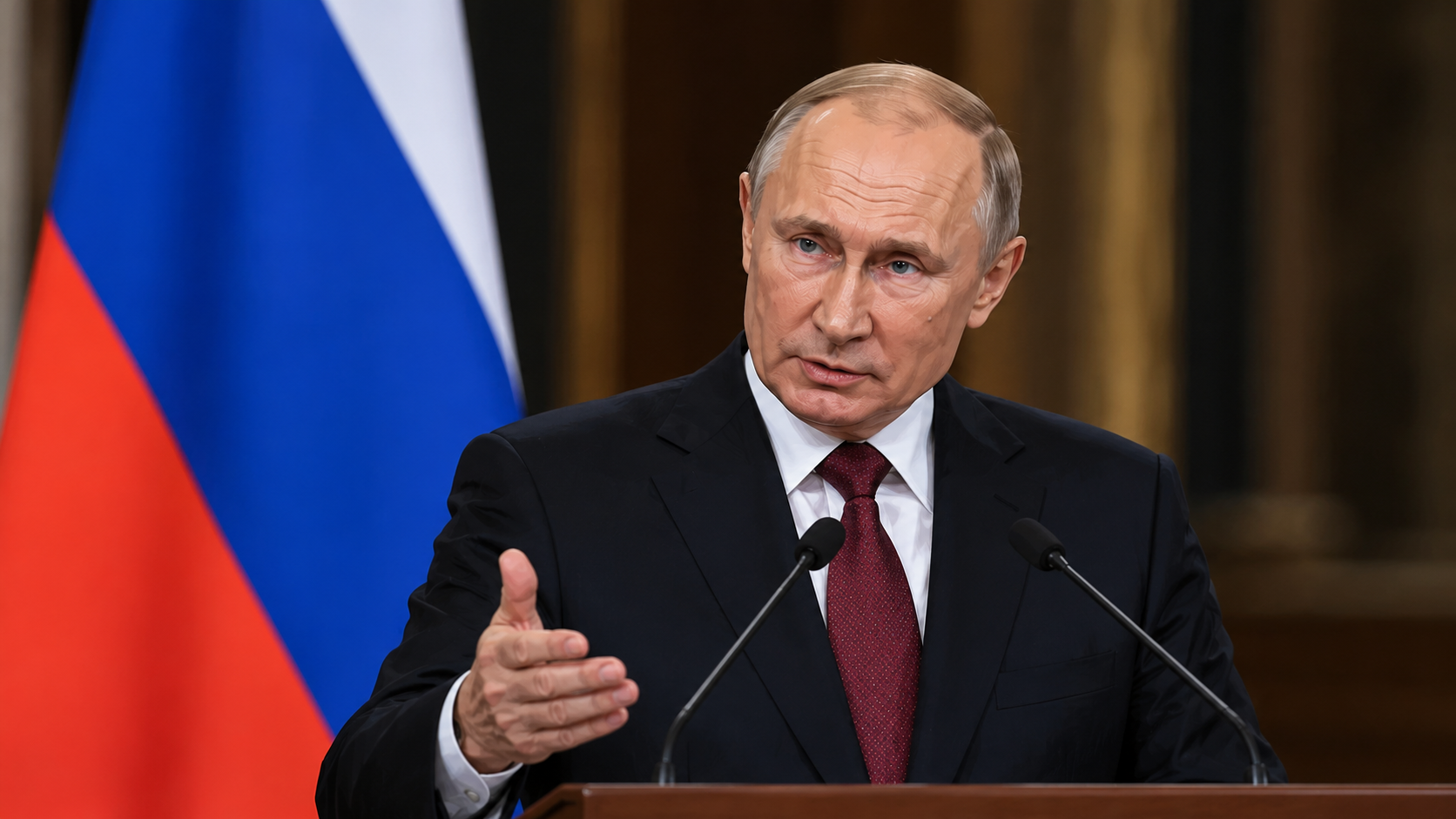
Russian President Vladimir Putin has called for an end to Western dominance in global affairs as Moscow hosts African leaders for the third Russia-Africa Summit.
Speaking in Moscow on Wednesday, October 28, Putin presented Russia as a strategic partner for African countries seeking greater economic independence and international influence.
Delegations from 48 countries are attending the two-day summit, including 22 African leaders.
The gathering highlights Russia’s efforts to strengthen political, economic and security relationships across Africa.
Putin challenges Western influence in Africa
According to Africanews, Putin told delegates that the era of a small group of powerful countries determining the future of entire continents was coming to an end.
He argued that a more balanced international system should give developing nations a stronger voice in global decision-making.
Putin also accused Western countries of continuing to exploit Africa’s natural resources and using debt to limit economic development.
These claims form part of Moscow’s broader diplomatic efforts to position itself as an alternative partner to Western governments.
Russia has increasingly sought closer relations with African countries through trade, investment, diplomatic cooperation and security agreements.
Russia-Africa Summit focuses on economic cooperation
Economic development is a central theme of the Russia-Africa Summit.
Putin said African countries were becoming increasingly important players in global politics and the international economy.
He called for reforms to international financial institutions, including the International Monetary Fund (IMF) and World Bank.
According to Putin, these institutions should respond more effectively to the needs of developing economies.
The Russian president argued that African countries deserve greater influence over decisions affecting their financial stability and development.
The summit is expected to feature more than 40 sessions covering trade, investment, technology transfer, healthcare, education and youth cooperation.
Food security and energy development are also among the major priorities.
African leaders demand greater economic independence
Burundian President Evariste Ndayishimiye, the current African Union chair and co-chair of the summit, called for stronger economic partnerships that deliver greater benefits to African populations.
He said African countries wanted to move beyond exporting raw materials and importing expensive finished products.
Instead, he argued that African economies should participate in the entire production process, from manufacturing to marketing.
Ndayishimiye stressed that international partnerships should help African countries create wealth domestically.
His remarks reflect longstanding concerns about Africa’s dependence on commodity exports and limited industrial development.
African leaders have increasingly emphasised local manufacturing, technology transfer and investment as priorities in international economic partnerships.
Russia seeks to expand its influence across Africa
The Moscow summit comes as Russia continues efforts to expand its diplomatic and economic presence on the continent.
Moscow maintains relationships with African governments through energy projects, mining, trade and military cooperation.
Russian security personnel, including members of the Africa Corps, also operate in parts of the continent.
Russia’s growing engagement has attracted attention from Western governments, which have traditionally maintained extensive political and economic relationships with African countries.
For Moscow, the summit offers an opportunity to deepen existing partnerships and establish new agreements.
For participating African governments, it provides another platform to pursue investment, development assistance and diplomatic cooperation.
Africa’s growing role in global politics
The Russia-Africa Summit also reflects the continent’s increasing importance in international diplomacy.
African governments are engaging with a wider range of global partners while seeking greater influence in international institutions.
The discussions in Moscow are expected to focus on practical cooperation, including infrastructure development, energy security and industrial investment.
However, the long-term significance of the summit will depend on whether political commitments translate into concrete economic agreements.
As the two-day gathering continues, African leaders are expected to emphasise partnerships that support domestic industries, create employment and deliver measurable benefits to their populations.