
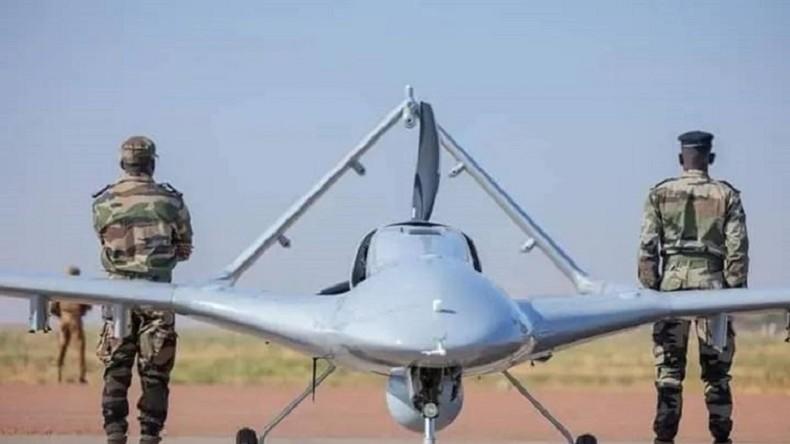
The conflict in northern Mali has entered a new phase following the first documented use of Shahed-136-type loitering munitions, or their Russian-produced Geran-2 variant, in operations attributed to the Malian armed forces and Russia’s Africa Corps.
The deployment gives Bamako and its Russian allies a new capacity to conduct relatively low-cost, long-range strikes against targets in remote areas controlled or used by armed groups.
A joint investigation by Jeune Afrique and Bellingcat, based on video footage, geolocation and visual analysis of debris, identified at least two suspected strikes involving the drones in July 2026.
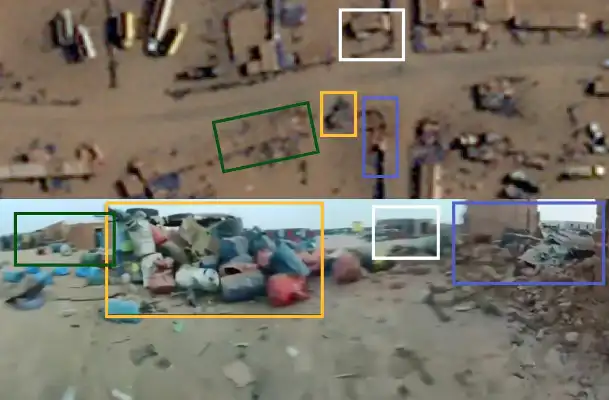
The first attack reportedly took place on July 12 in In-Afarak, north of Kidal, while the second occurred five days later in Talhandak, near Mali’s border with Algeria.
In the In-Afarak incident, a drone struck a commercial facility, causing significant damage to buildings and fuel barrels. Images from the scene appeared to show debris from an MD-550-type engine, a derivative of the motor used in Iran’s Shahed-136 and Russia’s Geran-2.
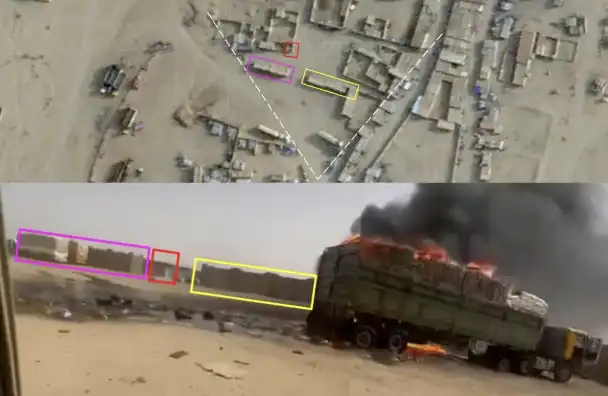
The second strike, on July 17, targeted a truck carrying barrels believed to contain cooking oil in Talhandak. At least one civilian was reported killed and the vehicle was destroyed.
Bellingcat said its analysis of the footage and the location of the incident indicated that the truck was hit by a loitering munition from the same drone family. The findings contradicted claims by accounts sympathetic to Russia’s former Wagner Group that the aircraft had been shot down.
Iranian design, Russian production
The Shahed-136 was developed by Iran’s Aircraft Manufacturing Industrial Company and first emerged publicly in the early 2020s. Russia later began manufacturing a modified version, known as the Geran-2, at the Alabuga industrial facility in Tatarstan under a technology-transfer arrangement with Iran.
The drone is designed to circle or travel towards a pre-programmed target before detonating on impact. Depending on its configuration, it is believed to have a range of up to about 2,000 kilometres and can carry a warhead weighing between roughly 40 and 90 kilograms.
Russia has used the system extensively during its war in Ukraine, particularly in large-scale attacks against energy infrastructure and other fixed targets.
New capabilities for Mali’s military
The arrival of Shahed-type drones provides Mali’s military and its Russian partners with a strike capability they previously lacked.
The aircraft can be launched from relatively basic platforms and do not require conventional airfields, making them suitable for use in isolated desert regions. They can also reach targets far beyond the operational range of ground forces.
Although Shahed-type drones are generally less precise and less flexible than armed unmanned aircraft such as Türkiye’s Bayraktar TB2 or Akıncı, they are cheaper to manufacture and can be deployed in larger numbers.
Their characteristics make them particularly suited to attacking fixed targets, including camps, warehouses, vehicles, fuel depots and gathering points.
Analysts do not expect the drones alone to fundamentally alter the balance of power in Mali. Their deployment, however, adds a significant new dimension to the conflict by giving government forces access to relatively inexpensive, long-range attack systems.
The development could increase pressure on armed groups operating across northern Mali while expanding the range of military options available to Bamako and Russia’s Africa Corps.