
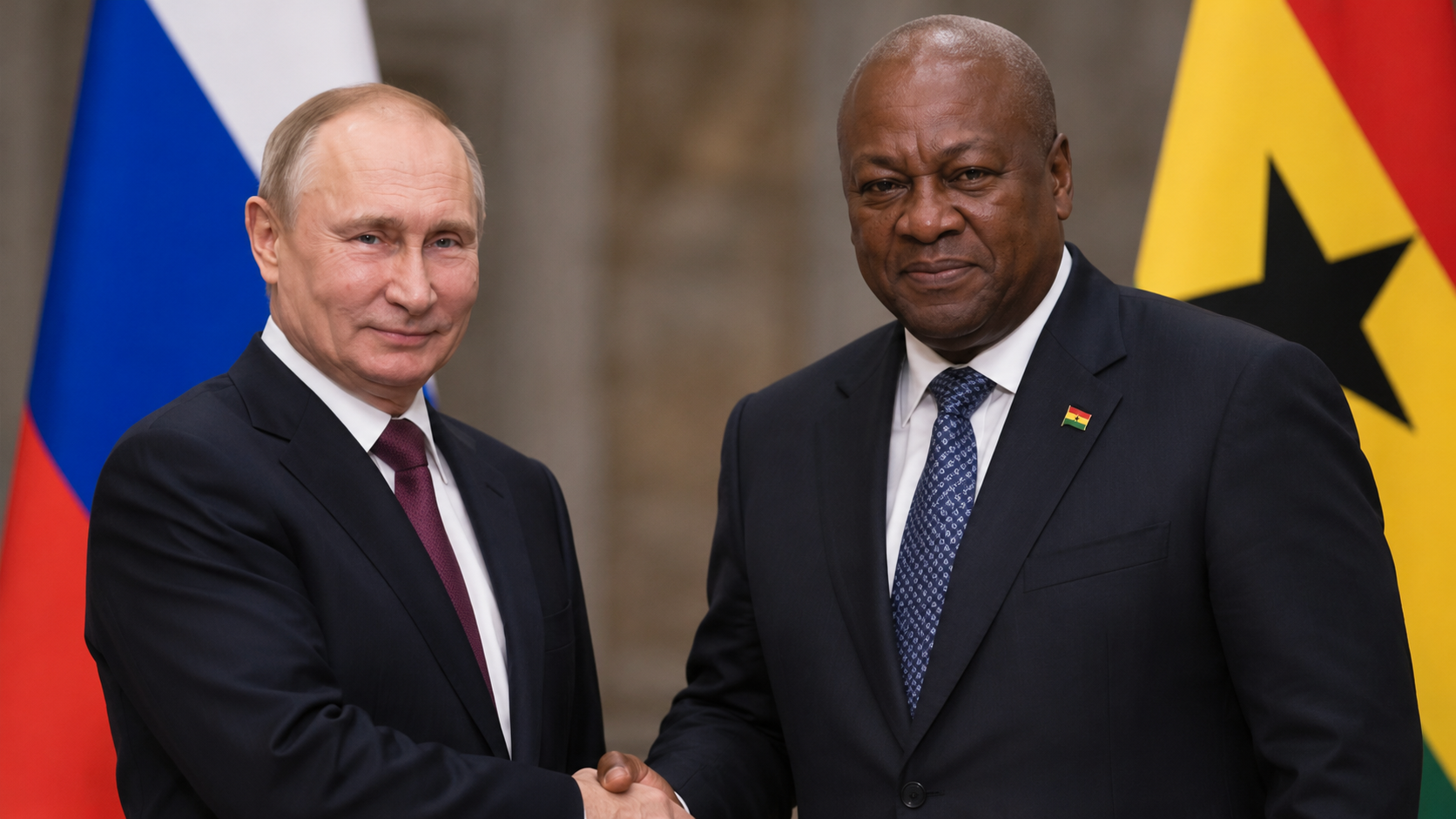
Russia has agreed to stop recruiting Ghanaian nationals for the Ukraine war. The decision follows talks between Russian President Vladimir Putin and Ghanaian President John Dramani Mahama.
The Russia Ghana recruitment ban comes after reports that hundreds of Ghanaians joined Russian forces. Some were allegedly misled by promises of jobs or educational opportunities.
According to Africanews, Putin made the commitment during the Russia-Africa summit in Moscow on October 30, 2026.
Ghana says the agreement covers both voluntary enlistment and irregular recruitment.
Russia Ghana recruitment ban follows reports of deaths
Ghana has raised concerns about the recruitment of its citizens for several months.
By mid-August, more than 270 Ghanaians had reportedly fought for Russia in Ukraine.
At least 62 had been killed, while another 15 were missing, according to Ghanaian authorities.
These figures have increased pressure on the government to protect its citizens.
In October, Ghanaian officials warned that some nationals were being tricked into joining Russian forces.
They also urged Moscow to take stronger action against recruitment networks.
Now, Russia has reportedly agreed to prevent further enlistment.
However, the government has not explained how it will enforce the restriction.
Putin and Mahama discuss Ghanaian recruitment
Mahama raised the issue directly with Putin during their meeting in Moscow.
The Russian president reportedly agreed to stop Ghanaian nationals from joining the war.
Importantly, the commitment covers both irregular recruitment and voluntary enlistment.
This means the proposed restriction would apply even to Ghanaians who wish to join Russian forces.
However, several questions remain unanswered.
For example, it is unclear whether the agreement applies to Ghanaian citizens already serving in Ukraine.
Neither government has announced a plan for their return.
Furthermore, authorities have not outlined how they will identify or stop recruitment networks.
Other African countries report recruitment concerns
Ghana is not the only African country affected by recruitment linked to the Ukraine war.
Kenya, South Africa, Nigeria, Cameroon and The Gambia have also raised concerns.
In several reported cases, African nationals were allegedly offered jobs or educational opportunities abroad.
However, some later found themselves involved in military activities.
These allegations have raised questions about recruitment practices and the protection of foreign workers.
Not every African national fighting in Ukraine was necessarily recruited through deception.
Nevertheless, reports of misleading offers have prompted calls for stronger safeguards.
Last week, Ukrainian officials also reported the death of a citizen of Botswana in the Luhansk region.
According to those officials, the individual had been recruited through social media.
The case highlights growing concerns about online recruitment methods.
Families seek answers about missing Ghanaians
The recruitment issue has also affected families across Ghana.
At least 62 Ghanaian nationals have reportedly died while fighting for Russia.
Meanwhile, 15 others remain missing, according to figures released by Ghanaian authorities.
For their relatives, obtaining reliable information can be difficult.
Families may struggle to confirm whether loved ones are alive, injured or detained.
The new agreement could help prevent further recruitment.
However, it does not resolve the situation of those already involved in the conflict.
Ghanaian authorities have not announced any arrangements for bringing serving nationals home.
As a result, families are still waiting for answers.
What happens after Russia’s recruitment pledge?
The agreement represents a diplomatic development between Ghana and Russia.
It also reflects growing concern among African governments about foreign military recruitment.
However, the success of the Russia Ghana recruitment ban will depend on enforcement.
Authorities will need to determine how recruiters operate and how new enlistments can be prevented.
Additionally, questions remain about Ghanaian nationals already serving in Ukraine.
For now, Moscow has reportedly committed to stopping further recruitment.
The next challenge will be turning that promise into practical action.
Meanwhile, families of those killed or missing continue to seek information about their loved ones.