
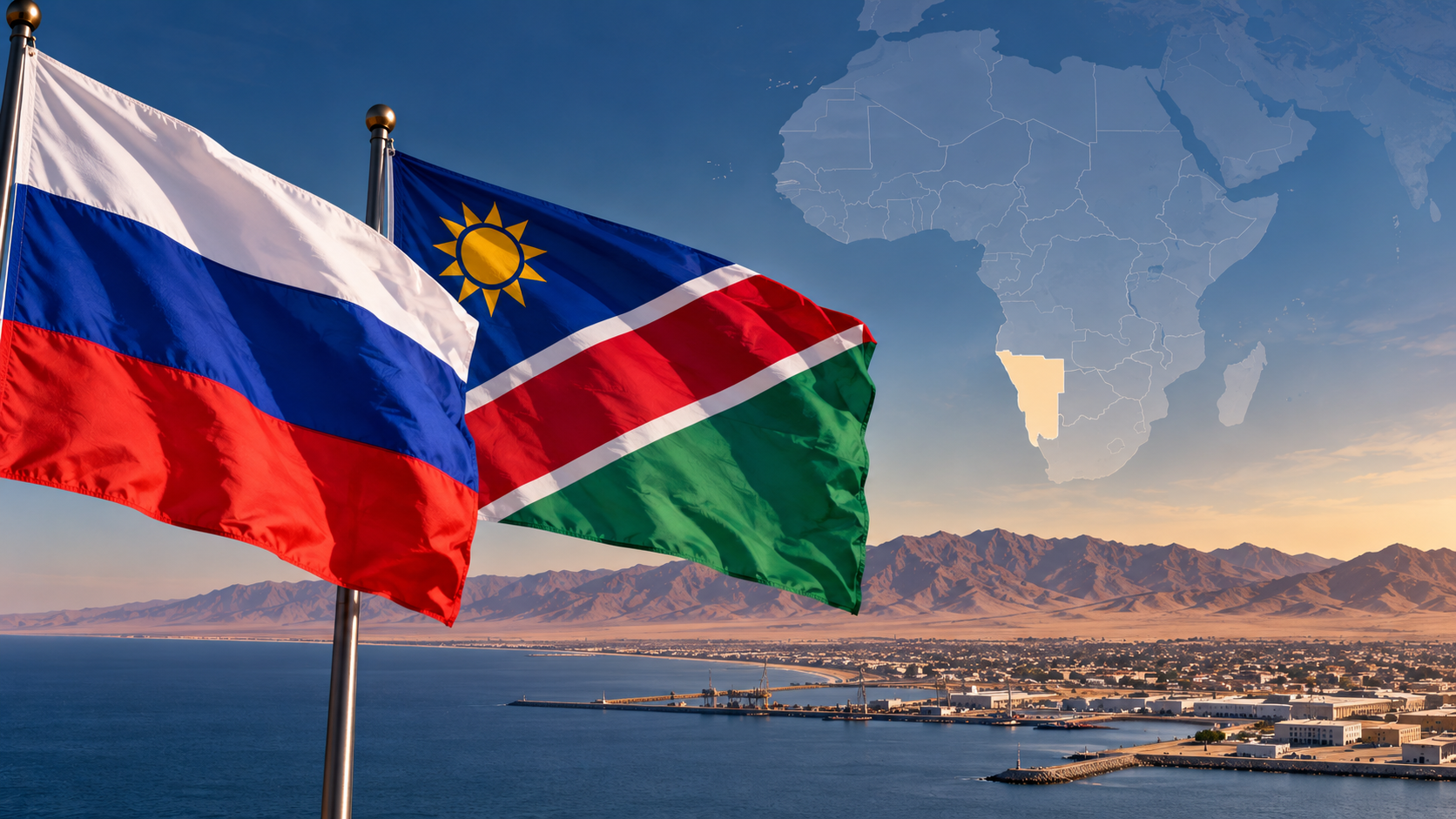
A heavily armed Russian naval training ship has arrived in Namibia as part of a major maritime expedition spanning four oceans, highlighting Moscow’s continuing military engagement with African countries.
The Baltic Fleet vessel Perekop docked at Walvis Bay on October 20 after travelling through the Indian and Atlantic Oceans.
According to Business Insider Africa, the visit forms part of a wider Russian naval training mission that includes stops in several African countries.
The deployment comes as Russia maintains defence partnerships across Africa while facing Western sanctions and tensions with NATO over the war in Ukraine.
Russian naval ship docks in Namibia
The Perekop arrived at Namibia’s Walvis Bay port on Tuesday, continuing its international training voyage.
During the visit, Russian naval officers met representatives of the Namibian Navy and welcomed them aboard the vessel.
The meetings provided an opportunity for military personnel from both countries to exchange information and examine the ship’s facilities.
According to the Russian Baltic Fleet’s press service, the vessel covered more than 1,800 nautical miles in seven days before reaching Namibia.
During the journey, naval cadets conducted shooting exercises and other military training activities.
What weapons does the Perekop carry?
Although primarily used for naval training, the Perekop carries several weapons systems.
According to the naval reference database RusNavy, its equipment includes 76mm and 30mm naval guns, anti-submarine rocket launchers, radar and sonar systems.
These systems allow the vessel to support military training and conduct a range of maritime operations.
The ship’s main role during the current expedition is to provide practical experience to Russian naval cadets.
Trainees are learning navigation, ship positioning and watchkeeping procedures during the voyage.
The cadets are from the Admiral Fyodor Ushakov Baltic Higher Naval School in Kaliningrad.
Russia’s four-ocean naval expedition
The Russian naval expedition is scheduled to conclude on December 9, 2026.
Its route covers the Arctic, Pacific, Indian and Atlantic Oceans.
According to the published itinerary, the mission includes 14 seas, 23 straits, nine bays and two rivers.
The vessel is expected to make 20 port calls, including 12 in foreign countries.
Before reaching Namibia, the ship visited several African destinations, including Seychelles, Tanzania and Mozambique.
The extended voyage provides Russian naval personnel with experience operating across different maritime environments.
It also creates opportunities for military engagement with countries along the route.
Russia maintains defence relationships in Africa
Russia has longstanding military and diplomatic relationships with several African countries.
These include Algeria, Mali, Burkina Faso and the Central African Republic, where Moscow has maintained defence cooperation through arms supplies, training and security arrangements.
Namibia’s relationship with Russia has historical roots in Soviet support for the country’s independence struggle against South African rule.
The Perekop visit reflects continuing contact between Russian and Namibian military institutions.
However, the port visit alone does not establish that the two countries have reached a new defence agreement.
Naval mission coincides with Arctic security tensions
The expedition comes as European governments increase their focus on maritime security in the Arctic and North Atlantic.
According to Business Insider Africa, the European Union announced a revised Arctic strategy on October 20 aimed at strengthening surveillance and protecting shipping routes, undersea cables and energy infrastructure.
European officials have expressed concern about Russia’s military activities in the region.
European Commission President Ursula von der Leyen warned that increasing military activity and competition over Arctic shipping routes were reshaping regional security.
EU foreign policy chief Kaja Kallas also raised concerns about Russia’s expanding military presence in the High North.
The Russian training voyage and European security initiatives are separate developments taking place amid broader tensions between Moscow and Western governments.
Namibia visit highlights Russia’s global naval presence
The Perekop deployment demonstrates Russia’s ability to conduct extended naval training missions across multiple oceans.
For Namibia, the port call provides an opportunity for engagement with Russian naval personnel.
For Moscow, the wider expedition supports cadet training and maintains contact with international military partners.
The vessel is expected to continue its journey before completing the four-ocean mission in December.
Its African port calls also highlight the continuing importance of maritime diplomacy in Russia’s relationships with countries across the continent.