
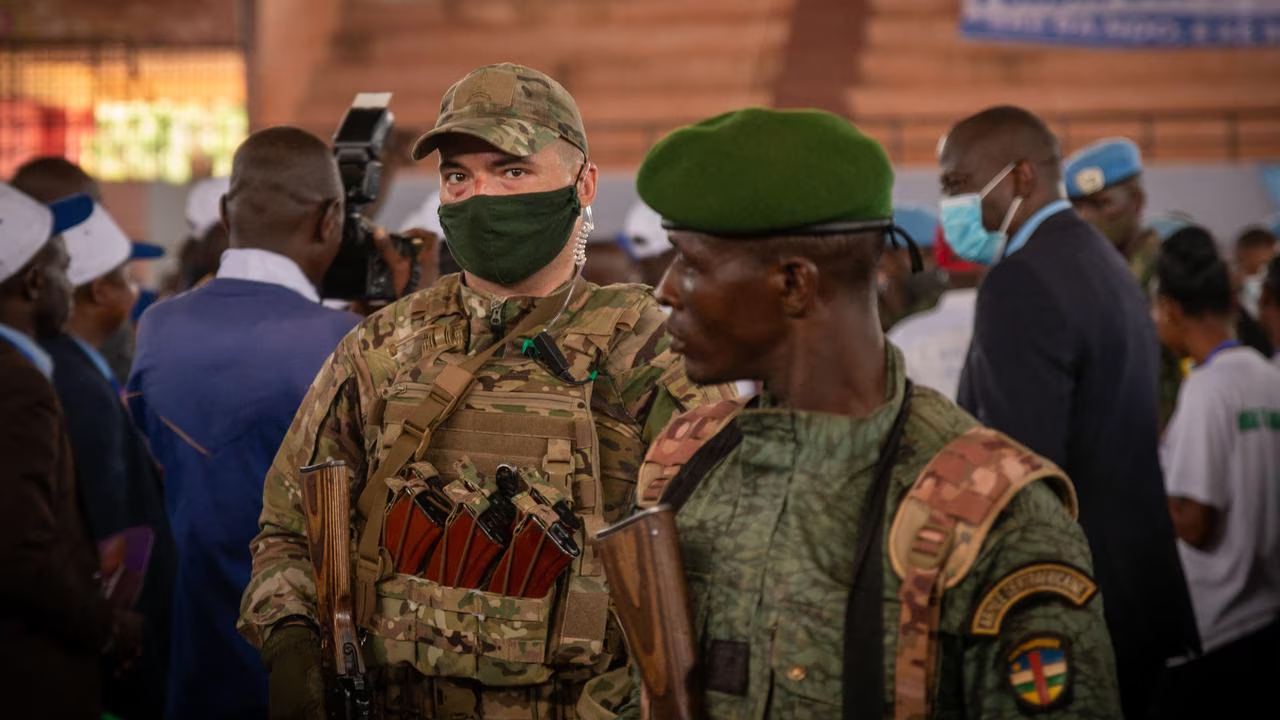
Russia’s foreign intelligence service, the SVR, has assumed control of the Wagner Group’s influence and disinformation operations across Africa following the death of its founder Yevgeny Prigozhin, according to a new investigative report.
Wagner, Russia’s most notorious mercenary network, built an extensive footprint across the continent, deploying fighters alongside government forces in countries such as Mali and Libya while running large-scale political influence and destabilisation campaigns. The group’s tactics have been widely condemned by human rights organisations.
After Prigozhin was killed in a plane crash in 2023, months after a failed mutiny against Moscow, the Russian defence ministry moved to reorganise Wagner’s military activities under a new umbrella structure known as the Africa Corps. However, investigators say the Kremlin’s intelligence services quietly took charge of Wagner’s political and influence machinery.
According to an investigation by a consortium of media and investigative organisations including Forbidden Stories, All Eyes On Wagner, the Dossier Center, openDemocracy and iStories, the SVR has taken over Wagner’s most effective influence tools. These operations are designed to advance Russia’s political and economic interests, conduct disinformation campaigns and marginalise rival actors.
“The SVR has now taken over the most effective tool of the Wagner Group,” the investigation concluded.
Nearly 100 consultants are said to work for Wagner’s influence branch, known internally as Africa Politology or “The Company.” Between 2024 and 2025, teams were deployed to a wide range of countries, including Angola, Argentina, Bolivia, Burkina Faso, Chad, Ghana, Libya, Mali, Niger and Sudan. Additional operations were identified in Madagascar, Zimbabwe, Egypt, Cameroon, Benin and Namibia.
The investigators say the SVR provides intelligence support, recruits local sources, facilitates access and places key agents of influence in strategic political and institutional positions.
The probe was launched after more than 1,400 pages of internal documents were anonymously sent to the editor-in-chief of The Continent, a pan-African media outlet. The leaked files include strategic plans, staff biographies, operational reports, financial records and summaries of disinformation campaigns conducted between January and November 2024.
Journalists verified the authenticity of 76 documents, concluding that the operations go well beyond conventional political consulting.
“These activities combine political influence, disinformation and close ties to security services,” the report said.
The investigation also highlights tensions within Russia’s security apparatus. While the defence ministry and the GRU military intelligence oversee some former Wagner operations, particularly in Mali, they have not fully absorbed Wagner-linked contractors in the Central African Republic. In that case, investigators say the SVR intervenes to prevent conflicts between Wagner’s activities and defence ministry objectives.
The report points to Mali as a key focus of SVR activity. There, intelligence officers reportedly supply Africa Politology with information on French and US military and political plans in the Sahel, while also providing diplomatic backing for a new regional alliance linking Mali, Burkina Faso, Niger and Guinea.
Following a series of coups between 2021 and 2023, Mali, Burkina Faso and Niger cut ties with former colonial power France, withdrew from the regional bloc ECOWAS and formed the Alliance of Sahel States (AES) in 2023. Investigators describe the creation of the AES as a major strategic gain for Moscow.
“That’s a significant political win,” said Lou Osborn, a co-author of the investigation, adding that Russian influence efforts have been particularly effective in the politically fragile Sahel region.
The journalists also uncovered a network of shell companies used to channel SVR funding to Africa Politology. They estimate the budget for influence operations between January and October 2024 at around $7.3 million, or roughly $750,000 per month.
Despite the scale of the operation, the investigators argue that results have been mixed.
“Russia is playing the long game, but the results are not always quick to materialise,” the report said, noting that many cooperation agreements signed across Africa have yet to translate into profitable or sustainable ventures.