
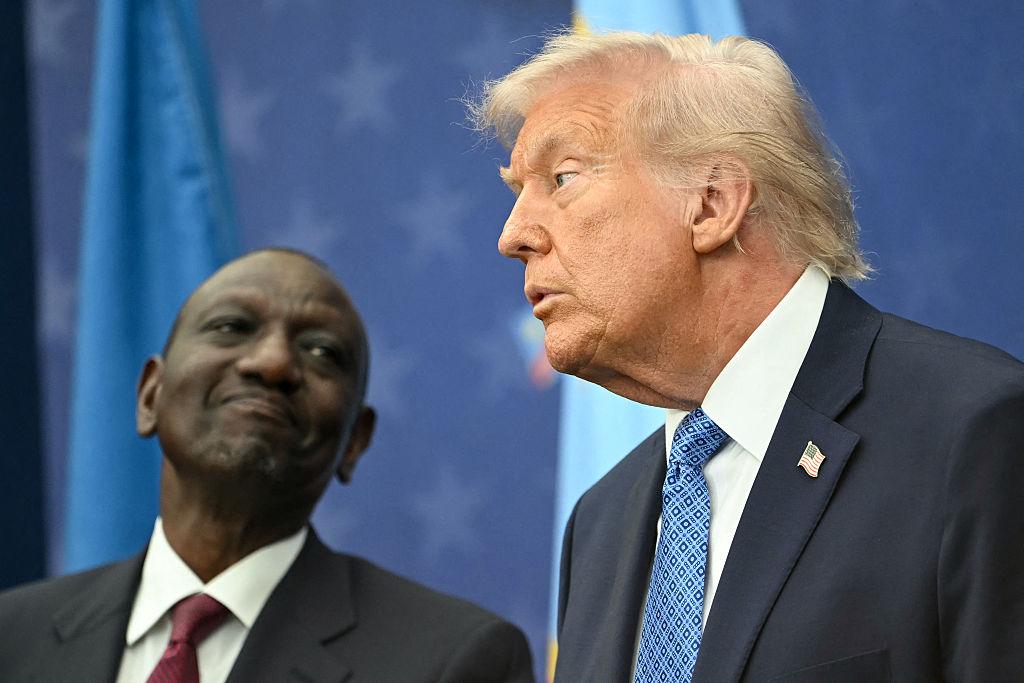
Kenya is close to reaching a critical minerals agreement with the United States that would allow the country to process strategic resources at home, President William Ruto said on the sidelines of the G7 summit.
Speaking to Reuters in Evian-les-Bains, France, Ruto said the planned deal would cover rare earths and other minerals considered vital for clean energy, advanced technology and defence industries.
“We have agreed that the minerals will be processed in Kenya,” Ruto said after meetings with G7 leaders, including U.S. President Donald Trump. “We’ve agreed with them on what is mutually beneficial between Kenya and the United States.”
The agreement comes as African governments increasingly push to retain more value from their natural resources, moving away from the long-standing model of exporting raw minerals for processing abroad.
Ruto said Kenya wanted partnerships based on industrial development, jobs and shared returns, not extraction.
“These natural resources can no longer be exported and processed elsewhere. They have to be processed in-country and in-continent,” he said. “We have to create value out of them.”
Kenya has untapped deposits of niobium, lithium, graphite, copper, nickel and rare earths, placing it within a wider global race for access to minerals needed for batteries, renewable energy systems, electronics and military technologies.
Western governments have been seeking to reduce reliance on China, which dominates many parts of the critical minerals supply chain. G7 leaders agreed this week to deepen coordination on mineral stockpiles and supply security, including through a new platform involving the International Energy Agency.
Ruto said African countries should not be forced to choose between Washington and Beijing, but should instead pursue partnerships that serve their own economic priorities.
“There are opportunities for everybody,” he said, noting that African countries had recently expanded trade ties with China and also wanted deeper engagement with the United States and Europe.
The Kenyan president also used the G7 summit to call for a broader reset in relations between Africa and wealthy economies, saying the continent wanted investment rather than aid.
“We are going to reject any relationships that are based on extraction of our natural resources,” he said.
Ruto said Africa’s biggest challenge was not a shortage of capital, but the barriers that prevent governments and institutions from accessing it at affordable rates. He pointed to pension funds, insurance assets and reserves across the continent as potential sources of financing if supported by guarantees and risk-sharing mechanisms.
He said G7 leaders had shown support in principle for strengthening African financial institutions, including the African Trade & Investment Development Insurance agency, known as ATIDI.
“Africa is not a problem to be solved,” Ruto said. “It is an opportunity that can be harnessed for global progress.”