
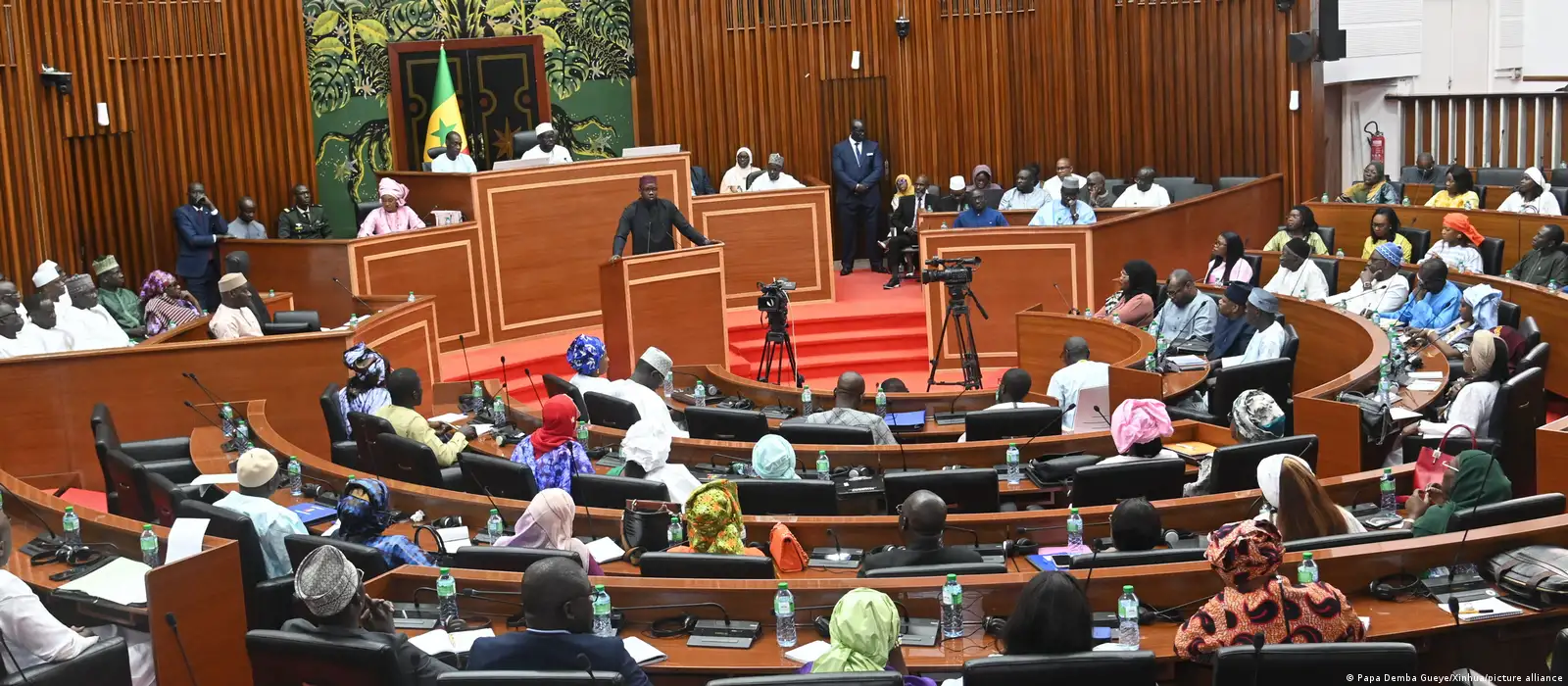
A fierce political tempest has engulfed Senegal after parliament passed a contentious constitutional reform aimed at diminishing presidential authority.
The legislative overhaul, spearheaded by parliamentary leader Ousmane Sonko, seeks to aggressively curtail the powers of President Bassirou Diomaye Faye.
Outside the National Assembly in Dakar, angry demonstrations erupted into violence as security forces deployed tear gas against civilian protesters.
Inside the chambers, the atmosphere fractured completely when opposition lawmakers boycotted the vote and stormed the podium in chaotic defiance.
The ruling PASTEF party successfully pushed the bill through, yet their legislative victory was abruptly halted by a presidential blockade.
Refusing to sign the sweeping amendments into law, President Faye counterattacked by demanding a nationwide referendum on the matter.
This dramatic confrontation exposes a bitter, deeply personal rivalry between Faye and Sonko, who originally swept into power as allies.
The proposed text strips the executive branch of traditional privileges, rebalancing governance by shifting substantial oversight to the National Assembly.
Analysts warn this structural deadlock threatens to paralyze the state, creating an unpredictable, dual-headed system of fractured authority.
Citizens now prepare to cast their ballots, holding the ultimate power to reshape Senegal’s democratic landscape at the ballot box.