
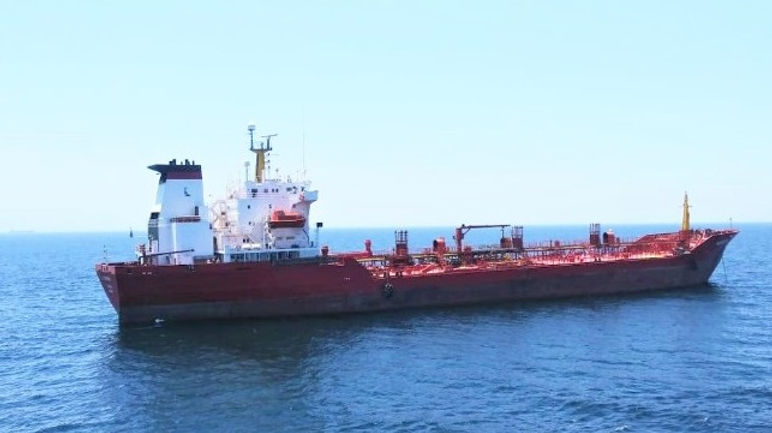
An oil tanker under U.S. sanctions over allegations that it transported Iranian petroleum products has been seized off Yemen and diverted toward Somalia, becoming the latest vessel targeted in a sharp resurgence of Somali piracy.
The Eritrea-flagged Sibu 1 was boarded on Thursday by six armed individuals, according to the United Kingdom Maritime Trade Operations, or UKMTO.
The tanker was sanctioned by the U.S. Treasury in December over allegations that it formed part of a so-called shadow fleet used to move Iranian petroleum products in breach of U.S. sanctions.
The attack marks at least the 13th vessel targeted this year off Somalia or in the Gulf of Aden, according to International Maritime Bureau data and UKMTO reports. Only five attacks were recorded in the region during all of 2025.
The latest seizure is adding to concerns that Somali piracy, once largely suppressed by international naval patrols, is again becoming a serious threat to commercial shipping in the western Indian Ocean.
Somali pirates carried out hundreds of attacks between 2008 and 2014, creating a major maritime security crisis and costing the global economy billions of dollars through disrupted trade, higher insurance costs and ransom payments.
A coordinated international naval response sharply reduced piracy, while another wave of hijackings in 2023 and 2024 also subsided following increased maritime patrols.
Security analysts, however, say piracy was never fully eliminated.
“The piracy was always suppressed. It was never really fully eradicated,” said Timothy Walker, a senior researcher at the Institute for Security Studies in Pretoria.
Experts have linked the latest surge partly to the broader regional security environment, including the Iran conflict. Higher oil prices have made tankers more valuable targets, while naval forces that once focused heavily on piracy have increasingly been deployed toward the Strait of Hormuz and Red Sea amid threats involving Iran and Yemen’s Houthi movement.
Questions have also emerged over possible cooperation between Somali pirates and actors in Yemen after several recent attacks near the Yemeni coast.
However, the seizure of the Iran-linked Sibu 1 has cast doubt on suggestions of systematic cooperation between the Houthis and Somali pirates.
Jay Bahadur, co-director of the Scopus Insights consultancy, said the targeting of an Iran-linked vessel made him sceptical that the Houthis were directly behind the recent piracy wave.
He said there was nevertheless clear evidence of longstanding criminal networks connecting Somalia and Yemen, particularly through arms trafficking and human smuggling.
Those networks, analysts say, could provide Somali pirate groups with weapons, logistical support and access to regional smuggling routes even without direct political coordination with the Houthis.
The latest hijacking highlights how worsening insecurity around the Red Sea, Gulf of Aden and western Indian Ocean is creating new opportunities for pirate groups that had largely disappeared from major international shipping routes.