
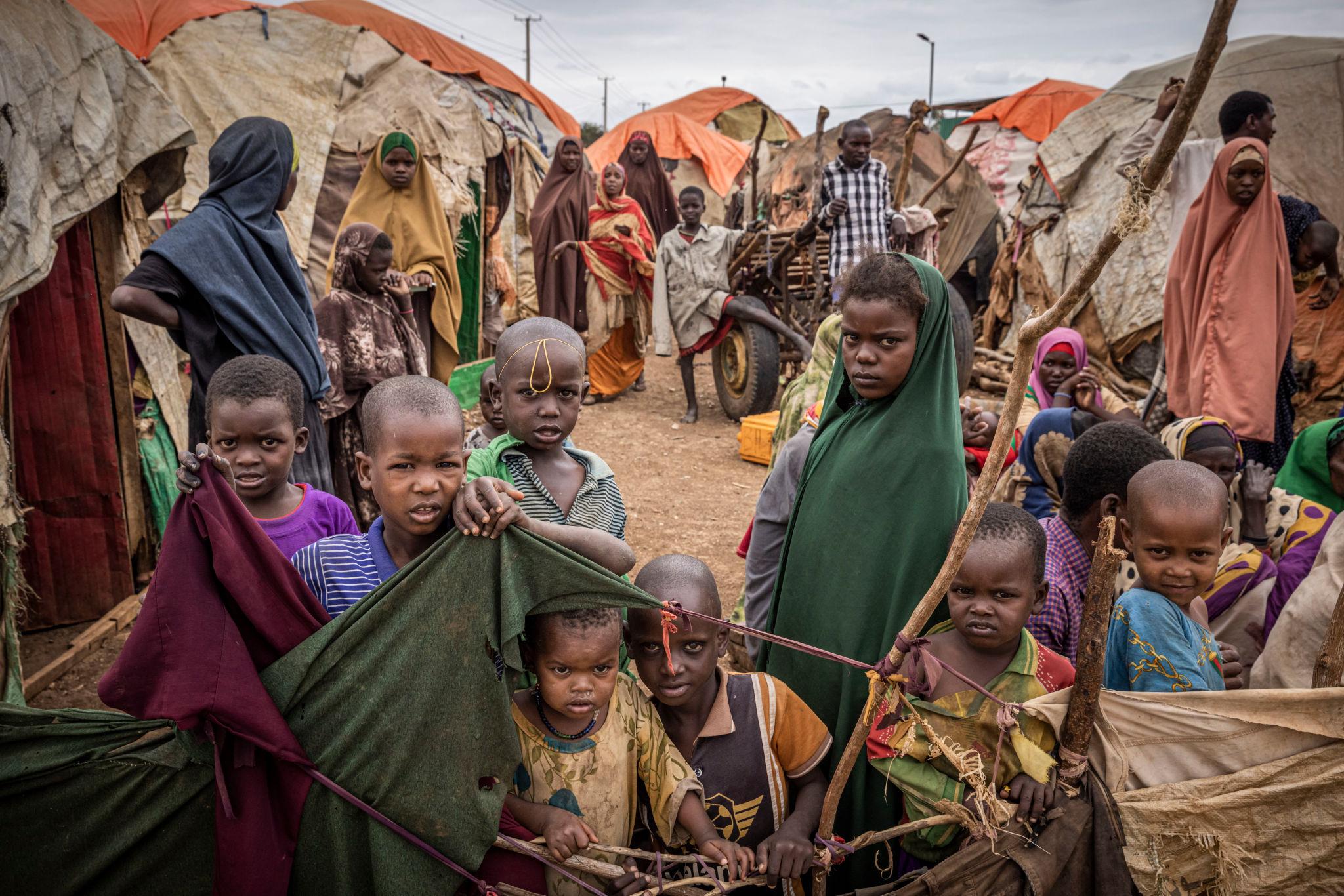
Somalia’s worsening hunger crisis is pushing growing numbers of children into acute malnutrition as international funding for nutrition programmes falls sharply, Médecins Sans Frontières (MSF) has warned.
The medical charity said on Tuesday that it had admitted around 22,000 people for nutrition treatment so far this year, an increase of more than 80% compared with the same period in 2025.
At the same time, humanitarian funding available for Somalia has fallen dramatically. MSF estimates that donors have provided roughly $300 million this year, compared with about $2.2 billion during the country’s 2022 drought emergency.
Mitchell Sangma, an MSF health adviser, said cuts by major donors were severely limiting the ability of aid organisations to respond.
According to Sangma, U.S. support to aid agencies operating in Somalia fell from about $70 million last year to no funding this year, while several other Western donors have also reduced contributions.
“We are seeing less interest from donor support” just as the scale of the crisis requires a major expansion in humanitarian assistance, Sangma said.
The scale of child malnutrition is particularly severe in Baidoa, one of Somalia’s largest centres for people displaced by drought and conflict.
An MSF survey conducted in July among 888 households across 14 displacement sites in the southwestern city found that one in four children screened was suffering from severe malnutrition.
Around one-third of families said they were surviving on just one meal a day, while only 2% reported being able to afford three meals.
Since the beginning of the year, MSF says it has screened more than 21,000 children under five in Baidoa, with around half showing signs of acute malnutrition.
Although acute malnutrition is less severe than the most dangerous forms of the condition, it can still cause rapid weight loss and become life-threatening without treatment.
Somalia’s food crisis has intensified following repeated failed rainy seasons that have damaged crops, killed livestock and depleted water supplies across large areas of the country.
Armed conflict and insecurity have added to the pressure, forcing communities from their homes, disrupting livelihoods and restricting access to food, healthcare and humanitarian assistance.
In February, Somalia’s government and the United Nations estimated that about 6.5 million people were facing acute hunger because of drought conditions.
More than half a million people were displaced during the first three months of 2026 alone, according to UN figures, with drought responsible for most of the movement. Women and children made up around 85% of those displaced.
The deteriorating situation has revived fears of another emergency similar to Somalia’s 2022 near-famine, when prolonged drought pushed millions towards severe hunger.
Aid organisations say the difference this time is that they are being asked to respond with far fewer resources.
“The world cannot wait for a famine declaration before acting,” said Allara Ali, MSF’s project coordinator in Somalia. “Action is needed now to prevent loss of lives.”