
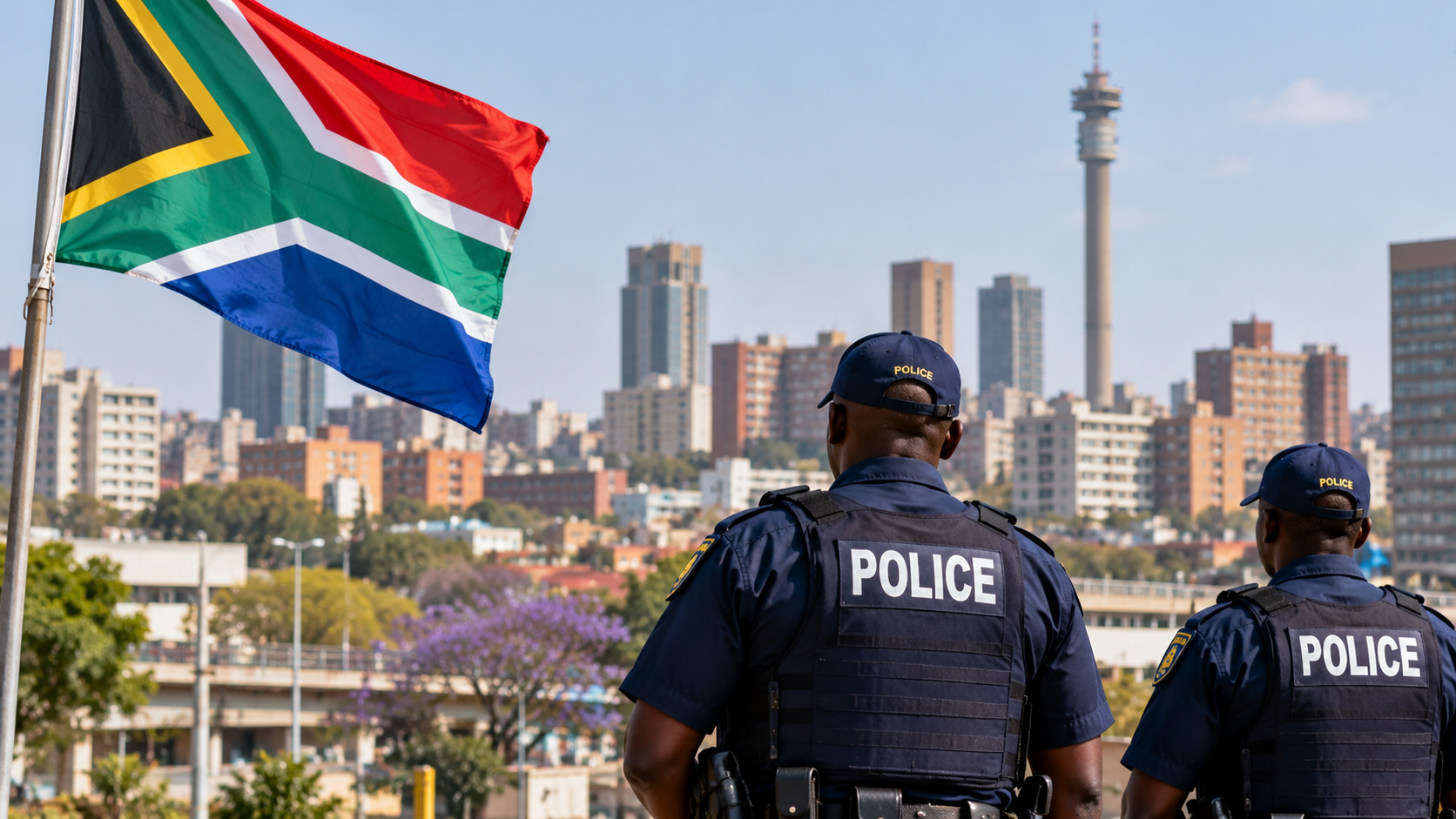
South Africa anti-immigrant protests have prompted heightened security in Johannesburg and Durban after two days of violence targeting foreign nationals, businesses and vehicles.
Police increased their presence in affected areas on Friday as demonstrators continued to gather. Some protesters set vehicles on fire, looted shops and attacked foreign nationals.
According to Africanews and AFP, police used tear gas and stun grenades to disperse crowds after protesters threw bricks and bottles.
The unrest followed confusion and false claims about a government directive concerning asylum applications.
South Africa anti-immigrant protests linked to asylum directive
The demonstrations erupted after South Africa’s Department of Home Affairs issued a directive to implement a Constitutional Court ruling.
The ruling requires authorities to allow asylum seekers to submit applications even if they entered the country without the necessary documentation.
However, misleading claims circulated that the government intended to automatically grant legal status to undocumented migrants.
These claims contributed to growing tensions as hundreds of people gathered at refugee reception centres to submit applications.
The directive did not provide automatic legal status to all undocumented migrants.
Nevertheless, anti-immigration campaigners criticised the government’s approach.
Community leader Tshepo Mposula accused authorities of prioritising foreign nationals over South African citizens.
Local councillor Mpumi Edward also opposed the documentation process, arguing that people who entered the country illegally should face legal consequences.
Police respond to violence in Johannesburg and Durban
Security forces stepped up patrols in areas affected by the demonstrations.
In Johannesburg’s Soweto area, protesters set vehicles alight during unrest linked to immigration concerns.
Reports also described attacks on foreign nationals and the looting of businesses.
Police deployed crowd-control measures to prevent further violence and disperse demonstrators.
The incidents raised concerns about the safety of migrant communities, particularly in neighbourhoods that have experienced previous outbreaks of anti-foreigner violence.
Authorities have faced growing pressure to maintain public order while addressing disputes over immigration policy.
South African government withdraws asylum directive
On Friday, the Department of Home Affairs withdrew the disputed directive following the public backlash.
Officials said they would prepare a revised plan that complies with the Constitutional Court’s requirements.
The decision came as the government faced criticism from anti-immigration groups and growing concerns about public safety.
Earlier in June, South African authorities announced measures to strengthen migration management.
These included tighter border controls, efforts to combat human smuggling and faster deportation procedures for people without permission to remain in the country.
The government must also ensure that its asylum procedures comply with constitutional and legal obligations.
Unemployment fuels immigration debate
South Africa has long attracted migrants from neighbouring African countries seeking employment and economic opportunities.
However, unemployment remains a major domestic challenge, with the country’s jobless rate exceeding 30%.
Economic pressures have contributed to tensions surrounding migration, particularly in communities facing poverty and limited access to services.
Some anti-immigration groups blame foreign nationals for competition over employment and public resources.
However, claims linking migrants to unemployment and shortages of public services are frequently disputed and require supporting evidence.
South Africa has experienced repeated outbreaks of violence against foreign nationals over nearly two decades.
These incidents have affected migrant communities and raised concerns among human rights organisations.
Immigration tensions rise ahead of elections
The latest South Africa anti-immigrant protests come ahead of local government elections scheduled for November 4.
Immigration policy, unemployment and public service delivery have become prominent issues in the political debate.
Anti-immigration organisations, including March and March, have organised demonstrations throughout the year.
The group previously announced an unofficial June 30 deadline for foreign nationals to leave South Africa.
Africanews reported that large numbers of migrants left the country amid the resulting tensions.
With security reinforced in Johannesburg and Durban, attention is now turning to whether the government’s revised asylum procedures can address legal requirements while reducing public tensions.