
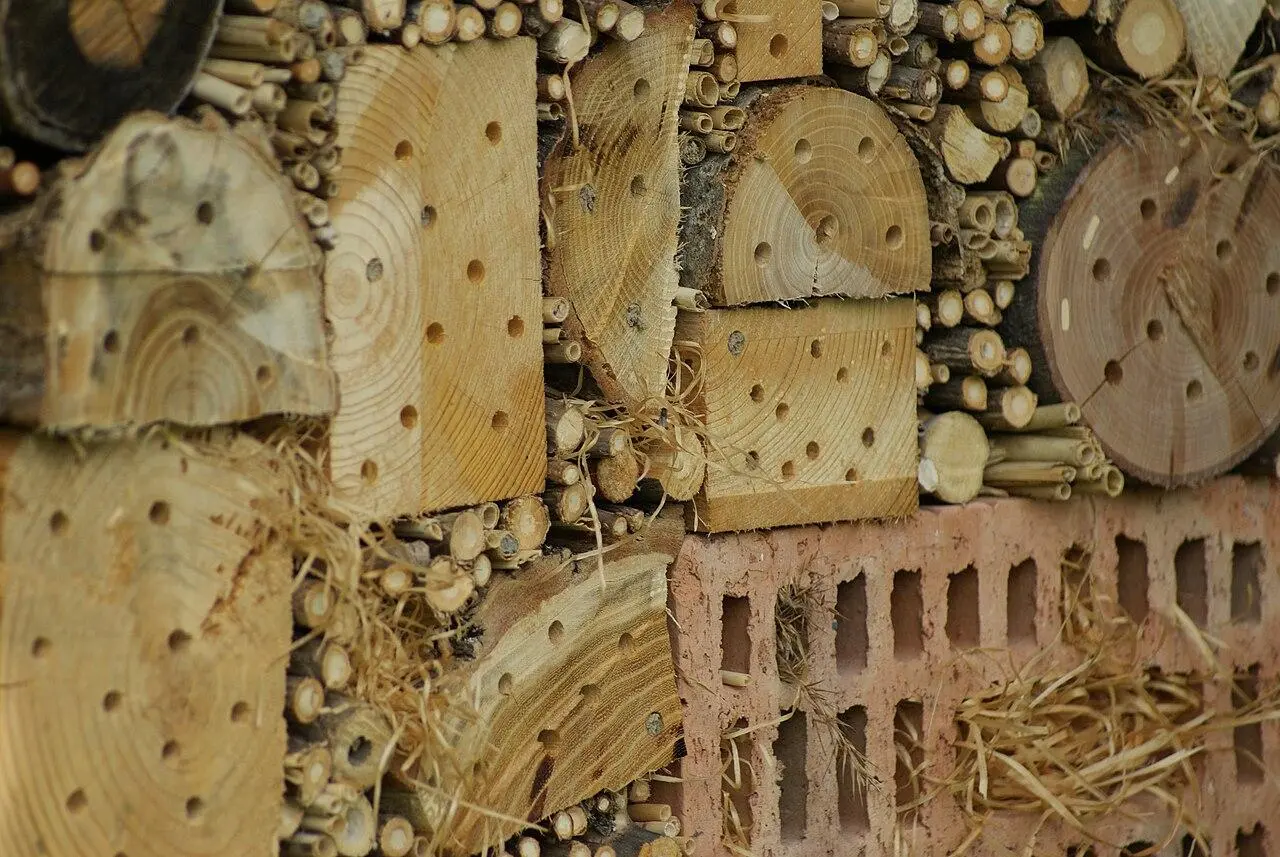
A research project in South Africa is using miniature bee hotels to study urban biodiversity and help residents reconnect with nature.
The initiative, known as UrbanBEE, brings together hundreds of volunteers across Johannesburg and Cape Town.
According to Africanews, with additional reporting from the Associated Press (AP), participants install small wooden shelters for solitary bees and regularly photograph their occupants.
Researchers use these observations to study how different bee species adapt to urban environments.
Tiny bee hotels provide nesting spaces
Unlike honeybees that live in colonies, most of the world’s more than 20,000 known bee species are solitary.
South Africa alone is home to approximately 1,300 bee species. Many nest underground, inside hollow plant stems or in small cavities in wood.
The bee hotels provide artificial nesting spaces through small holes drilled into untreated wooden blocks.
Different species also leave distinctive signs of their presence.
For example, leafcutter bees use leaves and flower petals to seal their nests. Other species use mud or similar materials.
Sage Naidoo, who coordinates UrbanBEE’s South African campaign at the University of the Witwatersrand, said the project aims to improve understanding of urban bee diversity.
Bringing communities closer to nature
The initiative also encourages residents to pay greater attention to their natural surroundings.
Volunteers experiment with different locations for their bee hotels, monitor their occupants and share observations with researchers.
Some participants have also introduced more flowering plants into their gardens to provide food for pollinators.
Meanwhile, the project has helped create a community of residents interested in protecting urban biodiversity.
Through citizen science, participants contribute to research while learning more about the insects that inhabit their neighbourhoods.
From South Africa to Europe
UrbanBEE developed from an earlier research initiative involving 347 Johannesburg residents during the pandemic.
The expanded programme receives funding through the European Union-backed Biodiversa+ partnership.
It now includes parallel studies in Budapest, Turin and Vienna.
By comparing observations across African and European cities, researchers hope to understand how climate, vegetation and urban development influence bee diversity.
The project also explores how public participation in scientific research can strengthen appreciation for nature.
Through these miniature shelters, South African residents are discovering how small changes to everyday surroundings can help support urban wildlife.