
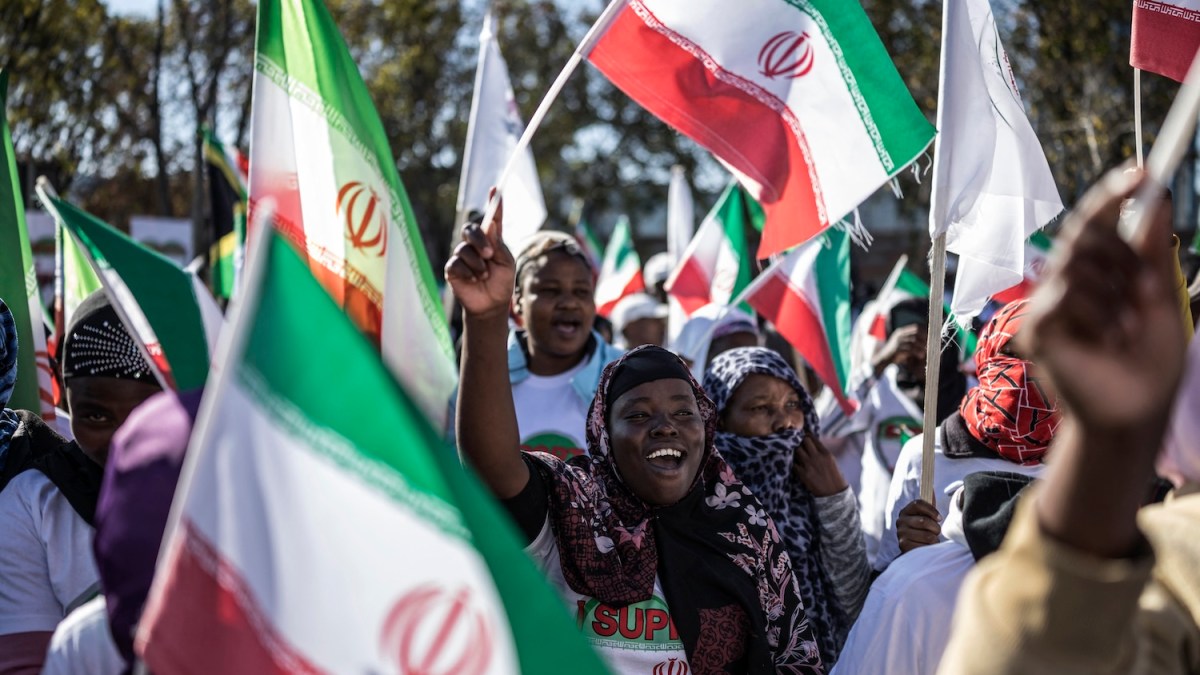
South Africa has rejected calls from Washington to sever ties with Iran, with a senior government official saying Pretoria will not allow major powers to dictate its foreign policy despite efforts to repair strained relations with the United States.
In an interview over the weekend, Zane Dangor, director-general of South Africa’s Department of International Relations and Cooperation, dismissed suggestions from the newly appointed U.S. ambassador that Pretoria’s ties with Tehran are obstructing stronger relations with Washington.
Dangor said South Africa sees no reason to cut diplomatic relations with Iran, even as tensions rise during the ongoing U.S.–Israeli war with Tehran.
“We have no reason to cut ties with Iran,” Dangor said, stressing that while Pretoria has criticised some Iranian actions, including a crackdown on protesters and attacks on neighbouring countries, it will not be drawn into geopolitical blocs.
“We cannot be pulled into the sort of sphere-of-influence politics that great powers want to pull us into — and that in this instance includes the United States,” he added.
The comments come after newly appointed U.S. Ambassador Leo Bozell reportedly said South Africa’s relationship with Iran could hinder closer ties with Washington.
Dangor rejected several other issues raised by the Trump administration, including pressure for Pretoria to withdraw its genocide case against Israel at the International Court of Justice over the Gaza war.
“That is not even on the table,” Dangor said, noting that the matter is a judicial process rather than a diplomatic negotiation.
Relations between South Africa and the United States have deteriorated sharply during U.S. President Donald Trump’s second term. In August, Washington imposed a 30% tariff on South African imports — a move economists warn could cost tens of thousands of jobs in a country where roughly one-third of the population is unemployed.
Trump has also accused South Africa’s Black-led government of persecuting the country’s white minority, repeating claims widely circulated in far-right circles about land seizures from white farmers — allegations that South African officials strongly deny.
Dangor said Pretoria remains open to improving relations with Washington but insisted discussions should focus on areas of mutual interest.
“Let’s engage about areas we agree on,” he said.
The South African official also rejected U.S. pressure to modify domestic laws designed to address the legacy of apartheid, including Black economic empowerment policies that require minimum levels of Black ownership and employment in businesses.
“We’re not going to let domestic issues that they’ve put on the table become part of that equation,” Dangor said.
He also criticised a U.S. programme aimed at processing up to 4,500 refugee applications per month from white South Africans, saying the initiative amounts to preferential immigration rather than legitimate refugee protection.
“They should do it through the normal immigration channels. They cannot use the moniker of ‘refugee’,” Dangor said, adding that this was why a Kenya-based refugee processing organisation had been denied entry to South Africa.