
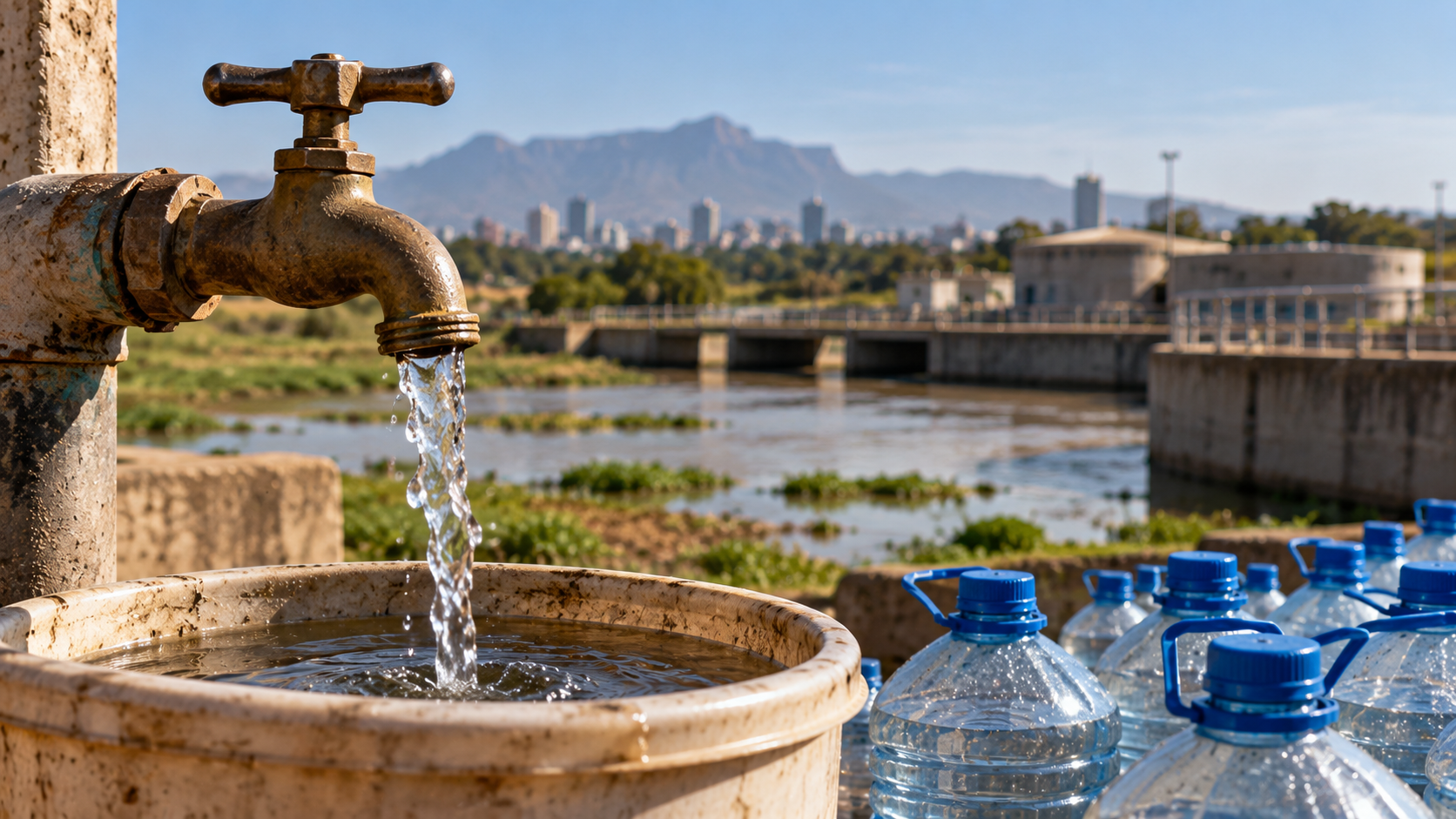
More than 500 people have fallen ill in South Africa amid concerns over contaminated drinking water in two separate outbreaks.
Health authorities reported 408 cases in communities east of Pretoria, where residents were warned to stop using tap water. Meanwhile, at least 111 university students in the Eastern Cape have received treatment for gastrointestinal illness.
According to Africanews and The Associated Press, the illnesses have caused symptoms including stomach cramps and diarrhoea.
Officials have confirmed serious water treatment failures near Pretoria. However, the cause of the university outbreak remains under investigation.
Contaminated water sickens 408 near Pretoria
Authorities in Tshwane, which includes Pretoria and surrounding communities, warned residents against using tap water after hundreds became ill.
Health facilities treated 408 people, including many young children.
Most of those affected were children under four years old.
Investigators linked the outbreak to contaminated water supplied by a treatment plant serving communities east of the capital.
Officials confirmed that the plant had operated without chlorine treatment for approximately three weeks.
Chlorination helps eliminate harmful microorganisms from drinking water.
However, municipal authorities said they had experienced difficulties obtaining chlorine from their regular supplier.
As a result, untreated water continued reaching households.
Sewage pollution raises further concerns
The affected treatment plant draws water from the Bronkhorstspruit River.
According to officials, the river suffers from serious sewage contamination caused by poorly functioning wastewater treatment facilities upstream.
The lack of chlorination increased the risk of unsafe water reaching residents.
An initial investigation also found that municipal officials failed to inform communities about the problem.
Tshwane Mayor Nasiphi Moya said residents had not received adequate warnings about the untreated water.
She explained that the water was unsafe for drinking, cooking, washing or bathing, even after boiling.
The findings have raised concerns about oversight and communication within the municipality.
Emergency water supplies delivered to residents
Authorities began distributing emergency water supplies on Wednesday.
Municipal tankers delivered water to affected communities, while humanitarian organisation Gift of the Givers provided bottled water.
The emergency response aims to reduce further exposure while authorities address the contamination.
Meanwhile, several political parties have demanded accountability.
Some have called for Mayor Moya to resign and for officials responsible for the failures to be dismissed.
The incident has renewed debate over South Africa’s ageing water infrastructure and municipal service delivery.
Water quality problems have affected several communities across the country in recent years.
Over 100 university students fall ill
A separate outbreak has affected students at Rhodes University in South Africa’s Eastern Cape province.
The university reported that at least 111 students had received treatment for gastrointestinal illness.
Some students experienced severe symptoms and required hospital care.
However, university spokesperson Olwetu Gwanya said those admitted to hospital had since returned to campus.
University officials and water authorities are investigating the cause.
They suspect water quality may have contributed to the illnesses, although this has not been confirmed.
The university has urged students and staff to follow precautions while investigations continue.
Health officials urge safe water practices
Rhodes University advised students to drink bottled water or water that has been boiled and cooled.
It also recommended using safe water when preparing food and brushing teeth.
Students were advised to avoid ice and uncooked foods washed with untreated water.
Regular handwashing with soap was also encouraged.
However, the precautions differ from those issued near Pretoria.
In Tshwane’s affected communities, authorities specifically warned that the untreated tap water should not be used for drinking, cooking, washing or bathing, even after boiling.
Residents there should continue following local emergency water guidance.
South Africa faces renewed water safety concerns
The two outbreaks have highlighted ongoing concerns about drinking water safety in South Africa.
Near Pretoria, officials have confirmed failures in water treatment and public warnings.
In the Eastern Cape, investigators are still working to determine what caused the university illnesses.
Together, the outbreaks have affected at least 519 people.
Authorities are continuing emergency responses and investigations as communities seek assurances about the safety of their water supplies.
The incidents have also increased pressure on local governments to strengthen water treatment, infrastructure maintenance and public health monitoring.