
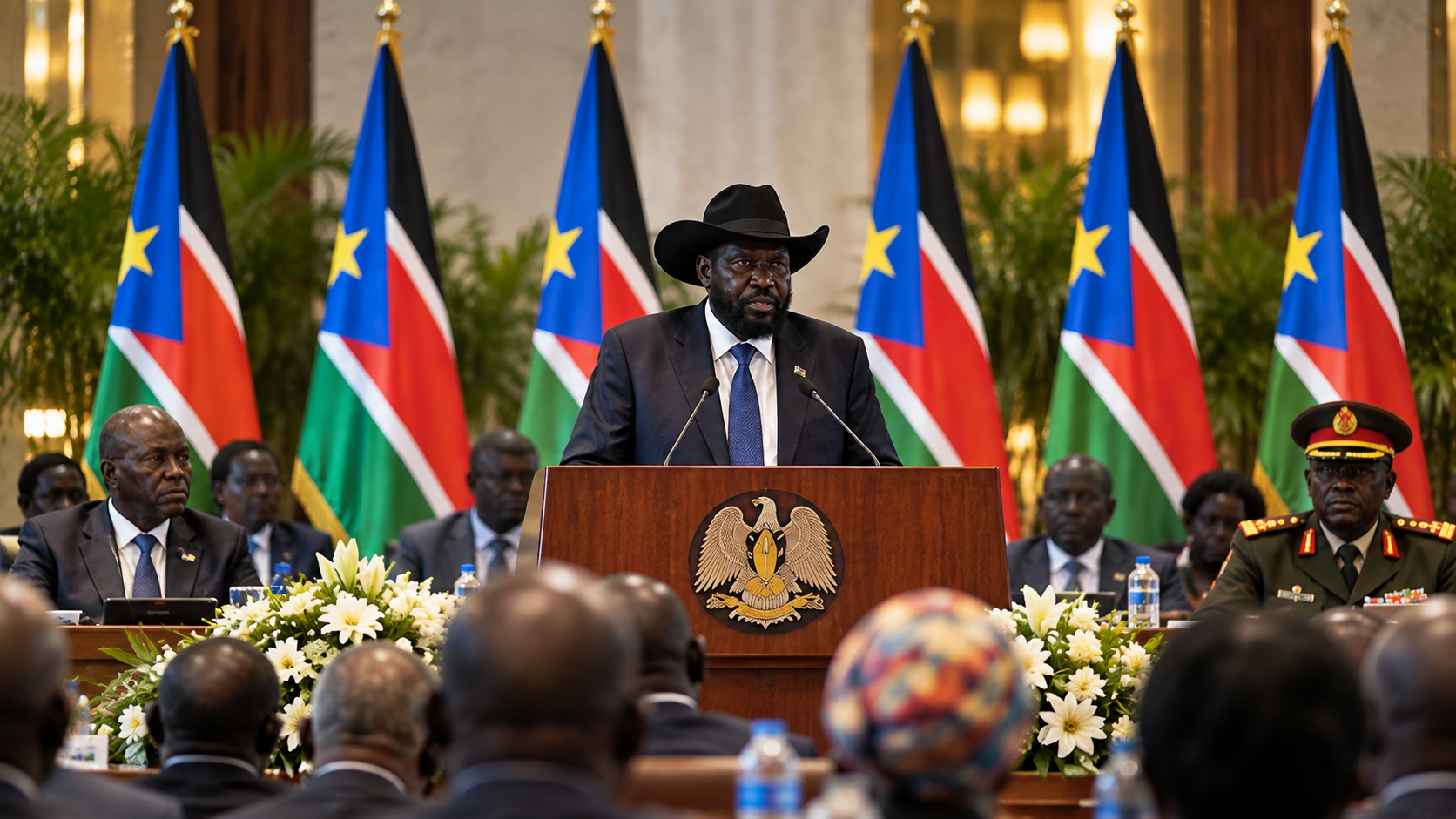
South Sudan has opened an inter-party dialogue ahead of elections scheduled for December 22, as the country prepares for what would be its first national vote since independence.
President Salva Kiir opened the talks in Juba on September 24, two days after dissolving the transitional unity government.
Kiir said the dialogue should allow political parties and other stakeholders to discuss election-related issues and help the country move towards a peaceful electoral process.
However, major opposition groups have challenged the government’s approach, raising questions about whether credible elections can be organised within the remaining three months.
South Sudan election dialogue begins in Juba
The talks brought together political parties, members of the caretaker government, former vice presidents, diplomats, religious leaders and civil society representatives, according to South Sudan’s presidency.
Kiir described the dialogue as an important step towards elections and the conclusion of the transitional period.
However, he warned political parties against using the talks to change or delay the existing electoral roadmap, according to Radio Tamazuj.
The general election is currently scheduled for December 22.
If held, it would be South Sudan’s first national election since the country gained independence in 2011.
Kiir dissolves transitional government
The dialogue follows a major restructuring of South Sudan’s political system.
On September 22, Kiir dissolved the Transitional Government of National Unity and appointed a caretaker administration.
The transitional government had been established under the 2018 peace agreement.
The dissolution also removed the vice presidents from office, including former First Vice President Riek Machar.
Kiir remains president during the caretaker period until an elected president takes office, according to the presidential order.
Reuters reported that the move followed amendments to South Sudan’s election law that removed previous requirements linking elections to the completion of a permanent constitution and a national census.
Opposition groups challenge election process
The government’s election plans have faced opposition.
Major opposition groups, including those associated with Machar, have rejected the government’s approach, according to Africanews.
Critics have questioned whether South Sudan can organise credible elections within three months.
Concerns include security conditions, political participation and the absence of a permanent constitution.
These concerns have become particularly important as the country approaches a vote that has already faced repeated delays.
Kiir says transition is ending
Kiir has maintained that South Sudan should proceed towards the December election.
His government presents the inter-party dialogue as an opportunity for political actors to discuss outstanding election-related issues without changing the timetable.
Opposition groups and other critics, however, continue to question whether the current conditions provide enough political space for a credible vote.
The dialogue therefore comes at a critical point for South Sudan.
The coming months will determine how the electoral process develops ahead of the planned December 22 vote.