
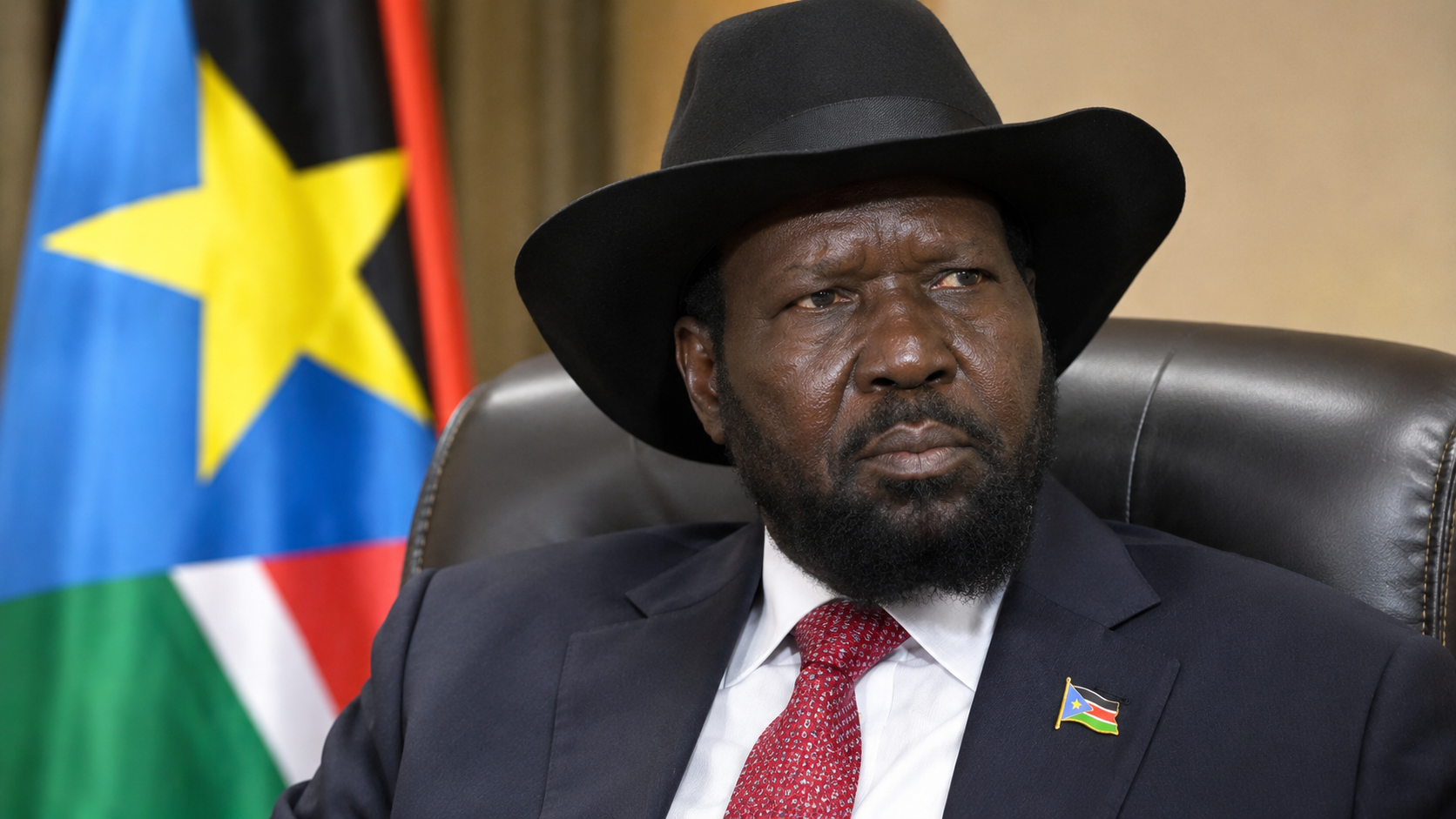
South Sudan has begun voter registration ahead of its first general elections since gaining independence in 2011, marking a significant step in the country’s long-delayed democratic transition.
Registration opened on Saturday, November 14, with authorities urging eligible citizens to participate despite ongoing political tensions and security concerns.
The elections are officially scheduled for December 22, although local media have reported a possible postponement until February 11.
According to Africanews, citing AFP, electoral authorities have not confirmed the reported change in the voting date.
The registration process comes after years of delays, with elections initially planned for 2015 before being postponed repeatedly.
Registration opens across South Sudan
The National Electoral Commission announced that voter registration will continue until November 28.
Commission chairman Gabriel Bol Deng Majok said the exercise would cover all 10 states and three administrative areas.
A total of 3,161 registration centres have been established, while more than 22,000 personnel have been recruited to support the process.
Speaking at a news conference on Friday, Deng said election equipment had already reached the capitals of the 10 states and three administrative areas.
However, delivering materials to more remote registration centres could take several additional days.
Consequently, some communities may have less time to register before the deadline.
Deng encouraged eligible South Sudanese citizens to participate and called on political parties, civil society organisations and community leaders to support the exercise.
Lack of identification poses major challenge
One of the biggest obstacles facing South Sudan’s voter registration process is the widespread lack of official identification.
According to World Bank figures cited by Africanews, approximately 90% of the country’s estimated 15 million residents lack state-recognised identification documents.
This could complicate efforts to register eligible voters, particularly in rural communities.
However, electoral authorities say alternative identification procedures are available.
Deng explained that traditional community leaders, including paramount chiefs, can help verify the identities of residents without official documents.
Special identification forms will also be used during registration.
After the November 28 deadline, the commission plans to publish a preliminary voter register.
Political tensions threaten election preparations
South Sudan’s election preparations are taking place amid continuing violence and political uncertainty.
President Salva Kiir’s main political rival, former Vice President Riek Machar, has been under house arrest since March 2025.
Machar faces accusations of crimes against humanity, according to the supplied Africanews report.
The political rivalry between Kiir and Machar has shaped South Sudan’s troubled transition since independence.
Fighting between forces aligned with the two leaders escalated into a civil war between 2013 and 2018.
The conflict killed more than 400,000 people and displaced millions.
Although a peace agreement helped establish a transitional political framework, implementation has faced repeated setbacks.
Questions remain over election credibility
Regional and international partners have expressed concerns about South Sudan’s readiness to conduct credible elections.
Security challenges, political divisions and logistical difficulties remain significant obstacles.
Furthermore, uncertainty over the election date has raised additional questions about the electoral timetable.
While December 22 remains the officially reported date, local media have suggested voting could be moved to February 11.
The electoral commission has not confirmed that reported postponement in the information provided.
Nevertheless, the opening of voter registration represents an important milestone for a country that has never held a general election since independence.
The coming weeks will test whether South Sudan can complete registration, resolve outstanding challenges and move towards its long-awaited national vote.