
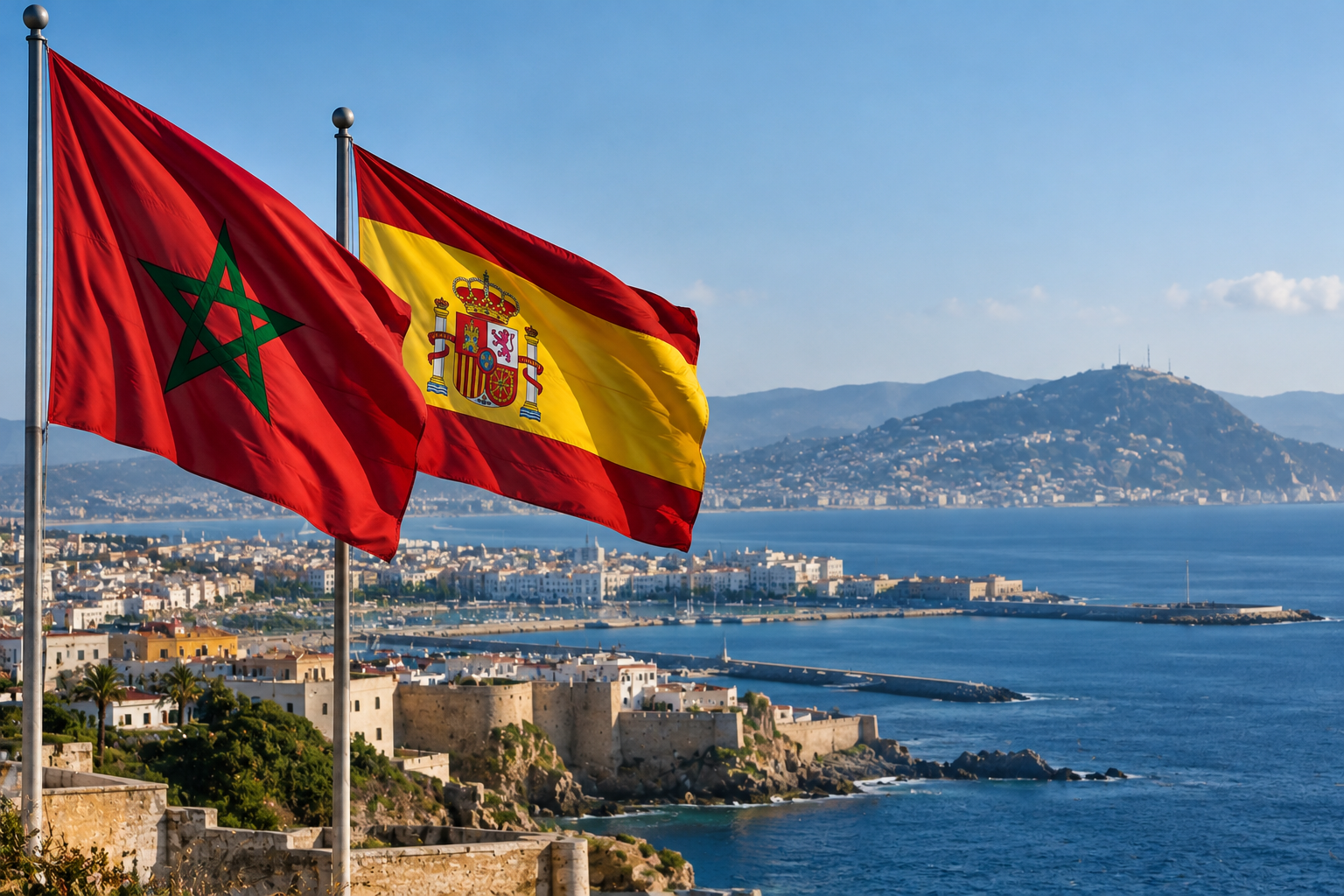
Spain’s King Felipe VI has called for stronger relations with Morocco during a visit to Ceuta, as disagreements over migration and territorial sovereignty continue to affect ties between the two neighbouring countries.
Accompanied by Queen Letizia, the Spanish monarch visited the North African territory following a major migration crisis that left thousands of people stranded and raised concerns about border security.
According to Africanews and AFP, Felipe emphasised the importance of cooperation with Morocco while reaffirming Spain’s position on Ceuta and Melilla.
The visit comes ahead of Spain’s general election scheduled for November 29, with migration becoming an increasingly prominent political issue.
Spain’s king calls for cooperation with Morocco
During his visit, King Felipe VI stressed the importance of maintaining good relations between Madrid and Rabat.
He also reaffirmed Spain’s sovereignty over Ceuta and Melilla, two territories administered by Spain on the North African coast.
Morocco claims both territories, making their status a longstanding source of disagreement between the countries.
Despite these differences, Felipe called for continued diplomatic cooperation.
His remarks highlighted Spain’s efforts to maintain constructive relations with Morocco while defending its territorial position.
The royal visit was the first to Ceuta since 2007, according to the report.
Ceuta migration crisis raises concerns
The visit followed a major migration crisis in Ceuta during the summer.
According to Africanews, more than 70,000 migrants entered the territory on July 30 and 31, 2026.
The report said many people subsequently returned to Morocco, while thousands remained in Ceuta under difficult conditions.
Some migrants were reportedly sleeping outdoors, including on beaches and city streets.
The crossings also resulted in deaths, highlighting the dangers faced by people attempting to reach Spanish territory.
Ceuta’s location on the North African coast has made it an important entry point for migrants seeking to reach Europe.
Morocco rejects accusations over migration
The migration crisis has also contributed to political disagreements between Spain and Morocco.
Some Spanish opposition politicians have accused Morocco of using migration as a means of applying political pressure.
Moroccan authorities have rejected these allegations.
Spanish Prime Minister Pedro Sánchez has also rejected accusations that Rabat deliberately used the migration situation for political purposes, according to the report.
Morocco’s King Mohammed VI has criticised political and media statements surrounding the crisis, warning against the exploitation of migration-related tensions.
He has maintained that cooperation between Morocco and Spain should not be influenced by political pressure.
The differing positions reflect the sensitivity of migration management in relations between the two countries.
Royal visit highlights migrants’ deaths
During their visit to Ceuta, King Felipe and Queen Letizia paid tribute to migrants who died while attempting to enter the territory.
The royal couple visited a cemetery where victims of dangerous border crossings were remembered.
Some migrants reportedly drowned while attempting to swim around barriers separating Ceuta from Morocco.
The visit drew attention to the human consequences of irregular migration and the risks associated with crossing heavily controlled borders.
Migration organisations have repeatedly raised concerns about the safety of routes connecting North Africa with Europe.
Migration remains a challenge for Spain and Morocco
Spain and Morocco maintain important economic, diplomatic and security relationships despite their disagreements over Ceuta and Melilla.
Cooperation on migration management remains a significant part of those relations.
The latest crisis has renewed debate over border controls, asylum procedures and the protection of migrants.
It has also highlighted the challenges facing African migrants seeking to reach Europe through North African transit routes.
With Spain preparing for a general election, migration is expected to remain a prominent issue in domestic political discussions.
For Morocco and Spain, the immediate challenge is to maintain cooperation while addressing disagreements over territorial sovereignty and the treatment of migrants.
Felipe’s visit signals Madrid’s intention to preserve diplomatic engagement with Rabat despite continuing tensions.