
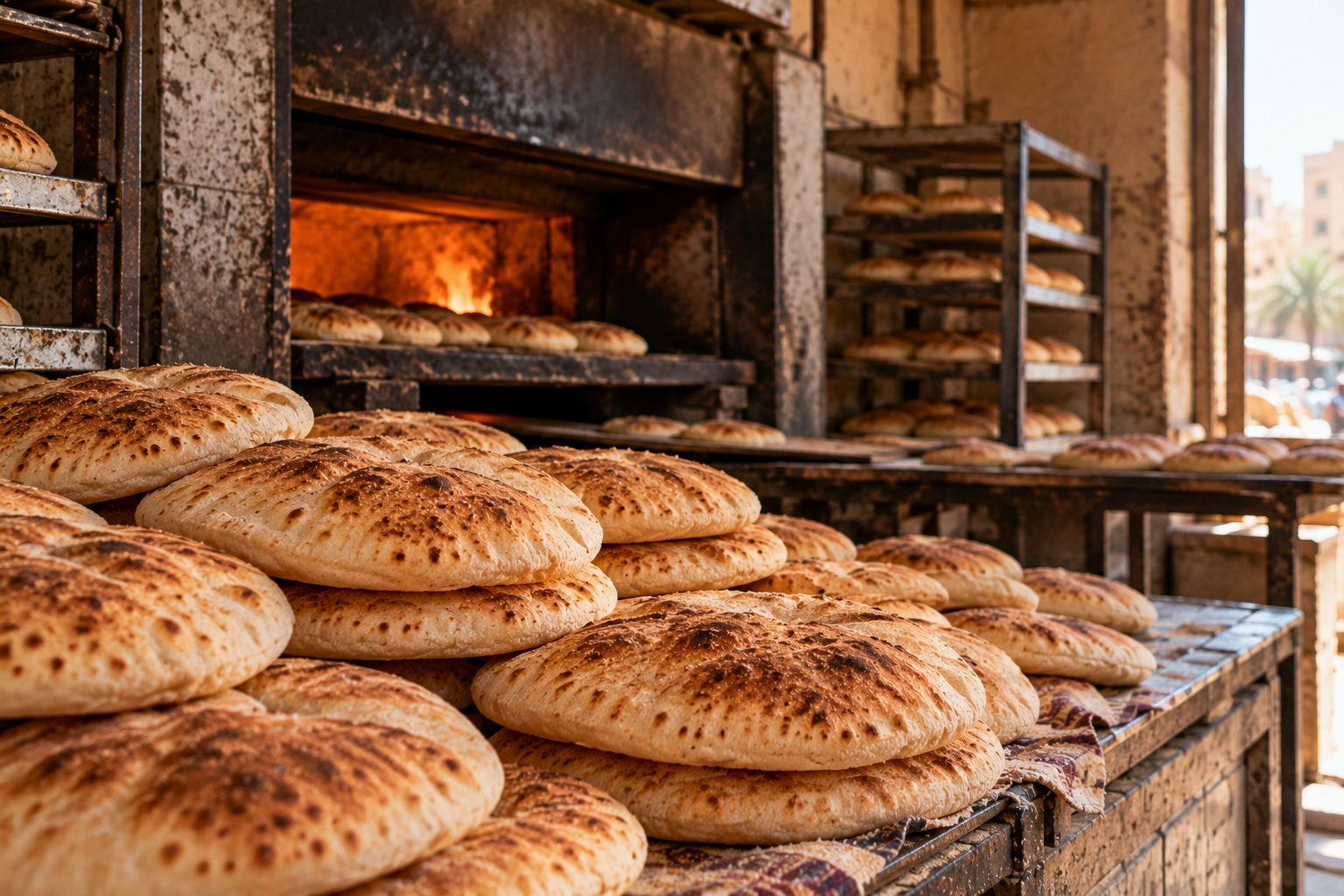
Sudan bread prices have risen sharply in parts of Khartoum, adding pressure on families already struggling with inflation, currency depreciation and the economic impact of the country’s prolonged conflict.
The price of a single loaf has reportedly reached 500 Sudanese pounds (about $0.06) in parts of the capital. Some bakeries began selling two loaves for 1,000 pounds (about $0.11) on Saturday, October 10.
The increases have prompted frustration among residents who say basic food items are becoming increasingly difficult to afford.
Bakery operators blame higher production costs, including flour, electricity, gas, cooking oil and labour.
The latest increases highlight the growing challenges facing households and small businesses as Sudan’s economic difficulties continue.
Sudan bread prices rise as bakery costs increase
Bakery owners say the rising cost of essential ingredients has made it increasingly difficult to maintain previous bread prices.
Issam Okasha, deputy head of the Khartoum Bakeries Union, said the price of a 25-kilogram sack of flour had increased from 87,000 Sudanese pounds (about $9.67) to 116,000 pounds (about $12.89) in less than two months.
Commercial yeast prices also reportedly climbed from 140,000 pounds (about $15.56) to 270,000 pounds (about $30) per carton.
Meanwhile, the cost of a container of cooking oil increased from 120,000 pounds (about $13.33) to 260,000 pounds (about $28.89).
The figures were reported by Sudan Tribune, which quoted Okasha on the rising cost of bakery supplies.
These increases have placed additional pressure on bakery operators, many of whom are struggling to cover operating expenses.
For consumers, higher prices mean that a larger share of household income must now be spent on bread and other everyday essentials.
Currency depreciation adds to economic pressure
Sudan’s weakening currency has contributed to rising prices across the economy.
The Sudanese pound has reportedly approached 9,000 to the US dollar on the parallel market, increasing the cost of imported goods and production materials.
The US dollar equivalents in this report are approximate calculations based on that parallel-market rate, rather than official bank exchange rates.
Wheat, fuel and other commodities have become more expensive as businesses face difficulties securing foreign currency.
The economic disruption has affected supply chains, transportation and commercial activity across several parts of the country.
Bread prices have also increased beyond Khartoum.
In Kosti, a city in White Nile state, bakeries reportedly began charging 2,000 Sudanese pounds (about $0.22) for five loaves.
Previously, three loaves were sold for 1,000 pounds (about $0.11).
The changes illustrate how rising production costs are affecting communities outside the capital.
Families face growing pressure over daily expenses
For many Sudanese households, bread remains an essential part of daily meals.
Even relatively small increases in its price can significantly affect families with limited or irregular incomes.
In Omdurman, a resident told local outlet Ultra Sudan that purchasing bread for an average-sized family could cost approximately 10,000 Sudanese pounds (about $1.11) each day.
At the same estimated exchange rate, this would amount to around $33 over 30 days for bread alone.
The resident said households were attempting to reduce consumption to manage their expenses.
The latest increases have also raised concerns about the effectiveness of measures introduced to support bakeries.
In September, Khartoum authorities announced temporary exemptions from certain local government fees in an effort to help bakeries maintain earlier prices.
However, the continuing rise in ingredient and operating costs has made it difficult to prevent further increases.
The situation highlights the challenge of protecting consumers while allowing bakeries to remain financially viable.
Sudan’s food crisis remains severe
The rise in bread prices comes as millions of people across Sudan continue to face serious food insecurity.
United Nations agencies warned in May that approximately 19.5 million people were experiencing acute food insecurity.
The humanitarian situation has been worsened by prolonged fighting, widespread displacement, disrupted agricultural production and difficulties delivering assistance.
Communities in parts of Darfur and South Kordofan have faced particularly severe food shortages and famine risks.
The conflict between Sudan’s regular armed forces and the Rapid Support Forces, which began in April 2023, has damaged infrastructure and disrupted economic activity.
Millions of Sudanese have been forced from their homes, while many families have lost reliable sources of income.
Humanitarian organisations have repeatedly called for improved access to vulnerable communities and greater support for food assistance programmes.
Rising prices deepen Sudan’s economic challenges
Sudan’s bread price increases reflect broader economic difficulties that have affected businesses and households throughout the conflict.
Bakery operators face higher expenses, while consumers have fewer resources to absorb rising prices.
The country’s currency problems and disrupted supply chains have added further uncertainty.
The differences between official and parallel-market exchange rates also make it difficult to compare local prices directly with international costs.
Although a loaf of bread may cost only a few US cents at the reported parallel-market rate, its affordability depends on local wages, household income and the availability of essential goods.
Restoring economic stability will require improved access to basic commodities, functioning markets and sustained efforts to address the humanitarian crisis.
For Sudanese families, however, the immediate concern remains the rising cost of everyday necessities.
As bread becomes more expensive, households already facing financial hardship must make increasingly difficult decisions about how to meet their basic needs.