
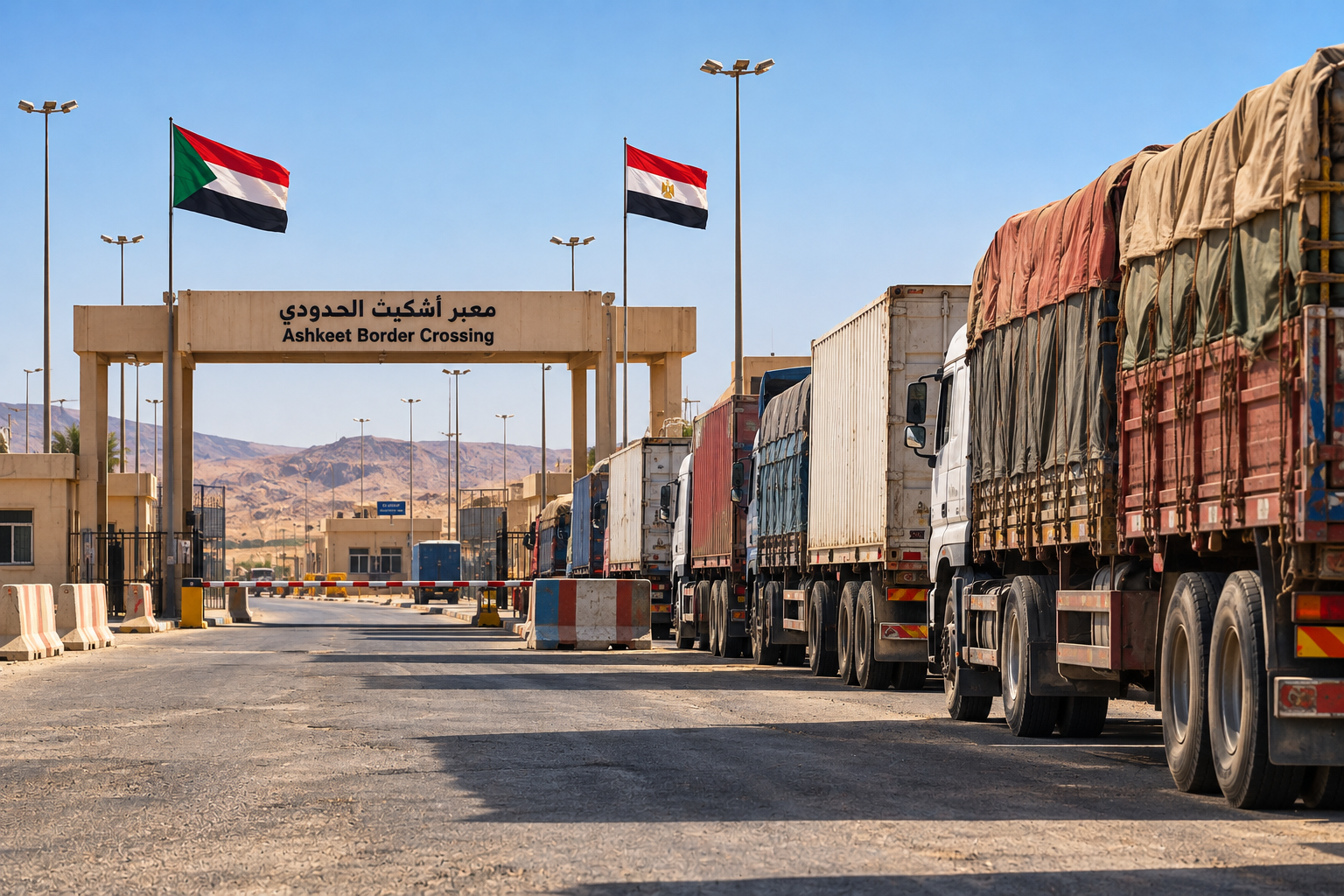
A widespread strike in northern Sudan has disrupted commercial operations at the Ashkeet border crossing with Egypt, as traders and transport workers protest import restrictions, customs fees and rising business costs.
The industrial action began on Sunday, October 11, in Wadi Halfa, where customs clearance agents, transport operators and workers involved in loading and unloading goods launched an open-ended strike.
According to local Sudanese media, protesters gathered outside the customs compound and blocked access roads, bringing freight operations to a halt.
The disruption has left trucks waiting along the border route and raised concerns about the movement of essential goods between Sudan and Egypt.
Why are workers striking at the Sudan-Egypt border?
The protesters are demanding changes to government policies they say have made cross-border trade increasingly difficult.
According to Radio Dabanga, their demands include lifting restrictions on imported goods, restoring personal imports and reducing taxes and road levies.
Traders argue that the existing measures have increased operating costs and weakened commercial activity in Wadi Halfa.
The city has long depended on trade and transport connections with neighbouring Egypt.
Local businesses, drivers and workers involved in customs clearance rely on the movement of goods through the border crossing.
Protesters say the restrictions threaten their livelihoods and the wider local economy.
Fruit and vegetable imports become major dispute
One of the main grievances concerns the withdrawal of a special import exemption previously granted to Wadi Halfa.
Under the earlier arrangement, traders could import vegetables and fruit from Egypt for sale within the city.
The exemption was intended to help meet local demand while limiting competition with agricultural producers in other parts of Sudan.
However, authorities have since withdrawn the arrangement.
Traders and residents say the decision has made it harder to obtain certain goods and maintain regular commercial activity.
The change has become a central issue in the ongoing strike.
Ashkeet crossing faces disruption
The Ashkeet border crossing, known as Qustul on the Egyptian side, is an important gateway for commercial and passenger movement between Sudan and Egypt.
The crossing serves freight companies, traders and Sudanese citizens travelling between the two countries.
According to The Sudan Times, workers from several transport-related sectors joined the strike and established a sit-in outside the customs facility.
Reports indicate that protesters blocked the road leading to the crossing, disrupting the movement of commercial vehicles.
The resulting congestion has affected freight operations, although the full scale of the economic losses remains unclear.
There has been no confirmed timeline for the resumption of normal commercial activity.
New director appointed at Ashkeet crossing
Amid the disruption, Sudanese media reported on Monday that Major General al-Fatih Hassan Dahab had been appointed director of the Ashkeet border crossing.
The appointment comes as the facility faces growing pressure over customs procedures, congestion and the movement of goods.
However, authorities have not publicly established whether the appointment is directly connected to the strike.
It also remains unclear whether negotiations have taken place or whether an agreement has been reached with protesters.
The workers’ demands therefore remain unresolved, according to the available reporting.
Border trade remains important for local livelihoods
Cross-border commerce plays an important role in the economy of Wadi Halfa and surrounding communities.
Transport operators, traders, customs agents and other workers depend on regular commercial activity between Sudan and Egypt.
Disruptions can affect supply chains, business income and the availability of goods in local markets.
The strike comes at a time when Sudan’s wider economy continues to face serious challenges linked to the ongoing conflict.
For communities dependent on border trade, additional restrictions and rising fees can place further pressure on household incomes.
The duration of the strike and any response from authorities will determine how quickly commercial operations can resume.
For now, the dispute highlights the economic pressures facing traders and transport workers along Sudan’s northern border.