
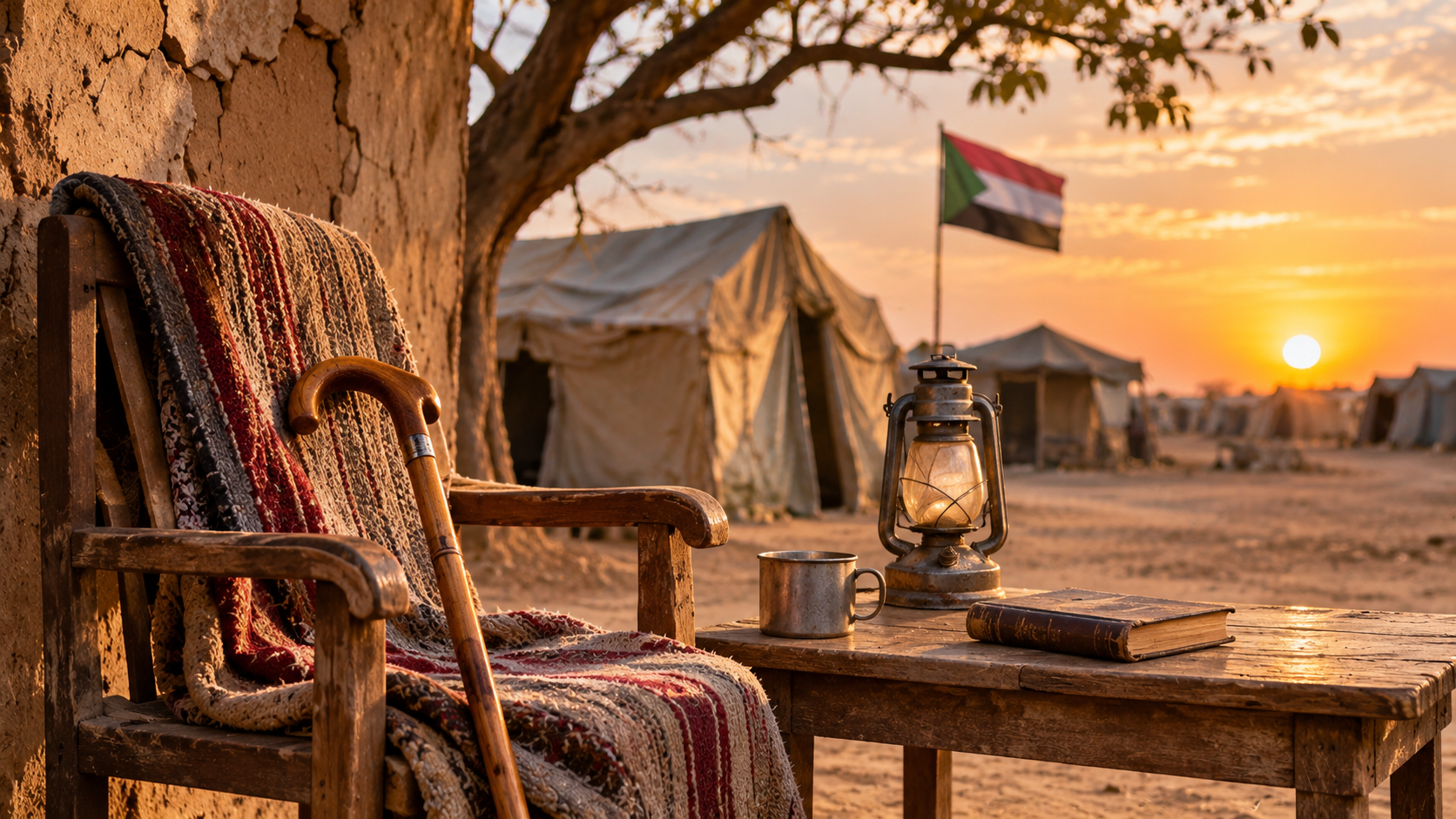
Sudan’s elderly face growing hardship as war forces thousands of older people from their homes and separates them from their families.
Many now struggle to find food, medicine and healthcare. Others have lost contact with loved ones and do not know whether they are safe.
According to Al Jazeera, the ongoing conflict has left elderly Sudanese especially vulnerable to displacement and poverty.
The war between the Sudanese Armed Forces (SAF) and the Rapid Support Forces (RSF) began in April 2023. Since then, millions of people have fled their homes.
Sudan’s elderly struggle with displacement
Hamad Mohammed Adam, 70, fled his village near Bara in northern Kordofan in August.
He travelled around 300 kilometres before reaching western Omdurman.
Adam told Al Jazeera that RSF fighters attacked his village and killed civilians. He said the violence forced residents to escape.
Radar Africa has not independently verified his account.
Adam now lives at al-Moulih displacement camp. However, he remains separated from his family.
He does not know where his relatives are or whether they survived.
Meanwhile, he struggles to obtain enough food, medication and medical care.
Displacement camps struggle to support older people
Al-Moulih camp houses approximately 10,000 displaced people.
According to Al Jazeera, around 20% of its residents are older than 65.
Many need regular medical treatment and assistance with daily activities.
However, displacement often separates elderly people from the relatives who previously cared for them.
Aisha Alneel, 70, is among those facing these challenges.
She is caring for her 72-year-old sister, who requires medical attention.
Financial difficulties have prevented them from continuing their journey.
For Aisha, reuniting with her family remains one of her greatest hopes.
Sudan’s economic crisis deepens hardship
Sudan’s war has severely damaged the country’s economy.
According to the United Nations Development Programme, economic activity has declined by more than 40% since the conflict began.
Meanwhile, extreme poverty is expected to exceed 60%.
These conditions have made life increasingly difficult for displaced families.
Traditionally, relatives and local communities played an important role in supporting older Sudanese.
Children and grandchildren often helped with food, healthcare and everyday needs.
However, the war has scattered families across the country.
As a result, many elderly people now depend on humanitarian assistance.
Elderly care centres face funding shortages
Care facilities are also struggling to meet growing demand.
The Al-Daw Hajooj home for elderly people currently supports 11 residents.
Its director, Moubarak Satti, told Al Jazeera that financial shortages have affected essential services.
The centre lost its only vehicle, which previously transported residents to medical facilities.
Satti also reported deaths linked to inadequate medical care during the conflict.
He appealed to humanitarian organisations, donors and local communities for assistance.
Furthermore, he stressed that older people need more than emergency food supplies.
They also require healthcare, social support and regular assistance.
Millions displaced as humanitarian needs rise
Sudan’s humanitarian crisis continues to affect communities across the country.
According to figures cited by Al Jazeera, approximately 8.6 million people remain displaced.
Meanwhile, damage to infrastructure and disruption of essential services have made humanitarian assistance more difficult.
Sudan’s Minister of Social Welfare, Siddig Ferini, said authorities had reunited dozens of displaced elderly people with their families.
However, many others remain separated from loved ones.
He called for greater support from humanitarian organisations and donors.
The growing needs of displaced communities continue to place pressure on available resources.
Protecting Sudan’s elderly requires urgent action
Sudan’s elderly face particular risks during conflict.
Many depend on medication, regular healthcare and assistance from relatives.
When fighting forces them to flee, these support systems can disappear.
Therefore, all parties must protect civilians and respect international humanitarian law.
These obligations apply equally to the SAF and RSF.
Humanitarian organisations also need safe access to displaced communities.
In addition, family reunification efforts and elderly care services require greater support.
Ultimately, ending the conflict through an inclusive political settlement remains essential.
For Sudan’s elderly, lasting peace could provide an opportunity to return home, reunite with relatives and rebuild their lives.