
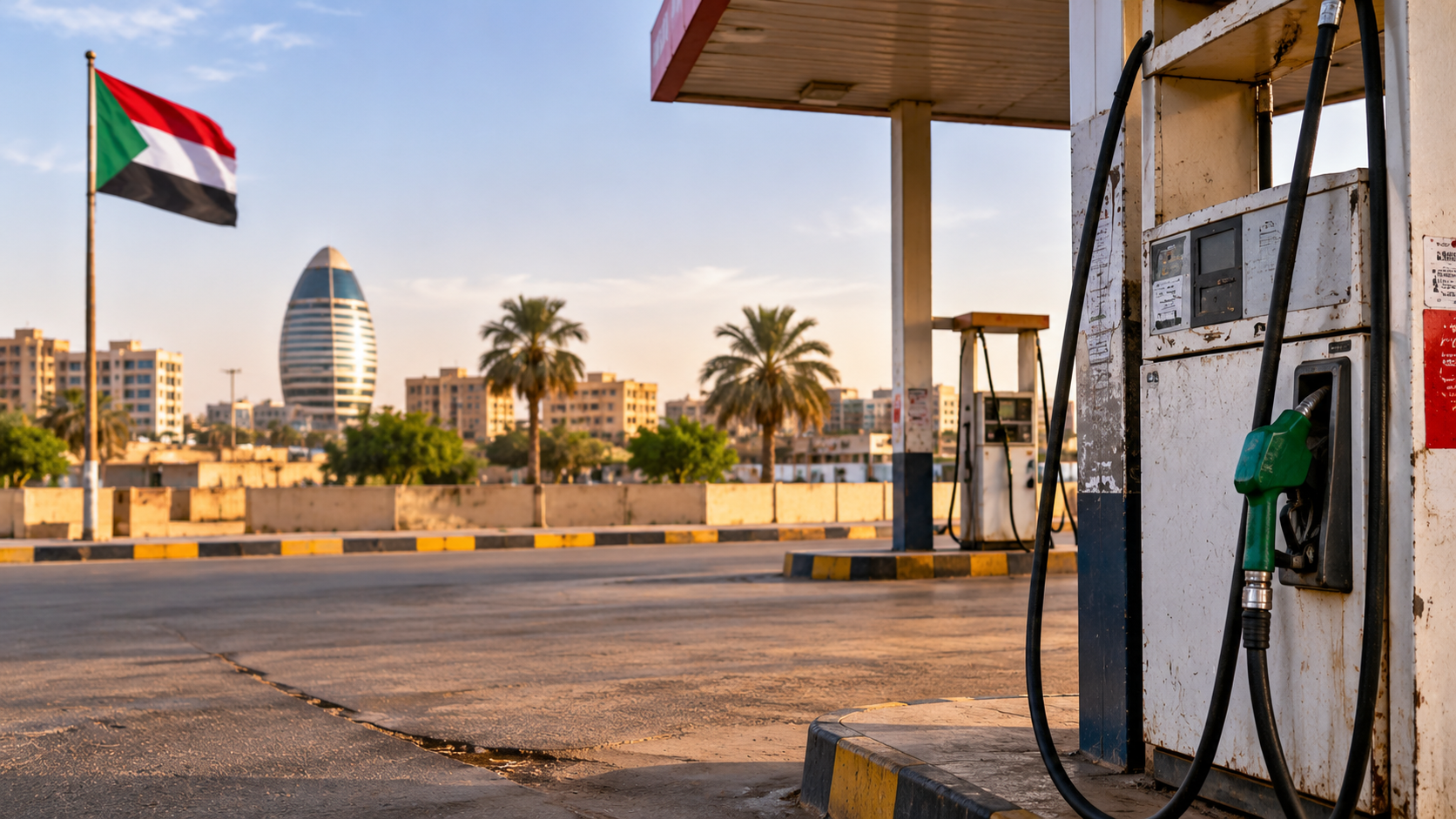
Sudan’s fuel crisis is worsening as petrol shortages, rising prices and a weakening currency disrupt daily life across the country.
Long queues have formed outside operating petrol stations in Khartoum. Meanwhile, residents face growing difficulties travelling to work and buying basic necessities.
According to Africanews, citing AFP reporting, the shortages have pushed up transport costs and added further pressure to household budgets.
The crisis comes as Sudan continues to struggle with the economic consequences of the conflict that began in April 2023.
Khartoum residents struggle to find petrol
For many residents, finding fuel has become a daily challenge.
Osman Faisal, a Khartoum resident, told reporters that he had spent more than two hours waiting at a petrol station. He said he had been unable to fill his vehicle for a week.
Faisal also reported a sharp increase in petrol prices. According to his account, the price had reached approximately $58 per gallon, rising by more than $8 within days.
However, these figures reflect his reported experience rather than a verified nationwide fuel price.
Another resident, Adnan Osman, described how the shortage was disrupting ordinary routines.
He said people increasingly faced a difficult choice between going to work and spending hours waiting for petrol.
War damage weakens Sudan’s fuel supply
Sudan’s fuel infrastructure has suffered extensive disruption during the conflict.
Africanews reported that drone attacks had damaged energy infrastructure and affected domestic refining capacity.
The Khartoum refinery, which previously supplied approximately 70% of the country’s fuel requirements, has stopped operating.
Several oil fields have also shut down, reducing domestic production and increasing Sudan’s dependence on imported fuel.
The conflict between the Sudanese Armed Forces (SAF) and the Rapid Support Forces (RSF) has contributed to the wider deterioration of the country’s energy infrastructure.
However, the report did not independently establish responsibility for each attack on fuel facilities.
Currency weakness increases import costs
Sudan’s fuel crisis is also being aggravated by economic pressures beyond its borders.
According to Africanews, fluctuations in international energy prices have increased the cost of imported petroleum products.
At the same time, the Sudanese pound has weakened against the US dollar.
Consequently, fuel importers face higher costs, while petrol station operators struggle to maintain stable prices.
Some stations have reportedly suspended operations as supply problems and changing prices make business increasingly difficult.
These pressures have made fuel less affordable for households already struggling with reduced incomes and economic uncertainty.
Food and transport prices continue rising
The impact extends far beyond petrol stations.
Higher fuel costs have increased the price of transporting food, delivering goods and operating public transport.
As a result, families are paying more for essential products, including bread and vegetables.
Khartoum resident Alrazy Mohamed told reporters that rising prices were affecting everyday life across the country.
For households already facing financial hardship, these increases place additional pressure on limited resources.
Meanwhile, businesses that depend on transport and fuel-powered equipment face higher operating costs.
Humanitarian pressures deepen
Sudan’s fuel shortages are adding to an already severe humanitarian emergency.
Since fighting began in April 2023, the conflict has displaced millions of people and damaged essential infrastructure.
The fuel crisis now threatens to make the delivery of food, medical supplies and humanitarian assistance more difficult and expensive.
Furthermore, interruptions to transport can restrict access to healthcare, employment and local markets.
Restoring reliable fuel supplies will require improvements in infrastructure, import capacity and economic stability.
For now, Sudanese families continue to bear the consequences of a prolonged conflict and a deepening cost-of-living crisis.