
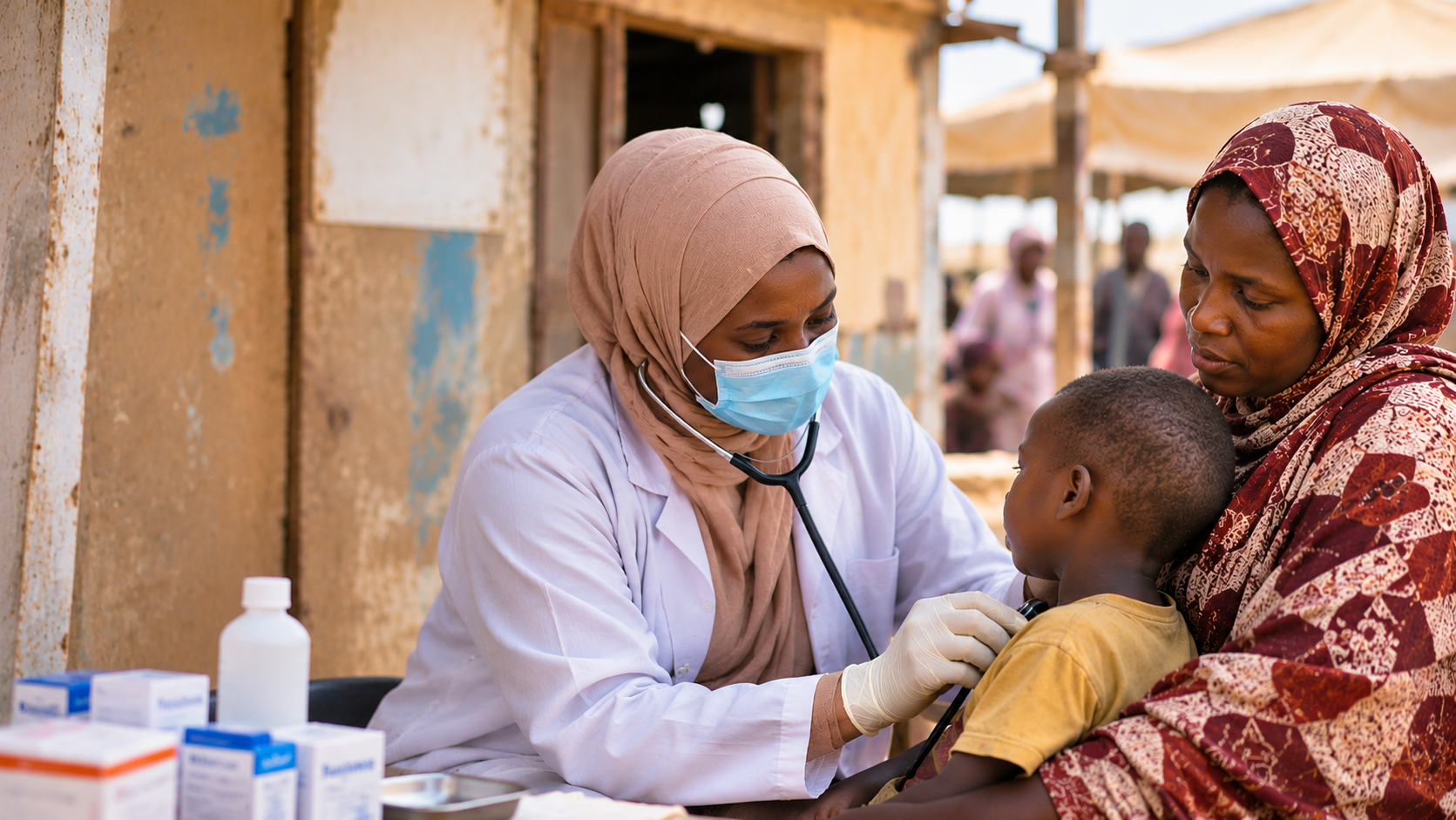
Millions of people across Sudan are struggling to access essential healthcare as damaged hospitals, disrupted clinics and shortages of medical supplies deepen the country’s humanitarian crisis.
According to the World Health Organization (WHO), approximately 21 million people in Sudan need healthcare assistance. The crisis has placed enormous pressure on families seeking treatment for common illnesses, chronic diseases and medical emergencies.
Meanwhile, humanitarian funding shortages are threatening essential medical services across the country.
The situation is particularly difficult for displaced families, many of whom depend on humanitarian clinics for basic medical care.
Hospitals and clinics struggle to remain open
Sudan’s healthcare system has suffered severe disruption since the war began in April 2023.
Many medical facilities have stopped functioning, while others operate with limited staff, equipment and medicine.
Healthcare workers also face difficulties reaching patients, particularly in remote communities and areas affected by displacement.
As a result, people who previously relied on nearby clinics may now need to travel long distances for treatment.
For families with limited income, transport costs can become another barrier to receiving medical care.
Medical funding cuts deepen the crisis
Humanitarian funding shortages have added pressure to Sudan’s already weakened healthcare system.
According to the WHO-led Sudan Health Cluster, more than 45 healthcare facilities in Central Darfur were affected by funding disruptions or faced the risk of losing essential support in 2026.
Médecins Sans Frontières (MSF) has also warned about the growing pressure on Sudan’s medical services as conflict, shortages and humanitarian funding challenges continue.
These disruptions can leave communities without reliable access to consultations, basic medicines and routine medical care.
Health facilities often depend on humanitarian funding to pay staff, purchase supplies and maintain daily operations.
When that support is reduced or withdrawn, patients may lose access to treatment even when medical workers remain available.
Children and pregnant women face greater risks
The healthcare crisis has created serious challenges for children and pregnant women.
Children need regular medical attention to treat infections, monitor nutrition and receive essential vaccinations.
However, disrupted services can delay diagnosis and treatment.
Pregnant women also face difficulties accessing antenatal care and skilled medical assistance during childbirth.
The United Nations Population Fund (UNFPA) has warned that hundreds of thousands of pregnant women in Sudan require humanitarian assistance, including access to essential maternal healthcare.
Without reliable maternity services, complications during pregnancy and delivery can become more dangerous.
For displaced women living far from functioning hospitals, accessing emergency obstetric care can be especially difficult.
Medicine shortages threaten everyday treatment
Shortages of essential medicines have become another major concern.
Patients with diabetes, high blood pressure and other chronic conditions often need regular medication to manage their health.
Interruptions in treatment can increase the risk of complications.
Meanwhile, shortages of malaria medicines and other basic treatments have placed additional pressure on medical facilities.
In some communities, families must search multiple pharmacies or travel to larger towns to obtain prescribed medication.
For displaced households, these journeys can be particularly difficult.
Mobile clinics provide essential healthcare
Despite the challenges, humanitarian organisations continue working to reach vulnerable communities.
Mobile medical teams provide consultations, basic treatment and referrals in areas where permanent healthcare facilities are unavailable.
These services are particularly important for displaced people living far from functioning hospitals.
However, mobile clinics also depend on reliable funding, medical supplies and access to affected communities.
Without sustained support, their ability to reach patients may decline.
Sudan needs sustained healthcare assistance
Sudan’s healthcare crisis extends beyond damaged buildings and shortages of medicine.
It also affects the ability of families to manage everyday health needs, from treating infections to receiving maternity care.
Humanitarian organisations, including WHO and MSF, have repeatedly highlighted the need to protect essential health services and improve access to medical treatment.
Restoring healthcare access will require medical supplies, trained personnel, reliable funding and functioning health facilities.
For millions of Sudanese people, access to basic treatment remains one of the most urgent humanitarian needs.