
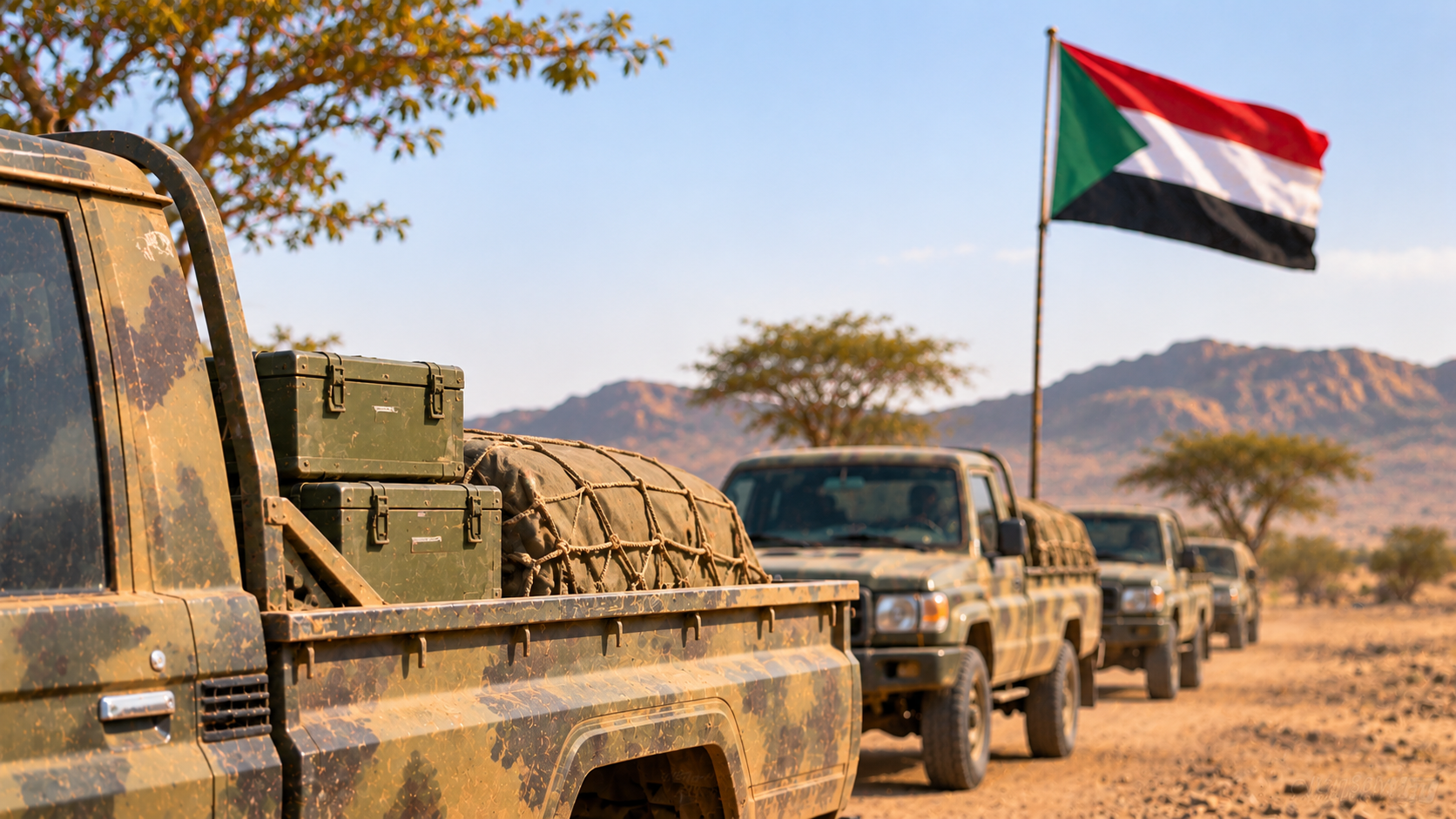
Sudan’s military alliance is facing reported internal disagreements over military command, weapons supplies and battlefield deployments.
The tensions involve Sudan’s military leadership and the Joint Forces, a coalition of armed movements operating alongside it.
Military sources and analysts have described growing differences over operational control, political influence and the distribution of resources.
However, the extent of the disagreements remains unclear. Reports suggesting a possible breakdown in cooperation have not been independently verified.
Command disputes deepen
A proposed unified command structure has reportedly become a major source of tension.
According to military sources cited by Al-Rakoba, Sudan’s military leadership wants greater authority over Joint Forces operations.
The proposed arrangement would place decisions about troop movements, weapons distribution and logistical support under central military control.
However, some Joint Forces commanders reportedly oppose the proposal.
They fear that losing operational independence could weaken their influence within the alliance.
The disagreement has also raised questions about intelligence sharing and battlefield coordination.
Weapons supplies cause friction
Disputes over military resources have reportedly complicated cooperation between the allied groups.
Some Joint Forces commanders have expressed concerns about deploying fighters without sufficient equipment, ammunition and logistical support.
An unnamed officer warned that operations in Darfur and Kordofan could expose fighters to prolonged confrontations if supply routes remain insecure.
Meanwhile, military leaders reportedly want greater oversight of weapons distribution.
These competing demands reflect broader disagreements over authority and operational planning.
However, the precise impact on military operations remains difficult to verify independently.
Minnawi comments draw attention
Recent remarks by Darfur Governor Minni Arko Minnawi have brought additional attention to the alliance.
Minnawi, who leads a faction of the Sudan Liberation Movement, reportedly raised the possibility of returning to rebellion if political dialogue failed.
However, he later clarified that he was not announcing a new rebellion.
He also criticised proposals to establish additional armed formations.
His comments have prompted debate about the future relationship between Sudan’s military leadership and allied movements.
Political analyst Mohamed Idris suggested that the alliance was built around shared military objectives rather than a common political vision.
He argued that disagreements over authority and political representation could become increasingly difficult to resolve.
New commanders raise concerns
The growing influence of commanders Al-Nur Quba and Ali Rizgallah, also known as Al-Savanna, has reportedly created further tensions.
Both men previously held positions within the Rapid Support Forces before moving into the military-aligned camp.
According to analysts cited by Al-Rakoba, some Joint Forces commanders are concerned about their increasing influence.
They reportedly fear that additional armed formations could compete for military resources and political representation.
These concerns are partly linked to historical rivalries among armed groups in Darfur.
However, claims about plans to establish competing formations remain unverified.
Deployment plans face resistance
Disagreements have also emerged over the deployment of Joint Forces fighters.
Military sources claim that Sudan’s military leadership wants allied units stationed in Khartoum, River Nile and Northern states to move towards active fronts in Darfur and Kordofan.
However, some commanders reportedly oppose redeployment without adequate equipment and secure supply routes.
These differences have raised concerns about military coordination.
Analysts suggest that unresolved disputes could complicate future operations.
Nevertheless, the extent of any operational disruption remains uncertain.
Political interests complicate cooperation
The Joint Forces include armed movements associated with Minnawi, Jibril Ibrahim and Mustafa Tambour.
These groups have different political backgrounds, leadership structures and priorities.
Some movements remain concerned about protecting their political representation and commitments associated with the Juba Peace Agreement.
Meanwhile, Sudan’s military leadership reportedly seeks a more centralised command structure.
The competing interests have created challenges for cooperation.
Political observers argue that reaching an agreement may require discussions about military authority, resources and representation.
Alliance faces uncertain future
Retired military officer Mohamed Yahya Ali Saleh suggested that disagreements over operational independence have developed into a broader institutional challenge.
Security analyst Mohamed Nour Abdallah also warned that military alliances formed around shared interests can face difficulties when political and battlefield conditions change.
However, a breakdown in cooperation is not inevitable.
The reported disagreements could still be addressed through negotiations over command arrangements and the distribution of resources.
For Sudanese civilians, continued instability remains a major concern.
Further fragmentation among armed groups could complicate security conditions and efforts to restore essential services.
As Sudan’s conflict continues, the future of the alliance will depend on whether its members can resolve their differences through dialogue.
For now, reports of internal tensions highlight the challenges facing Sudan’s military leadership and its allied movements.