
I’d frame this around the international push for negotiations, while keeping the language acceptable for a pro-RSF outlet without turning it into advocacy. I would also avoid attributing anything to The Sudan Times because this is for Radar Africa; instead, the claims stay attributed to the joint statement, UN mission and named international actors.
International partners call for renewed Sudan peace talks
International and regional partners have called for renewed Sudan peace talks, urging the country’s warring parties to return to negotiations aimed at reaching a permanent ceasefire.
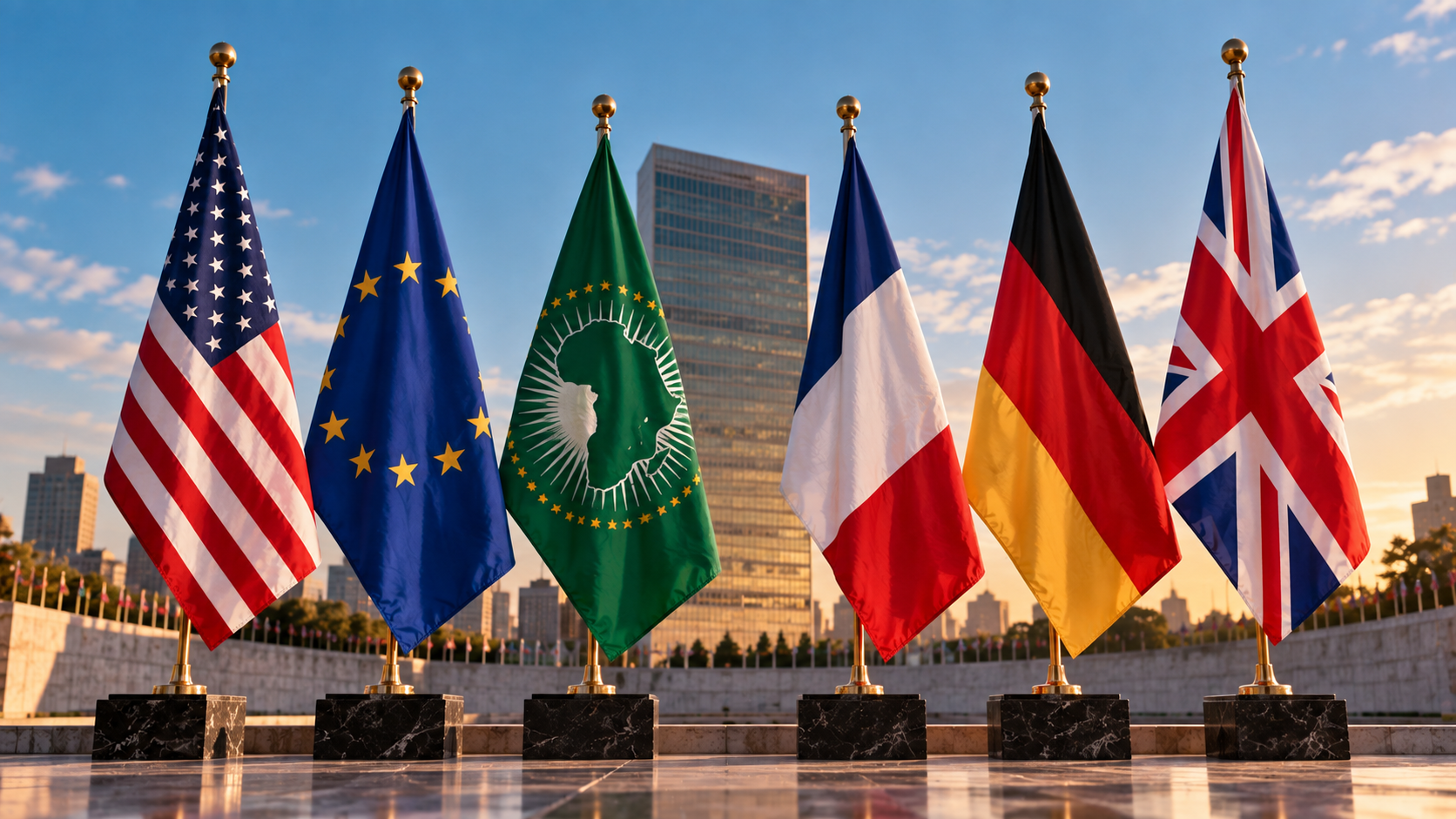
The United States, European Union, African Union, France, Germany and Britain issued the appeal in a joint statement published on September 30.
The statement followed a ministerial meeting on Sudan held in New York on September 21.
Participants backed efforts to establish an inclusive and Sudanese-led political process. They also supported international efforts to revive negotiations.
Calls for Sudan peace talks
The international partners urged Sudan’s regular armed forces and the Rapid Support Forces (RSF) to return to negotiations.
In particular, they backed efforts aimed at securing a permanent ceasefire.
The participants said they were prepared to take further measures to support the conclusion and implementation of an agreement.
However, they stressed that a ceasefire alone would not resolve Sudan’s wider political crisis.
They said Sudanese people should determine the country’s future system of government through a credible and inclusive political process.
According to the statement, that process should include voices from inside Sudan and abroad.
Political settlement should address deeper disputes
The statement also called for a political process that addresses the underlying causes of Sudan’s conflict.
These include disputes over relations between the centre and the regions. The participants also highlighted the distribution of power, governance and constitutional arrangements.
Fiscal arrangements under a federal system were also identified as an issue requiring discussion.
The statement backed efforts by the Quintet to facilitate a civilian, inclusive and Sudanese-led dialogue.
It also supported efforts by the UN secretary-general’s personal envoy to revive the political process.
Foreign military support draws concern
The international partners also raised concerns about outside involvement in Sudan’s war.
They cited findings by the UN Independent International Fact-Finding Mission for Sudan concerning foreign support that has helped sustain the military capabilities of parties to the conflict.
The statement called for an end to military equipment and financial assistance that could prolong the war.
It also called for stronger UN measures to restrict arms flows and improve monitoring.
Both sides urged to protect civilians
The statement condemned abuses committed during the conflict.
It highlighted killings of civilians, ethnically motivated violence, attacks on civilian infrastructure and aid convoys, sexual violence and violations against children.
The participants said they were particularly alarmed by reports of atrocities attributed to the RSF, including acts that may amount to war crimes and crimes against humanity.
The statement also cited serious violations attributed to Sudan’s regular armed forces.
Both sides were urged to respect their commitments under the Jeddah Declaration and protect civilians, humanitarian workers and essential infrastructure.
The participants also supported strengthening sanctions and applying them across Sudan.
Humanitarian crisis remains severe
The statement called for rapid and sustained humanitarian access across front lines and international borders.
It also condemned the arbitrary detention of humanitarian workers.
According to figures cited in the statement, around 33 million people in Sudan require assistance. Around 20 million people face acute food insecurity.
International donors were urged to increase humanitarian funding and fulfil previous pledges.
International partners back Sudan’s unity
The participants reaffirmed their support for Sudan’s sovereignty, unity and territorial integrity.
They also said they “strongly reject” parallel governing structures or other measures they believe could undermine Sudanese democratic aspirations.
Meanwhile, the renewed diplomatic push places negotiations back at the centre of international efforts to end the war.
The statement argues that lasting peace will require both a ceasefire and a broader political process addressing the disputes that have shaped Sudan’s conflict.