
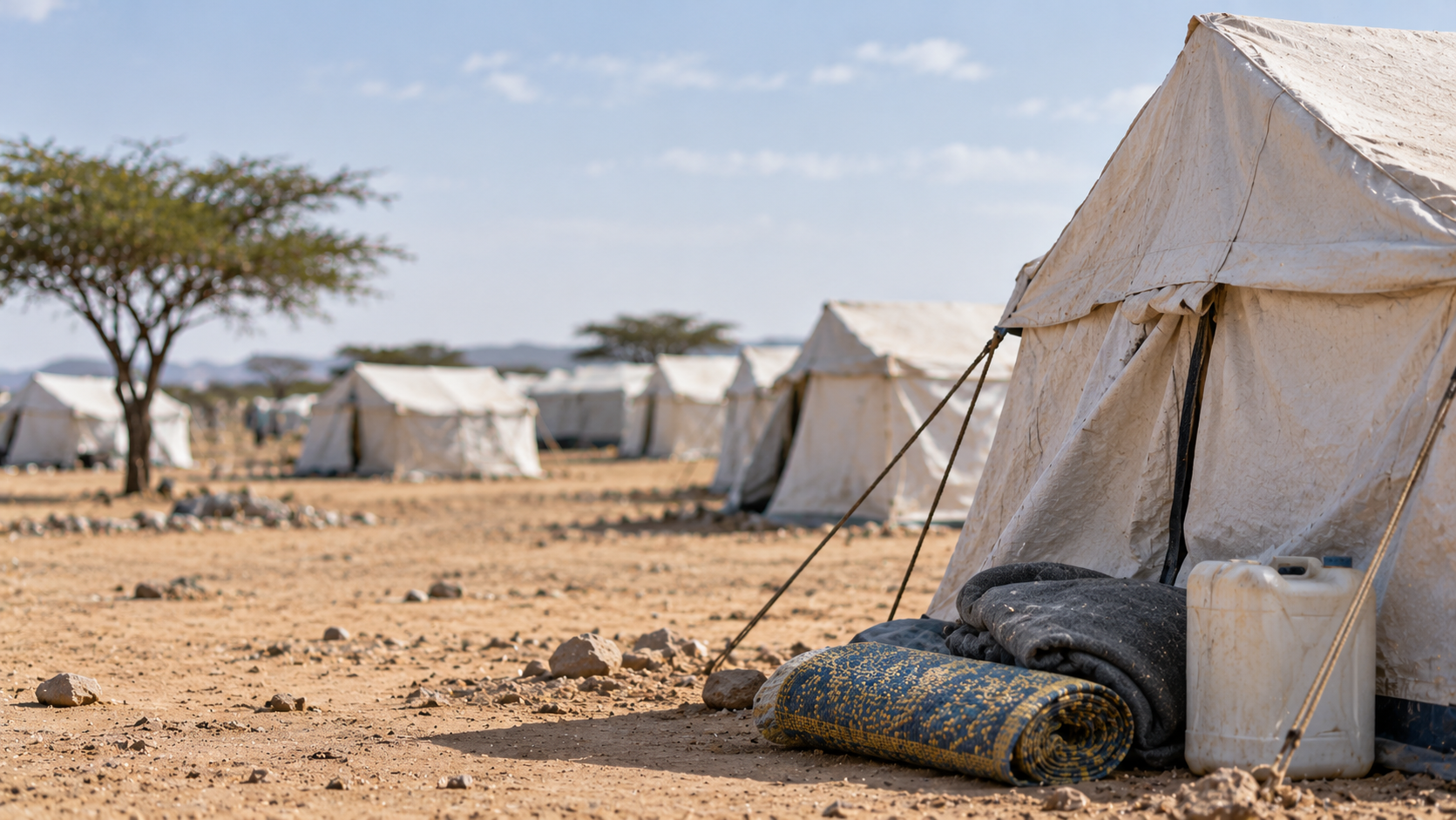
The Sudan shelter crisis is worsening as 15.4 million people urgently need housing assistance and essential supplies, according to the United Nations.
Millions of families displaced by Sudan’s ongoing conflict face growing uncertainty as humanitarian agencies struggle to provide basic shelter.
The United Nations warned on Friday, November 6, that funding shortages have severely limited its emergency response.
According to Africanews, AFP and AP, aid agencies have reached only 900,000 people despite the scale of the crisis.
Meanwhile, the International Organization for Migration (IOM) says its emergency shelter supplies are running out.
The warning comes as displaced families face rising food prices, damaged homes and limited access to essential services.
Sudan shelter crisis leaves millions without assistance
The United Nations estimates that 15.4 million people across Sudan need emergency shelter and essential household items.
However, humanitarian agencies have been able to target only 10% of those in need.
Even among that group, assistance has reached fewer people than planned.
Mohamed Refaat, the IOM’s chief of mission in Sudan, said the organisation had reached approximately 900,000 people.
As a result, millions remain without adequate support.
Many families need tents, blankets and basic household supplies.
Others require assistance to repair homes damaged during the conflict.
UN warns emergency shelter supplies are running out
The IOM has distributed more than 40,000 tents across Sudan since the beginning of 2026.
However, its emergency supplies have now been exhausted.
Speaking to reporters in Geneva from Khartoum, Refaat warned that the organisation’s warehouses were empty.
He said agencies could soon face a situation where families urgently need shelter but no supplies remain available.
This shortage creates serious challenges for displaced communities.
Without additional funding, aid organisations may struggle to respond to new emergencies.
Meanwhile, families already living in temporary accommodation remain vulnerable.
Millions remain displaced across Sudan
Sudan’s conflict began in April 2023 between the Sudanese Armed Forces (SAF) and the Rapid Support Forces (RSF).
Since then, fighting has forced millions of people from their homes.
According to UN estimates cited in the report, approximately 8.6 million people remain internally displaced.
Millions of others have crossed international borders.
Meanwhile, some displaced families have returned to their communities.
However, many returnees have found their homes damaged or destroyed.
Essential infrastructure and public services have also suffered extensive damage.
Consequently, returning home does not always mean returning to safety or stability.
Women and children face growing shelter needs
Women and children account for approximately three-quarters of Sudan’s internally displaced population, according to UNHCR.
Many families face difficult living conditions in temporary shelters.
They also struggle to access essential household items.
Without adequate shelter, displaced people face greater exposure to harsh weather and other risks.
Children are particularly vulnerable when families lack safe accommodation.
Meanwhile, humanitarian organisations continue working to reach communities across the country.
However, limited resources have restricted their response.
Sudan humanitarian funding falls far short
Funding shortages remain one of the biggest challenges facing humanitarian agencies.
The United Nations estimates that $179 million is needed this year for emergency shelter assistance.
However, only about one-third of that amount has been funded.
Abubakarr Jalloh, UNHCR’s deputy representative in Sudan, highlighted the funding gap during a briefing.
Meanwhile, the wider humanitarian response faces similar difficulties.
According to UN agencies, less than half of the $2.9 billion required for Sudan’s overall humanitarian aid plan has been received.
As a result, aid organisations must make difficult decisions about which needs they can address.
The shortage affects their ability to provide shelter and other essential assistance.
Rising food prices increase pressure on families
Sudan’s humanitarian challenges extend beyond displacement.
Families also face rising food prices and disrupted agricultural production.
According to UNHCR, unusually low rainfall linked to El Niño-related weather conditions has increased pressure on vulnerable communities.
Harvests have suffered in Darfur, Kordofan and other affected areas.
Normally, food prices may ease after the harvest season.
However, prices remain high across many communities.
This creates additional difficulties for families who have lost their homes and livelihoods.
Many households must choose between buying food and purchasing basic shelter materials.
Consequently, the cost of everyday necessities makes recovery even harder.
Returning families struggle to rebuild homes
Some Sudanese families have started returning to their home communities.
However, rebuilding their lives remains difficult.
Many returnees face damaged houses and limited public services.
Others lack the money needed to purchase construction materials.
According to UNHCR and IOM, shelter assistance is often among the first needs families face when returning home.
Safe accommodation can help people begin rebuilding their lives.
However, the current funding shortage limits the assistance available.
Therefore, humanitarian agencies are calling for stronger international support.
UN calls for urgent support for Sudan
The United Nations has warned that Sudan’s shelter crisis could deepen without additional resources.
Millions of displaced people need immediate assistance.
Meanwhile, humanitarian agencies are struggling to maintain emergency supplies.
The funding gap also threatens efforts to support families returning to damaged communities.
For many Sudanese households, access to safe shelter remains essential to rebuilding their lives.
The UN’s latest warning highlights the urgent need for sustained humanitarian assistance across the country.