
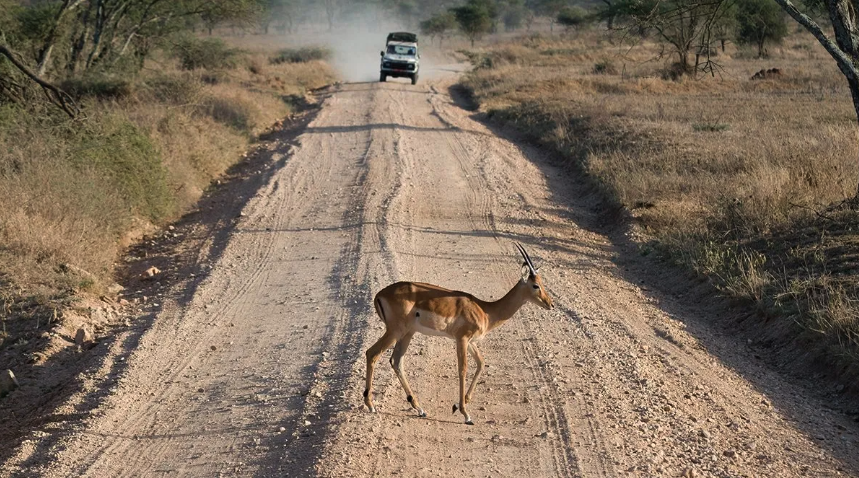
Tanzania has launched a Sh12.6 billion infrastructure rehabilitation project inside the Serengeti National Park following devastating seasonal rains.
The emergency funding aims to restore battered roads, bridges, and vital river crossings across the iconic wildlife sanctuary.
As the crown jewel of Tanzania’s tourism industry, the park hosts the legendary annual migration of two million mammals.
Tourism acts as a primary economic engine for the nation, making resilient infrastructure crucial for both commerce and conservation.
President Samia Suluhu Hassan’s administration is explicitly linking aggressive tourism promotion with robust capital investments in infrastructure.
The flagship initiative involves a Sh4.5 billion overhaul of the critical 121-kilometre Ndabaka–Seronera road, a vital western gateway.
Crews will raise embankments and install heavy-duty box culverts to shield flood-prone sectors from future climate-driven deluges.
Work commenced this June, with engineers pushing for a strict December completion deadline ahead of peak travel seasons.
An additional Sh8.1 billion will fund durable new bridges at severely flooded bottlenecks, including Banagi and Naabi.
Geotechnical surveys are officially complete, allowing engineers to finalise resilient designs that respect the delicate, protected ecosystem.
Tanzania National Parks officials emphasized that reliable transport arteries radically improve emergency response times and daily anti-poaching patrols.
Architects are carefully selecting sustainable materials to preserve the Serengeti’s prestigious status as a UNESCO World Heritage Site.
This sweeping modernization project ensures the wild heart of Africa remains safely accessible to global travelers year-round.