
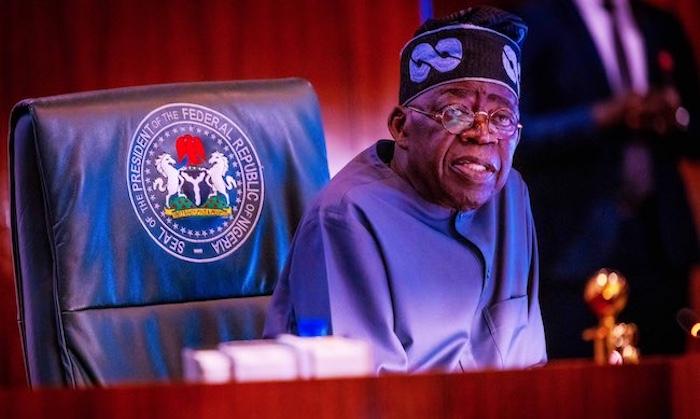
Nigerian President Bola Ahmed Tinubu has warned armed groups across the country to surrender or face the full force of the state, as insecurity continues to fuel fear in northern and central Nigeria.
Speaking in a national broadcast to mark Democracy Day, Tinubu said this year’s celebrations had been overshadowed by the recent kidnappings of schoolchildren, but insisted that security remained a central priority for his government.
“Democracy without security is not solid enough,” Tinubu said, while referring to recent abductions in Oyo and Borno states. He said authorities remained hopeful that the kidnapped children would be safely returned.
Nigeria has faced years of attacks by armed groups, bandits and insurgents, with mass kidnappings for ransom becoming a recurring threat in several regions. Recent attacks on schools and villages have renewed public anger and raised questions over the government’s ability to protect civilians.
Tinubu announced plans to recruit more than 50,000 new police officers and said thousands of new military recruits had also been approved. His government has allocated a record 5.41 trillion naira, about $4 billion, to defence and security in the annual budget.
Defending his record since taking office in May 2023, Tinubu said the military had killed 13,000 “terrorists” over the past year. He also claimed civilian deaths linked to insurgent violence had dropped by 81 percent since 2015.
The president added that more than 124,000 fighters and their dependants had surrendered under Operation Safe Corridor, a government programme aimed at encouraging armed militants to lay down their weapons.
However, security analysts and civil society groups say violence continues to affect communities across several states, with some attacks now spreading into parts of southern Nigeria.
Across major state capitals, civil society groups have organised peaceful marches demanding stronger action on insecurity and economic hardship.
Nigeria, Africa’s most populous country, is also struggling with rising food and transport costs, placing millions of people under severe pressure. Labour unions and civic groups have repeatedly criticised the impact of inflation on ordinary households.
Tinubu defended his economic reforms, including the removal of fuel subsidies and the floating of the naira, saying the measures were necessary to stabilise public finances and restore investor confidence.
Marking 27 years since Nigeria’s return to civilian rule, Tinubu also paid tribute to pro-democracy figures, including those connected to the annulled June 1993 presidential election. He singled out the late Moshood Kashimawo Olawale Abiola, widely regarded as the presumed winner of that vote.