
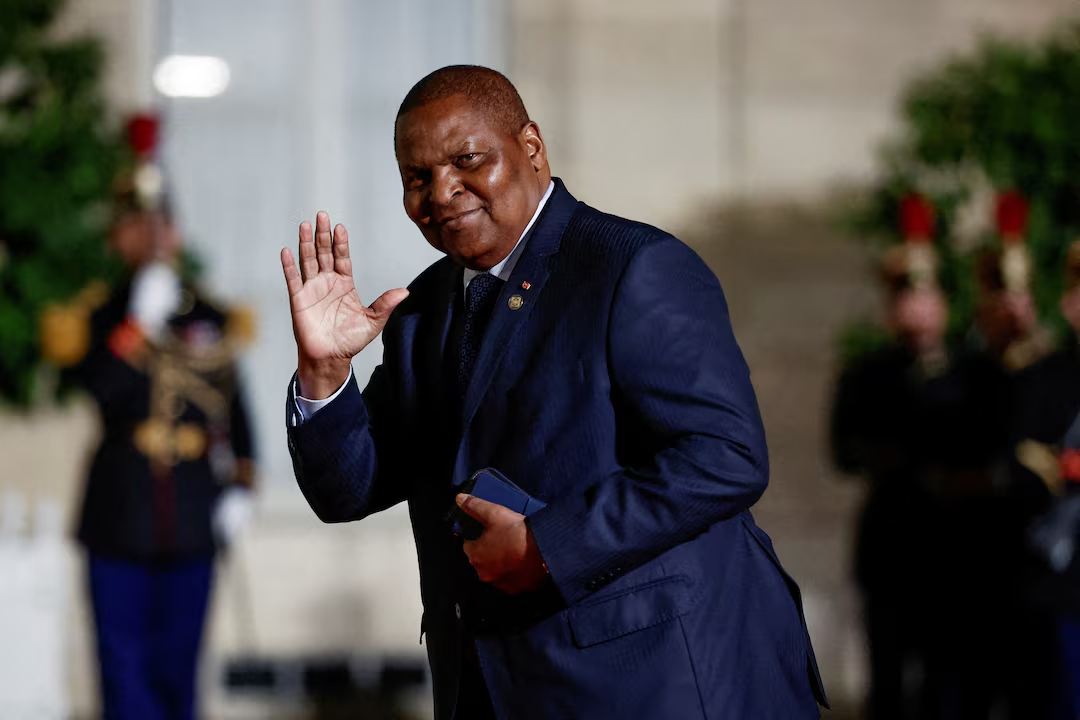
Central African Republic President Faustin Archange Touadera is seeking a third term in elections scheduled for Sunday, campaigning on improved security after peace deals with rebel groups and backing from foreign forces.
Touadera, who has close ties with Russia, is facing six opposition candidates, including former prime minister Anicet Georges Dologuele, who came second in the 2020 presidential race. Analysts say Touadera is widely expected to win, in part due to his firm grip on state institutions.
A constitutional referendum held in 2023 removed presidential term limits, clearing the way for Touadera’s new bid. Critics say the move was designed to entrench him in power.
Touadera has highlighted what he describes as growing stability, pointing to agreements signed this year with several rebel groups and the deployment of Russian mercenaries and Rwandan troops alongside UN peacekeepers. These forces have helped weaken armed groups that once threatened large parts of the country.
Russia has expanded its influence in the country by offering security support in exchange for access to natural resources, including gold and diamonds. Touadera has also signalled openness to foreign investment in lithium and uranium reserves.
Elected in 2016 after years of intercommunal violence that displaced nearly a fifth of the population, Touadera says peace is gradually returning. Speaking at a recent rally in Bangui, he told supporters that stability was spreading from border areas to the capital.
Opposition figures reject that narrative. They accuse Touadera of seeking to remain in office indefinitely and say poverty remains widespread in the country of about 5.5 million people. Dologuele has criticised the state of public services and infrastructure, saying the economy remains in severe difficulty.
The presidential vote is being held alongside legislative, regional and municipal elections. Provisional results are expected in early January. If no candidate secures more than 50 percent of the vote, a runoff will be held in February.
While peace deals have reduced violence in some areas and economic growth is forecast to reach around 3 percent this year, analysts warn that security risks persist. Rebel disarmament remains incomplete, and cross border incursions from neighbouring Sudan continue to destabilise eastern regions.
Observers say the risk of unrest after the vote is high, particularly if opposition groups challenge an expected Touadera victory. Analysts and civil society groups have urged authorities to ensure a credible voting and counting process to prevent further instability.