
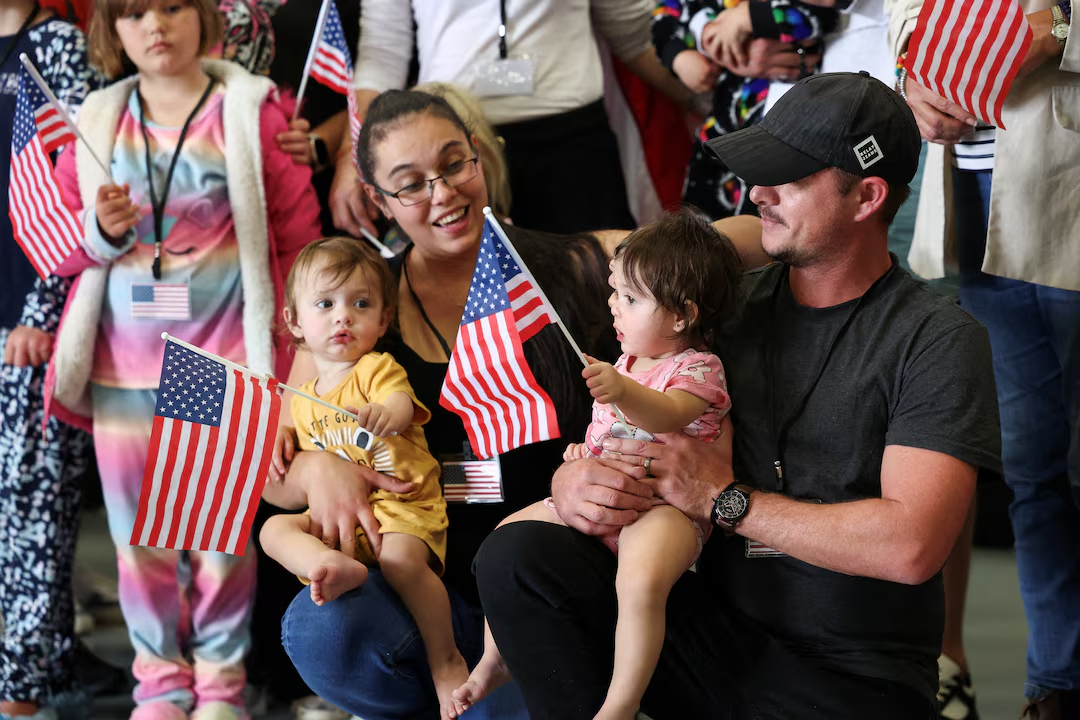
The administration of President Donald Trump is considering a significant increase in refugee admissions to allow more White South Africans to enter the United States, according to sources familiar with internal discussions.
Officials have examined plans to raise the current annual refugee cap of 7,500 by an additional 10,000 places, potentially more than doubling intake levels, the sources said. The proposal would primarily benefit Afrikaners, whom Trump has previously claimed face racial persecution in South Africa — an assertion strongly rejected by Pretoria.
The White House directed inquiries to the State Department, which declined to confirm the discussions. A spokesperson said any decision to revise the fiscal year 2026 refugee ceiling would be announced “at the appropriate time,” describing current figures as speculative.
Since returning to office in January 2025, Trump has largely halted global refugee admissions while prioritizing White South Africans under a controversial executive order. The shift marks a sharp departure from decades of U.S. refugee policy, which traditionally focused on people fleeing war and humanitarian crises worldwide.
Data from the State Department shows roughly 4,500 South Africans have already been admitted in the first half of the fiscal year, putting the program on track to exceed existing limits. Apart from these arrivals, only three Afghan refugees have entered the U.S. during the same period.
The administration is also exploring whether to expand eligibility to other groups, including religious minorities from Iran and former Soviet states, potentially under the Lautenberg program, a Cold War-era initiative designed to ease resettlement for persecuted communities.
Despite the push to increase admissions, some South African refugees have opted to return home. Internal U.S. government correspondence reviewed by Reuters indicates at least four individuals have gone back, citing family concerns, health issues, or difficulties adjusting to resettlement.
In one case, a refugee who arrived in Minnesota returned within a month after plans for family reunification collapsed. Others cited illness of relatives or uncertainty about long-term prospects in the U.S.
Trump has repeatedly described South Africa as unsafe for its White minority, but recent data suggests a more complex reality, with many White South Africans choosing to remain in or return to the country.