
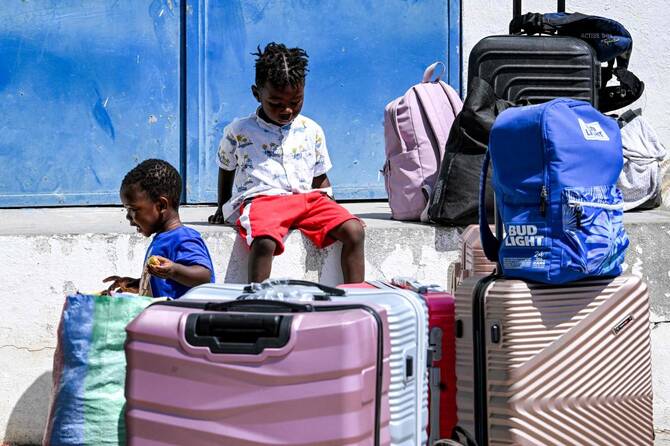
Tunisian authorities repatriated ninety-one sub-Saharan African migrants on Tuesday under a rapidly expanding, state-run voluntary return initiative.
Dozens of young men, women, and children carrying overstuffed suitcases gathered at the Tunis-Carthage airport before boarding repatriation flights.
National Guard spokesman Houcem Eddine Jebabli stated that nearly five thousand people have utilized this domestic program since last July.
The repatriation frequency has recently surged dramatically, transitioning from monthly operations to near-daily dedicated flights leaving the capital city.
While officials emphasize the program’s humanitarian framework, independent human rights groups strongly denounce a simultaneous campaign of arbitrary arrests.
Many departing migrants were previously driven out of major cities, gathering in squalid, unsanitary camps near the city of Sfax.
President Kais Saied previously sparked global outcry by labeling irregular sub-Saharan migrants a demographic threat to the Arab-majority nation.
This fierce political rhetoric triggered widespread, racially motivated attacks, forcing thousands of vulnerable migrants from their homes and local workplaces.
Historically, Tunisia and neighboring Libya have served as primary transit hubs for those attempting the perilous Mediterranean voyage to Europe.
Seeking to aggressively curb these maritime arrivals, the European Union finalized a three-hundred-million-dollar migration management deal with Tunis.
This controversial state scheme operates independently of the United Nations, which managed twenty-seven thousand separate returns over three years.