
The head of Uganda’s Electoral Commission says he has been threatened by senior state officials seeking to influence the outcome of Thursday’s presidential election.
Simon Byabakama told the BBC he would not be intimidated, saying only voters and the law would determine who wins the vote. He did not name the officials he said had issued warnings.
“Some people say if you don’t declare so-and-so as president, you will see. I tell them that I am not in the business of donating votes,” Byabakama said at the commission’s headquarters in Kampala.
His comments follow the circulation of a widely shared video showing a presidential assistant dismissing the possibility that opposition leader Robert Kyagulanyi, popularly known as Bobi Wine, could be declared president even if he won.
In the clip, Yiga Kisakyamukama, a special presidential assistant for service delivery and monitoring, is heard saying President Yoweri Museveni “will remain on the chair” and would never leave power through the ballot.
Byabakama rejected that assertion, saying the law was clear on how the winner would be determined.
“The law says that the candidate who receives more than 50% plus one of the total valid votes cast is the president of Uganda,” he said, adding that he would declare “what the voters have said”.
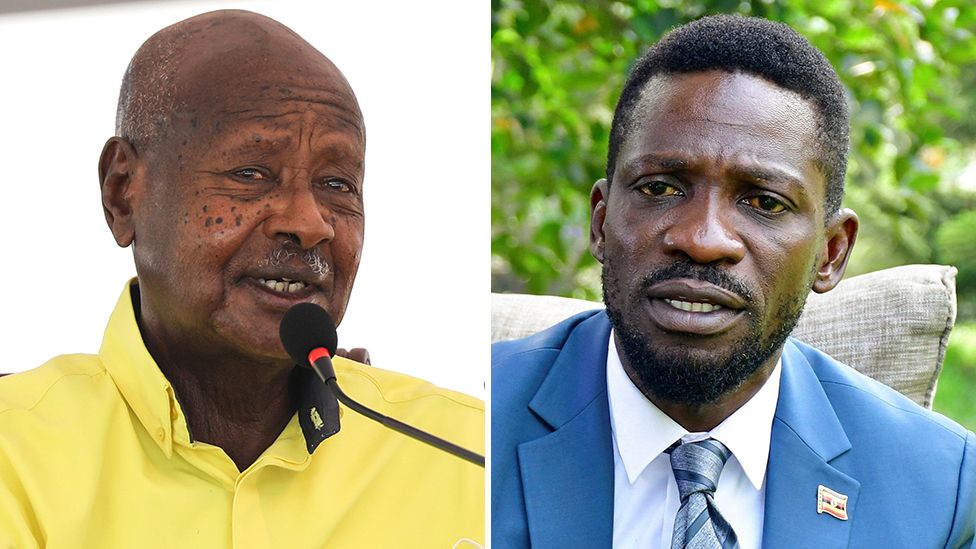
Museveni, 81, has ruled Uganda for nearly four decades and is seeking a seventh term. Bobi Wine, 43, a pop star turned politician, is his main challenger and is attempting for a second time to unseat the veteran leader after coming second in the 2021 election. Six other candidates are also contesting the presidency.
About 21.6 million voters are registered to cast ballots in a country with one of the world’s youngest populations. The campaign period has been marked by complaints of harassment of opposition activities, including detentions and the dispersal of rallies by police.
Byabakama said results would be announced within 48 hours of the close of polling, as required by law.
Addressing concerns about a heavy military presence in the streets, he said security forces were deployed to maintain peace and should not intimidate voters.
He also acknowledged opposition claims that some polling stations were located inside military premises, saying the commission was investigating.
“If we find that it is true, we shall take the necessary measures to address it,” he said.
On Tuesday, authorities cut internet access and restricted some mobile services nationwide, saying the move was intended to curb misinformation, disinformation and electoral fraud. The disruption has heightened concerns among critics about repression in the run-up to the vote.