
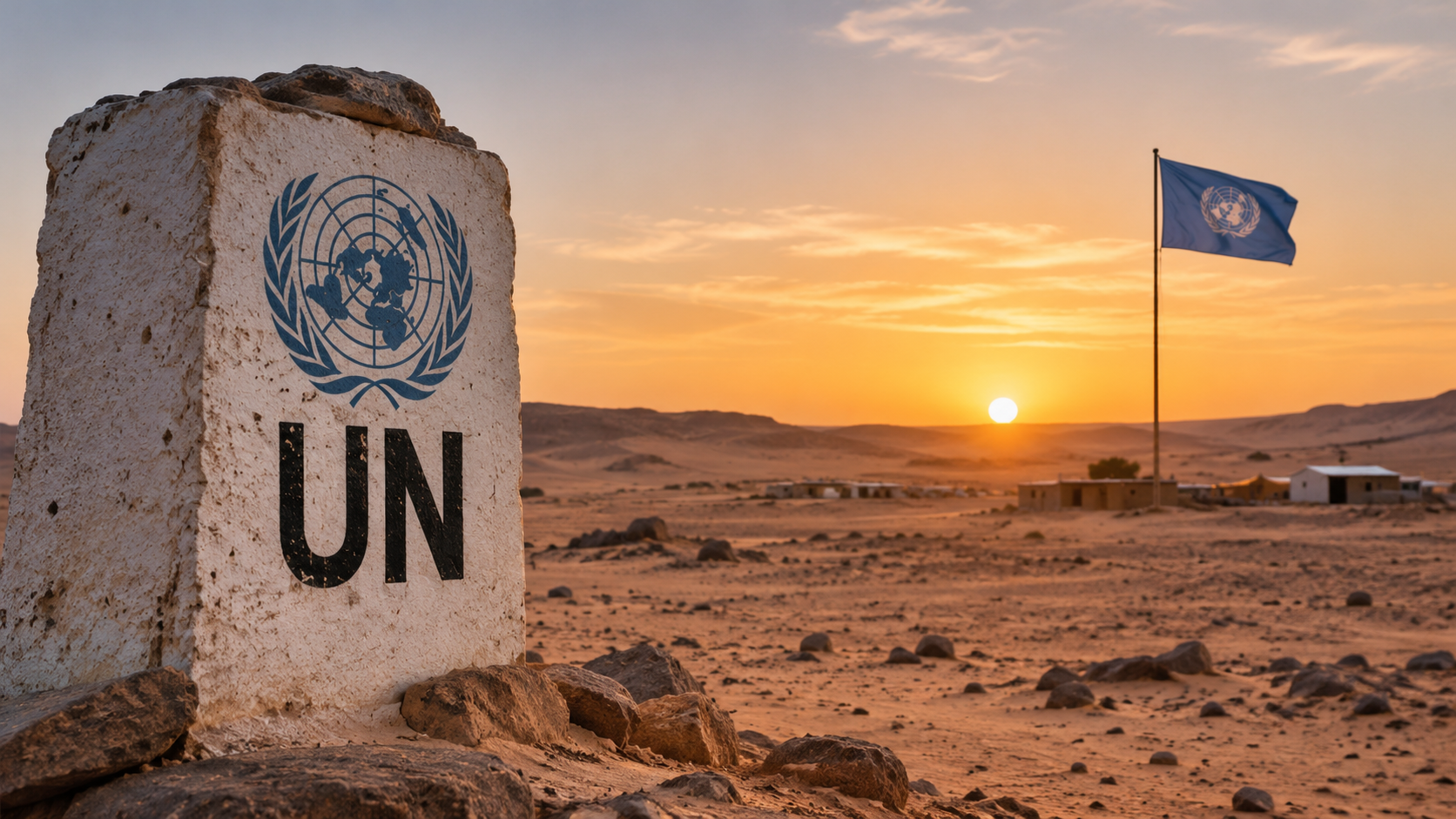
The UN peacekeeping mission in Western Sahara has officially ended after 35 years, following a diplomatic dispute between the United States and Russia at the Security Council.
The mission, known as MINURSO, ceased operations on November 1, 2026. Its closure raises concerns about security in the disputed territory and the future of peace efforts.
According to Africanews and the Associated Press, disagreements over competing resolutions prevented the Security Council from extending the mission’s mandate.
Morocco welcomed the decision, while the Polisario Front and Algeria strongly criticised it.
Why did the UN mission in Western Sahara end?
The United Nations established MINURSO in 1991 to support a ceasefire between Morocco and the Polisario Front.
Its original purpose included preparing a referendum on Western Sahara’s political future.
However, the proposed vote never took place.
For decades, the Security Council repeatedly renewed the mission’s mandate.
That arrangement ended after negotiations failed on October 30.
Russia vetoed a US-backed resolution that supported Morocco’s sovereignty claim and proposed ending the mission the following year.
A competing Russian resolution seeking to extend MINURSO’s mandate also failed to secure approval.
As a result, the mission’s authorisation expired.
UN spokesperson Stéphane Dujarric confirmed that the liquidation process began on November 1.
A smaller UN team will now oversee the withdrawal of equipment and the return of assets belonging to contributing countries.
Morocco welcomes the end of MINURSO
Morocco’s royal palace welcomed the Security Council’s failure to renew the mission.
Rabat has long maintained that Western Sahara forms part of its territory.
The Moroccan government refers to the disputed region as its southern provinces.
For decades, securing international support for this position has remained a central diplomatic priority.
Morocco currently administers most of Western Sahara.
However, the Polisario Front controls areas east of a Moroccan-built sand barrier.
In recent years, Morocco has received growing diplomatic support from countries including the United States, France and the United Kingdom.
Nevertheless, the territory’s final political status remains disputed.
Polisario Front and Algeria oppose the decision
The Polisario Front strongly criticised the closure of the UN peacekeeping mission.
The movement seeks independence for Western Sahara and represents the Sahrawi independence cause.
It operates largely from refugee camps near Tindouf in neighbouring Algeria.
The Polisario described the decision to end MINURSO as unacceptable.
Meanwhile, Algeria expressed deep regret over the mission’s closure.
The Algerian foreign ministry also criticised what it considered excessive US support for Morocco’s position.
Algeria has long supported the Polisario Front politically and militarily.
Consequently, the Western Sahara dispute remains a major source of tension between Algeria and Morocco.
The two neighbouring countries severed diplomatic relations in 2021.
Western Sahara dispute remains unresolved
Western Sahara lies along Africa’s northwestern Atlantic coast.
The territory is rich in natural resources, including minerals and fisheries.
Spain previously governed the region before withdrawing in 1975.
Morocco subsequently asserted control over much of the territory, leading to a prolonged conflict with the Polisario Front.
The fighting continued for more than 15 years before a UN-backed ceasefire took effect in 1991.
The United Nations continues to classify Western Sahara as a non-self-governing territory.
Morocco supports an autonomy arrangement under its sovereignty.
However, the Polisario Front seeks a referendum that includes independence as an option.
These competing positions have prevented a lasting political settlement.
Why was the referendum never held?
The 1991 settlement plan included a referendum on self-determination.
However, Morocco and the Polisario Front disagreed over who should be eligible to vote.
Morocco wanted the voter list to include Sahrawis living in areas under its administration.
The Polisario opposed that approach and supported using Spain’s colonial-era census as the basis for voter eligibility.
The disagreement prevented the referendum from taking place.
As a result, MINURSO remained in Western Sahara for decades without fulfilling one of its original objectives.
The mission continued operating while diplomatic efforts sought a political solution.
UN warns of renewed tensions in Western Sahara
The end of MINURSO has raised concerns about the possibility of further instability.
The Polisario Front withdrew from the 1991 ceasefire arrangement in 2020 following renewed clashes.
Since then, tensions and low-intensity hostilities have continued.
The United Nations has warned that the security situation remains fragile.
Dujarric said the UN secretary-general was concerned about the risk of escalating hostilities.
He also called on all parties to exercise restraint and respect the rights of people living in Western Sahara.
The peacekeeping mission had been authorised to deploy up to 534 personnel.
Its budget for 2026–2027 exceeded $62 million.
Egypt, Ghana and Pakistan were among its main military contributors.
During its 35-year history, 20 MINURSO personnel died while serving with the mission.
What happens next in Western Sahara?
The closure of MINURSO marks a major change in international involvement in Western Sahara.
However, it does not settle the dispute over the territory’s future.
Morocco continues to advocate sovereignty with autonomy for the region.
Meanwhile, the Polisario Front maintains its demand for Sahrawi self-determination.
Algeria also remains a central diplomatic actor in the dispute.
Without the UN peacekeeping mission, concerns are growing about monitoring security developments and preventing renewed fighting.
The United Nations has urged all sides to avoid escalation.
For now, the future of Western Sahara remains uncertain as diplomatic disagreements continue and the peacekeeping mission begins its withdrawal.