
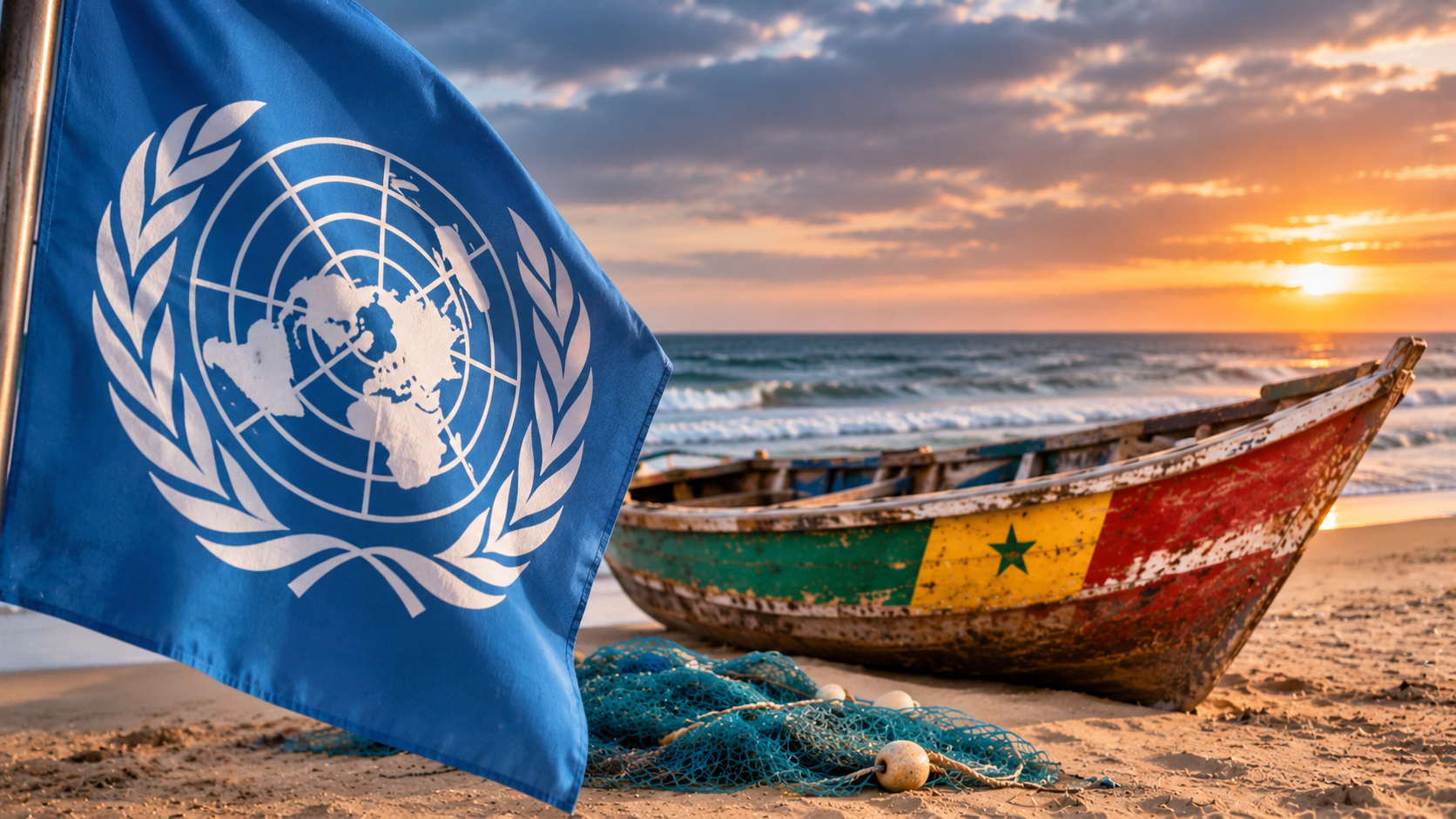
The United Nations and Senegal have called for stronger regional cooperation to combat migrant trafficking networks and prevent further deaths along dangerous migration routes.
The appeal came during a ministerial conference in Dakar on Friday, November 20.
Officials urged African governments to strengthen law enforcement cooperation and create more employment opportunities for young people.
According to Africanews, citing AFP, representatives from 15 countries attended the conference to discuss coordinated action against criminal networks.
Senegal urges tougher action against smugglers
Senegalese Justice Minister Moussa Sarr called for closer cooperation between judicial authorities across the region.
He said governments must work together to identify and prosecute networks that exploit people seeking opportunities abroad.
Sarr also urged countries to impose tougher penalties on those involved in migrant smuggling.
The minister stressed that cooperation between states was essential to addressing the problem.
Meanwhile, officials discussed the need for a coordinated regional response rather than separate national efforts.
The conference was expected to produce a roadmap outlining future cooperation.
UN warns of exploitation of young migrants
Amy Pope, director general of the International Organization for Migration (IOM), warned that criminal networks were exploiting vulnerable young people.
She said many migrants had useful skills but struggled to find employment in their home countries.
As a result, some became vulnerable to false promises of jobs and safer journeys abroad.
Pope stressed that no country could tackle migrant trafficking networks alone.
Instead, she called for stronger cooperation between governments and greater investment in economic opportunities.
She also highlighted the importance of protecting migrants from exploitation and abuse.
Deadly Atlantic crossings raise concerns
The conference took place amid renewed concern over dangerous migration journeys from West Africa to Europe.
Thousands of people have died in recent years while attempting to reach Spain’s Canary Islands.
Many travel in wooden fishing boats known as pirogues.
These vessels are often overcrowded and poorly equipped for long Atlantic crossings.
Earlier in November, a shipwreck near the Senegalese coastal town of Thieppe killed at least 43 people.
The tragedy highlighted the dangers facing migrants who attempt the journey.
Poverty, unemployment, conflict and political instability remain among the factors driving migration from parts of West Africa.
However, the circumstances behind each person’s decision to migrate can differ significantly.
Job creation seen as part of the solution
Alongside stronger law enforcement, the IOM called for investment in local employment.
Pope highlighted agriculture and food processing as sectors that could create opportunities for young people.
Such jobs could help families improve their incomes without feeling compelled to seek opportunities through dangerous routes.
Furthermore, better employment prospects could reduce the vulnerability of young people to exploitation by criminal networks.
The IOM chief stressed the importance of providing realistic economic opportunities within communities.
However, employment programmes alone cannot address every factor behind irregular migration.
Conflict, insecurity and limited access to safe migration pathways also require attention.
Regional cooperation remains essential
The Dakar conference brought together representatives from 15 countries to discuss common challenges.
Participants were expected to develop a roadmap for future action against trafficking and smuggling networks.
The discussions highlighted the need for stronger investigations, judicial cooperation and migrant protection.
They also placed economic development at the centre of efforts to address dangerous migration.
For Senegal and its regional partners, preventing further deaths will require both effective law enforcement and practical alternatives for people seeking better opportunities.
Protecting migrants’ rights and expanding access to safe, regular migration routes remain important parts of a broader response.