
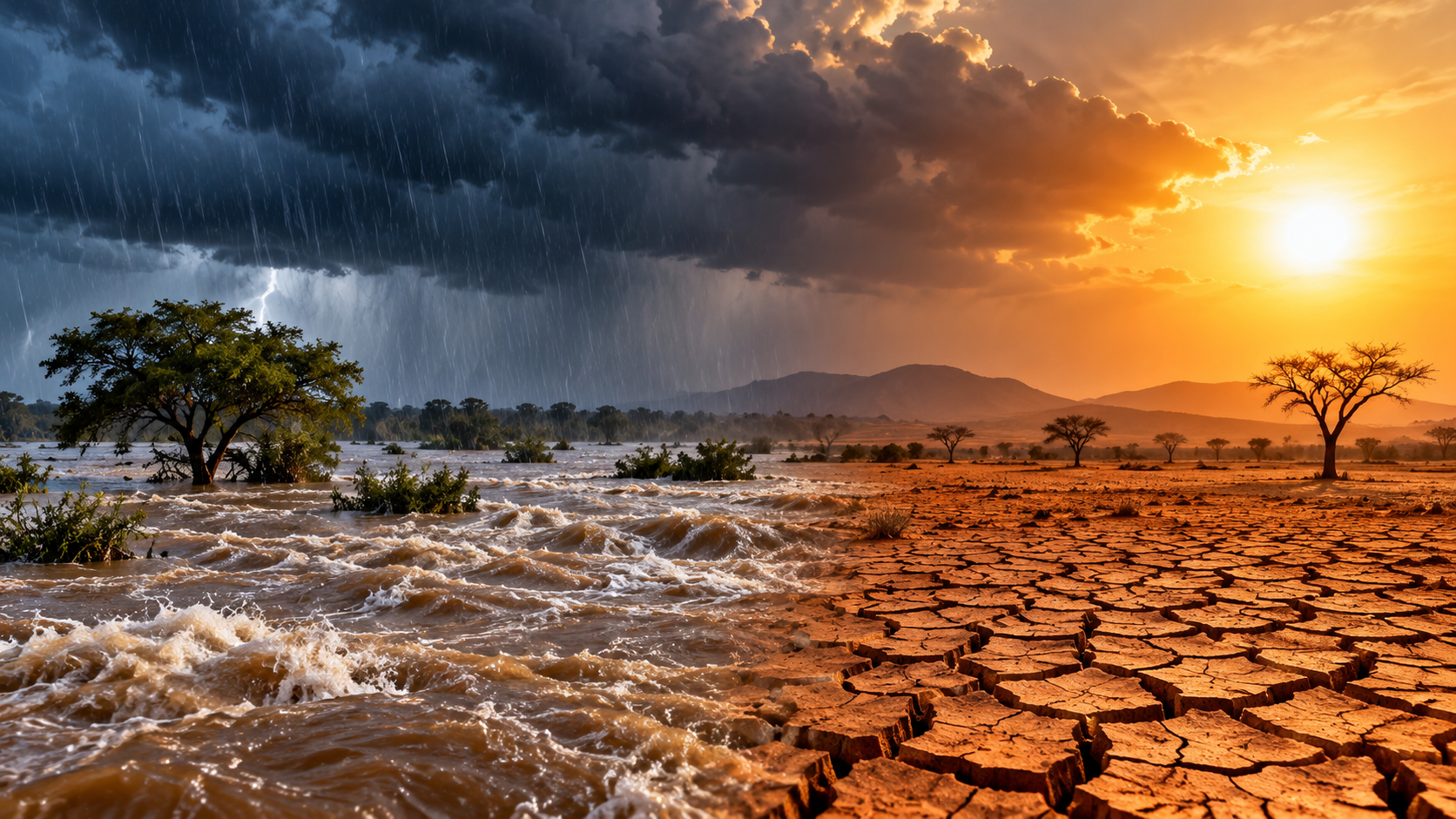
The United Nations has warned that an unusually powerful El Niño could trigger severe floods, droughts and food shortages across Africa and other vulnerable regions.
UN agencies are calling for urgent international support as the weather pattern intensifies ahead of its expected peak in December.
According to Africanews and AFP, the extreme conditions could continue affecting communities throughout 2027 and beyond.
UN humanitarian chief Tom Fletcher warned that up to 50 million people could face increased hunger if governments and aid organisations fail to act quickly.
Africa faces growing El Niño risks
Eastern and southern Africa are among the regions expected to face serious disruption from the powerful weather system.
Countries including Somalia, Ethiopia and Kenya are preparing for heavy rainfall and possible flooding.
Meanwhile, southern African nations face threats to agriculture, livestock and food supplies.
Fletcher urged governments and humanitarian organisations to deliver essential supplies before conditions worsen.
He said Somalia, Ethiopia and Kenya need emergency supplies ahead of heavy rains.
Southern African countries also require seeds and livestock support to protect rural communities.
These measures could help farmers recover more quickly and reduce the risk of food shortages.
UN warns of unprecedented weather conditions
Celeste Saulo, head of the World Meteorological Organization (WMO), warned that the current El Niño could reach unprecedented strength.
Speaking at a news conference in Geneva, she said the event could exceed the monitoring scales used over the past four decades.
Saulo warned that extreme weather events were already affecting vulnerable communities.
She added that floods, droughts and unusually high temperatures could become more frequent as El Niño intensifies.
The UN agencies called for coordinated early action to reduce the impact on populations already facing hardship.
Although governments cannot prevent El Niño, Saulo said preparation could limit its most damaging consequences.
Up to 50 million people face increased hunger
Fletcher warned that the powerful weather pattern could deepen existing humanitarian emergencies.
He said as many as 50 million people could face worsening hunger as extreme weather damages crops, disrupts livelihoods and increases food insecurity.
The impact could be especially severe in countries already affected by conflict and displacement.
Rising food, fuel and fertiliser prices have also weakened the ability of vulnerable communities to cope with additional shocks.
Meanwhile, reductions in international humanitarian funding have placed further pressure on aid organisations.
Fletcher warned that the combined effects could push tens of millions of people into humanitarian need.
He also said the consequences could continue for months or even years.
UN releases $50 million for vulnerable countries
The UN has released $50 million in emergency funding to support 11 countries facing significant El Niño risks.
The countries include Chad, Ethiopia, Somalia and South Sudan, alongside El Salvador and other vulnerable nations.
The funding aims to support early preparations and reduce the damage caused by extreme weather.
However, Fletcher warned that the humanitarian system cannot manage a crisis of this scale alone.
He urged governments, development banks and international financial institutions to provide additional funding before the worst conditions arrive.
According to Fletcher, the next two weeks represent a critical period for action.
Early investment could help protect lives, livelihoods and essential infrastructure.
What is a super El Niño?
El Niño is a natural climate pattern that occurs when surface waters in the central and eastern equatorial Pacific Ocean become unusually warm.
This warming changes atmospheric circulation and affects rainfall, temperatures and weather patterns around the world.
El Niño events generally occur every two to seven years and often last between nine and twelve months.
A super El Niño refers to an exceptionally strong event, with sea surface temperatures in parts of the central Pacific rising more than two degrees Celsius above normal.
Such events can increase the risk of extreme weather in different regions.
However, the effects vary by location. Some countries experience heavy rainfall and flooding, while others face drought and unusually high temperatures.
Climate shocks could worsen global instability
The UN warned that the consequences of a powerful El Niño could extend beyond the countries directly affected by extreme weather.
Fletcher said agricultural losses and disruptions to trade could create wider economic shocks.
He also warned that worsening humanitarian conditions could increase displacement and migration.
For African countries already facing food insecurity and conflict, another major climate shock could place additional pressure on communities and public services.
UN agencies are urging international partners to act before the expected December peak.
They argue that early preparation and adequate funding could prevent many of the worst humanitarian consequences.