
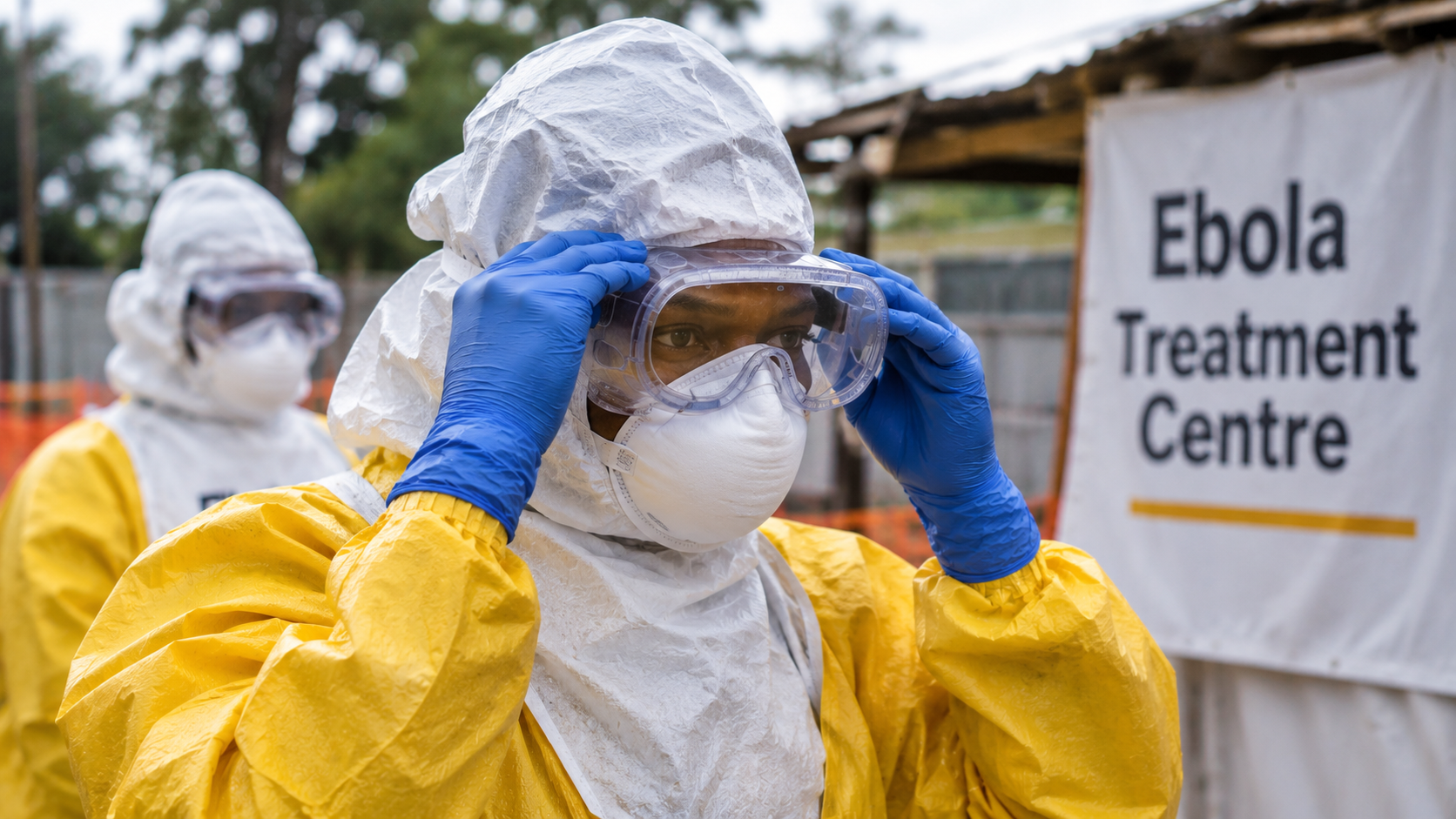
The United States has introduced new Ebola travel restrictions requiring international air passengers to declare whether they have recently visited the Democratic Republic of Congo (DRC), Uganda or South Sudan.
The measures took effect on November 3, 2026, as US health authorities seek to prevent the virus from entering the country.
According to the US Centers for Disease Control and Prevention (CDC), the requirements cover travel history during the previous 21 days, reflecting the maximum incubation period of Ebola.
Africanews, citing AFP, reported on November 4 that the restrictions follow growing concerns over an Ebola outbreak affecting the Democratic Republic of Congo.
The measures could affect travellers who have recently visited the designated countries, regardless of their nationality.
What are the new US Ebola travel rules?
Under the new requirements, international passengers must declare whether they have visited the DRC, Uganda or South Sudan during the 21 days before travelling to the United States.
The CDC introduced the measures to reduce the risk of Ebola entering the country through international air travel.
Travellers with recent visits to the designated countries may be prevented from boarding US-bound flights unless they qualify for an exemption.
The restrictions are not a blanket ban on African nationals. Instead, they focus on recent travel history.
The 21-day period reflects the time Ebola symptoms can take to develop after exposure.
Symptoms generally appear between two and 21 days after infection.
Ebola outbreak raises international concerns
The travel restrictions come amid concerns about Ebola transmission in parts of Africa.
The DRC has experienced several serious Ebola outbreaks, placing considerable pressure on healthcare workers and affected communities.
Africanews reported that the latest health emergency had prompted additional preventive measures by US authorities.
However, the previously reported figure of more than 5,300 deaths requires confirmation against current outbreak-specific data before publication.
Ebola spreads through direct contact with the blood or other bodily fluids of infected people who have developed symptoms.
The virus can also spread through contaminated materials.
Common symptoms include fever, severe weakness, vomiting and diarrhoea. Some patients may also experience bleeding.
Early detection, isolation and appropriate medical care are essential for limiting transmission and improving survival.
Bundibugyo Ebola strain presents treatment challenges
The supplied outbreak reporting identifies Bundibugyo Ebola virus as a major concern for health authorities.
Unlike the Zaire Ebola virus, Bundibugyo does not have a specifically approved vaccine.
This creates additional challenges for healthcare workers attempting to contain infections.
The Ervebo vaccine is approved for preventing disease caused by Zaire Ebola virus. However, its effectiveness against Bundibugyo Ebola has not been established.
As a result, public health responses continue to depend heavily on surveillance, contact tracing, infection prevention and supportive medical care.
Researchers are also working to develop additional vaccines and treatments against different Ebola viruses.
Why is the US restricting travel?
The CDC says travel restrictions are intended to reduce the risk of Ebola being introduced into the United States.
International travel can allow infectious diseases to cross borders before symptoms become apparent.
However, Ebola does not spread through ordinary airborne transmission in the same way as influenza or COVID-19.
Instead, transmission generally requires direct contact with infectious bodily fluids or contaminated objects.
The new requirements aim to identify travellers with recent exposure risks before they board flights.
They also form part of broader efforts to strengthen disease surveillance and international public health preparedness.
Health authorities monitor Ebola risks
Health authorities continue emphasising the importance of early detection, effective treatment and cooperation between countries.
For communities affected by Ebola, access to healthcare, protective equipment and reliable medical supplies remains essential.
Meanwhile, travellers planning to enter the United States should review the latest CDC guidance before departure.
The restrictions highlight the importance of international coordination in responding to infectious disease outbreaks while protecting public health.