
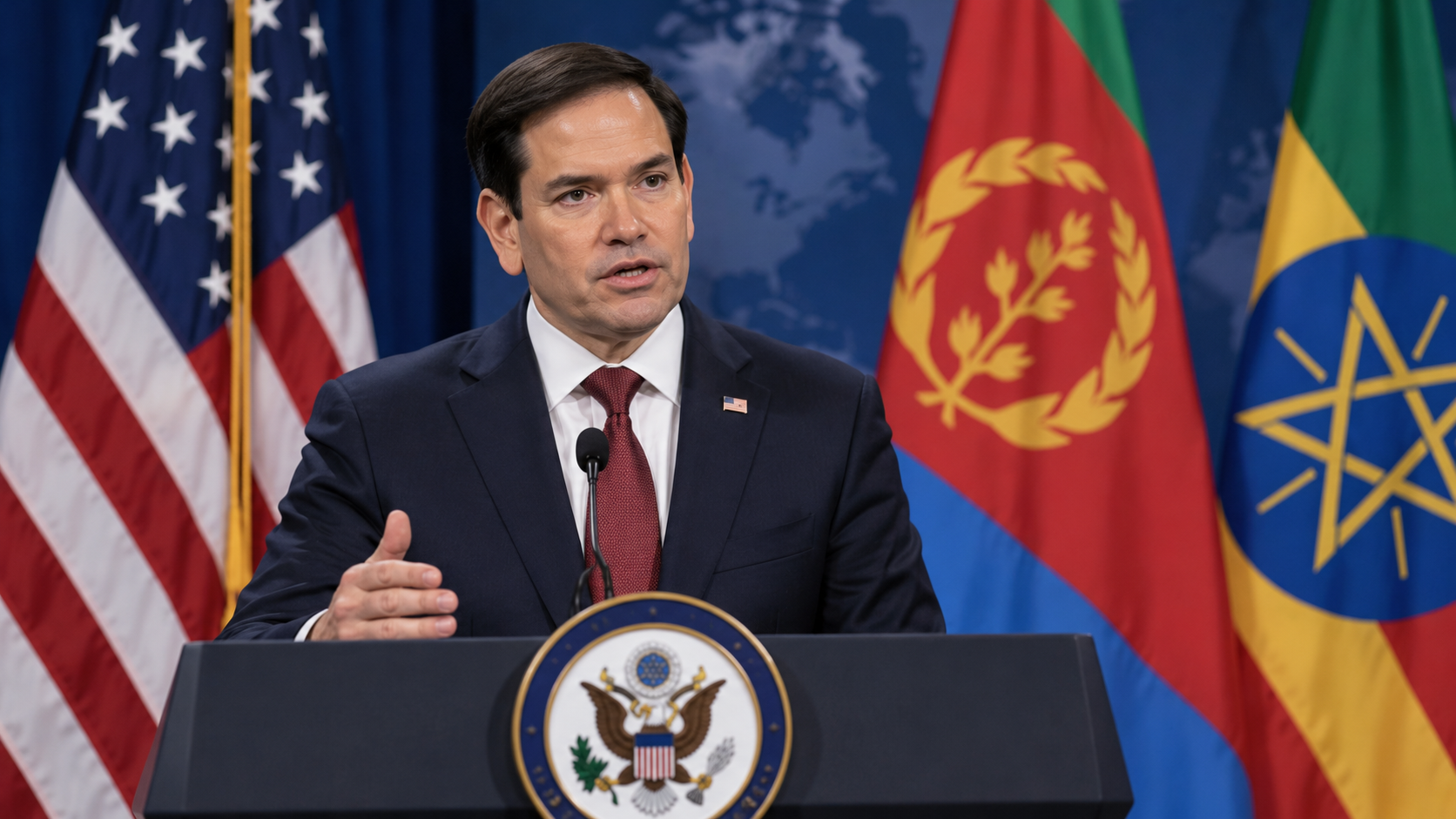
The United States has explained its decision to ease sanctions on Eritrean targets, saying improved diplomatic communication could help prevent escalating tensions between Ethiopia and Eritrea from developing into a wider regional conflict.
US Secretary of State Marco Rubio said Washington had increased contact with Eritrea in recent months as military movements along the two countries’ shared border raised concerns about renewed fighting.
According to Business Insider Africa, Rubio made the remarks at Joint Base Andrews on October 17, warning that further escalation could draw neighbouring countries into the confrontation.
The US has not announced a formal mediation agreement between Ethiopia and Eritrea.
US says Eritrea sanctions relief could support diplomacy
Rubio said easing sanctions could help Washington maintain communication with both governments during a period of growing instability.
He explained that diplomatic access to Ethiopia and Eritrea would be important if the United States were to play a role in reducing tensions.
The secretary of state also said he had personally urged Ethiopian officials to exercise restraint during discussions earlier in the week.
“The last thing the world needs right now is another war,” Rubio said.
However, Washington has not confirmed that either country has accepted an American mediation role.
The administration’s immediate focus remains on maintaining diplomatic engagement and encouraging both sides to avoid further escalation.
Which US sanctions on Eritrea were removed?
The sanctions changes took effect on September 18, approximately one month before Rubio’s remarks.
According to records from the US Treasury’s Office of Foreign Assets Control (OFAC), the national emergency supporting the Ethiopia-related sanctions programme had expired.
As a result, Washington removed several designations imposed under Executive Order 14046.
The removals included the Eritrean Defense Forces, Eritrea’s ruling People’s Front for Democracy and Justice, Hidri Trust and Red Sea Trading Corporation.
Two Eritrean officials were also removed from the sanctions list under the programme.
However, the decision applied specifically to the Ethiopia-related sanctions framework.
It did not represent the removal of every US restriction affecting Eritrea.
Ethiopia and Eritrea tensions raise fears of renewed conflict
The diplomatic developments come amid worsening relations between Ethiopia and Eritrea.
The neighbouring countries reportedly severed diplomatic ties earlier in October following allegations of hostile activities and reports of drone attacks.
Business Insider Africa reported that Ethiopian military forces had moved towards the border, raising concerns about a possible confrontation.
Eritrea has disputed allegations that its forces entered Ethiopian territory.
Meanwhile, renewed internal fighting in Ethiopia has added to fears that instability could spread beyond the country’s borders.
A direct conflict between Ethiopia and Eritrea would represent a separate and potentially more serious escalation than the fighting already taking place within Ethiopia.
US warns conflict could involve neighbouring countries
Rubio warned that continued military mobilisation could increase the risk of a wider regional conflict.
Although he expressed concern about other countries becoming involved, he did not identify which nations might be drawn into the fighting.
He also did not announce new American military deployments, security guarantees or military assistance connected to the tensions.
Washington has instead emphasised diplomatic communication and restraint.
The United States hopes that maintaining contact with both governments could create opportunities for dialogue if tensions continue to rise.
Diplomatic breakthrough remains uncertain
Despite the easing of sanctions and increased diplomatic engagement, there has been no announcement of formal peace negotiations between Ethiopia and Eritrea.
Rubio’s comments indicate that Washington wants to preserve channels of communication rather than isolate either government.
However, it remains unclear whether the diplomatic approach will lead to direct negotiations or reduce military activity along the border.
For now, growing troop deployments and strained relations continue to raise concerns about stability in the Horn of Africa.