
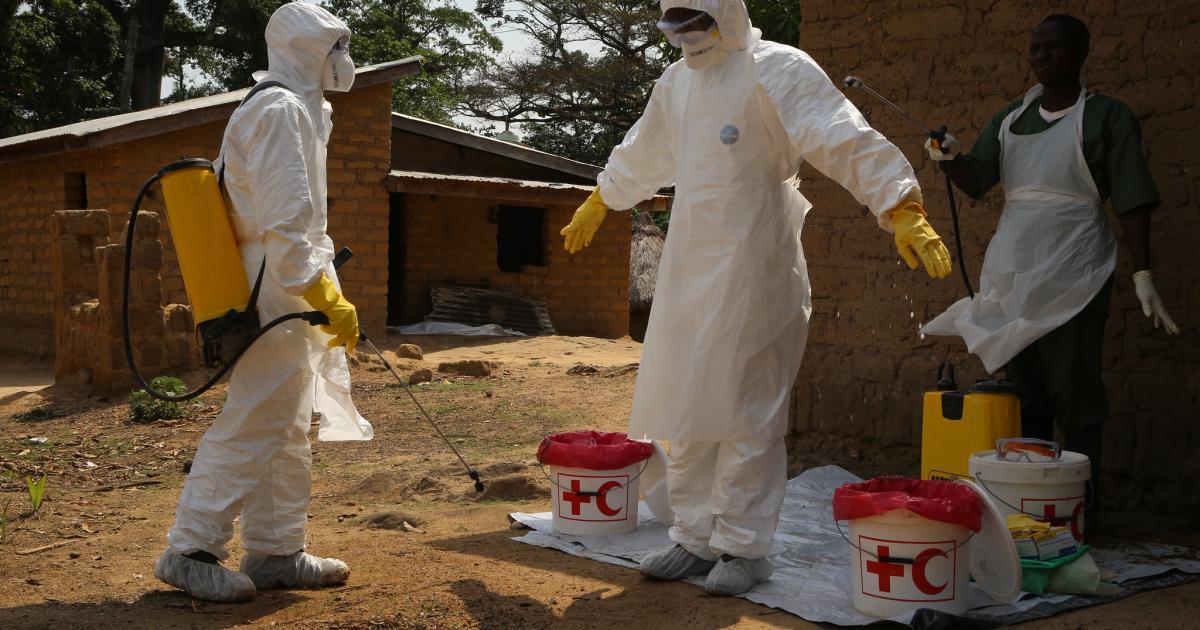
The United States has expanded its response to the Ebola outbreak in the Democratic Republic of Congo and Uganda, after the World Health Organization warned that the risk of wider spread inside Congo is now “very high.”
The State Department said Washington is coordinating a comprehensive response with the Congolese and Ugandan governments, the WHO and other partners, saying the effort is aimed at helping contain the outbreak before it spreads further.
The department said the US moved within 48 hours of the first confirmed case and has mobilized an initial $13 million in foreign assistance to support surveillance, laboratory testing, infection prevention, safe burials, risk communication, border screening and clinical case management.
Washington also said it would fund the establishment of up to 50 Ebola response clinics and related screening and isolation sites in Congo and Uganda, as health teams try to expand capacity in areas where insecurity and weak infrastructure have slowed the response.
The move comes as WHO officials warned that the Bundibugyo strain of Ebola continues to spread in Congo. Congolese authorities have confirmed 82 cases and seven confirmed deaths, while the country has also recorded 177 suspected deaths and nearly 750 suspected cases.
Uganda has reported two confirmed cases linked to travel from Congo, including one death. WHO officials said the situation in Uganda appears stable for now, after contact tracing and restrictions on large gatherings were introduced.
The outbreak has raised concern because the Bundibugyo strain has no approved vaccine or specific treatment. WHO officials have said the virus may have circulated undetected for weeks before the outbreak was formally declared, meaning case numbers are likely to continue rising as surveillance improves.
US officials have also paused visa services at embassies in Kinshasa, Kampala and Juba, citing public health and safety concerns linked to the outbreak. The pause applies to immigrant and non-immigrant visa operations but does not affect visas that are already valid.
The State Department has urged US citizens in affected areas to follow embassy and CDC updates, while US health agencies have introduced enhanced screening and monitoring measures for travellers from affected countries.
The outbreak has spread beyond its original epicentre in Ituri province, with cases also reported in North Kivu and South Kivu, including areas affected by armed conflict and rebel control. Health workers say insecurity, public mistrust and misinformation are complicating efforts to trace contacts and safely manage suspected cases.
WHO officials said the risk remains high at the regional level but low globally.