
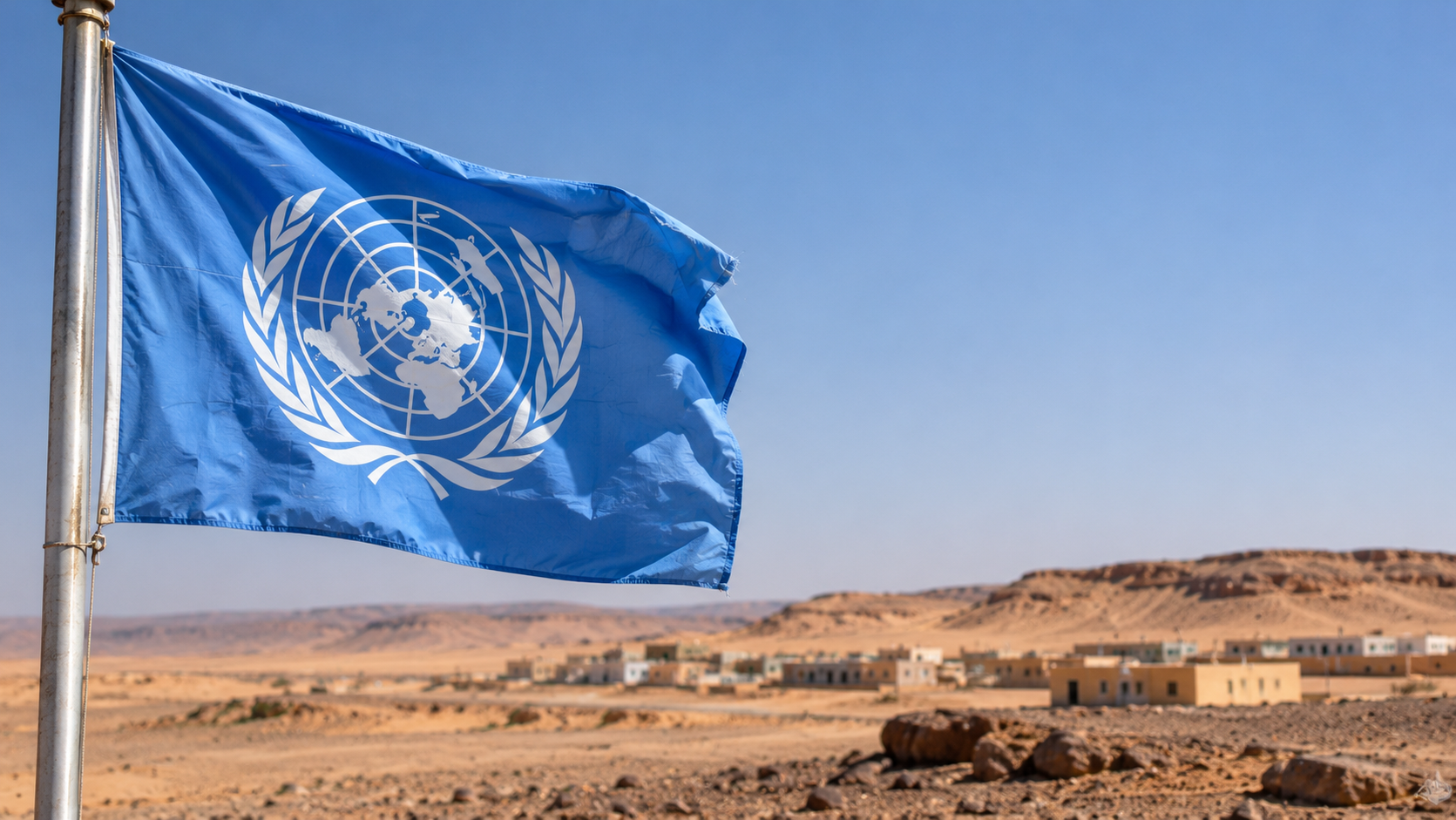
The future of the UN peacekeeping mission in Western Sahara is uncertain after competing US and Russian resolutions failed at the Security Council, leaving the disputed territory without an approved mandate extension.
Russia vetoed a US-backed resolution on Friday, October 30, despite support from 11 of the Security Council’s 15 members.
A separate Russian proposal also failed to secure enough votes for adoption.
The developments have raised concerns about the future of the United Nations Mission for the Referendum in Western Sahara (MINURSO), whose mandate was due to expire on October 31.
According to reporting by Reuters and the Associated Press, the disagreement centres on competing approaches to resolving the longstanding territorial dispute.
Russia vetoes US resolution on Western Sahara
The US-backed resolution proposed extending MINURSO’s mandate for another year.
However, it also included significant changes to the UN’s approach to the territory.
The proposal would have removed the word “referendum” from the mission’s name.
It also sought to establish Morocco’s autonomy proposal as the sole basis for future negotiations.
Under Morocco’s plan, Western Sahara would manage its internal affairs while remaining under Moroccan sovereignty.
The proposal received support from 11 Security Council members, including France and the United Kingdom.
However, Russia used its veto to block adoption.
Russian Ambassador Vassily Nebenzia argued that the resolution favoured one party in the dispute.
He said the Security Council should not predetermine questions of sovereignty.
Russian proposal also fails at UN Security Council
Following the veto, Russia introduced an alternative resolution.
Moscow proposed renewing the existing MINURSO mandate without changing its name or negotiating framework.
However, the Russian draft failed to secure the nine affirmative votes required for adoption.
It received two votes in favour, one against and 11 abstentions.
As a result, neither proposal was approved.
The failure left MINURSO without an agreed extension as its mandate approached expiration.
The mission was established in 1991 to monitor a ceasefire and support preparations for a referendum on Western Sahara’s future.
However, disagreements over voter eligibility have prevented the referendum from taking place.
Morocco welcomes failure to renew UN mission
Morocco welcomed the Security Council’s failure to extend MINURSO’s mandate.
In a statement on Friday, the Moroccan royal palace called for UN personnel and equipment to leave the territory in the coming days.
It also said the Western Sahara issue should be removed from the Security Council’s agenda.
Morocco maintains that Western Sahara forms part of its territory.
Its proposed autonomy framework would grant the region powers over local affairs while preserving Moroccan sovereignty.
Rabat has increasingly promoted this proposal as a solution to the decades-long dispute.
Despite its position on MINURSO, Morocco said it remained committed to the ceasefire.
Polisario Front welcomes Russian veto
The Polisario Front, which seeks independence for Western Sahara, welcomed Russia’s decision to block the US resolution.
Sidi Omar, the movement’s representative at the United Nations, said the American proposal would undermine the Sahrawi people’s right to self-determination.
The Polisario Front opposes Morocco’s autonomy plan as the only basis for negotiations.
Instead, it supports a referendum allowing the territory’s population to determine its political future.
Algeria, which backs the Polisario Front, also criticised the US proposal.
However, Algeria expressed regret over the Security Council’s failure to renew MINURSO’s mandate.
Its foreign ministry described the American draft as excessively favourable to Morocco.
Western Sahara dispute remains unresolved
Western Sahara is a former Spanish colony in northwest Africa.
Morocco controls most of the territory, while the Polisario Front seeks to establish an independent Sahrawi state.
The conflict has remained unresolved for decades despite international diplomatic efforts.
The United Nations established MINURSO in 1991 following a ceasefire agreement.
However, the proposed referendum has never taken place.
Tensions increased again in 2020 when the Polisario Front announced the resumption of armed struggle.
Low-level fighting has continued since then.
Meanwhile, tens of thousands of Sahrawi refugees live in camps in neighbouring Algeria.
The failed US resolution also called for a census of refugees in those camps.
Concerns grow over future of UN peacekeeping
The failure to renew MINURSO has raised questions about security and stability in Western Sahara.
According to a UN report cited by Reuters and AP, the mission has 155 military personnel.
Its estimated budget for the fiscal year beginning in June was approximately $62 million.
Humanitarian organisation Oxfam warned that losing the mission’s monitoring and de-escalation functions could undermine regional stability.
The disagreement also highlights broader divisions among permanent members of the Security Council.
While Washington supports Morocco’s autonomy proposal as the basis for negotiations, Moscow has opposed efforts to make it the exclusive framework.
For now, the future of MINURSO remains uncertain.
The Security Council would need to reach a new agreement to restore an approved mandate for the mission.
The latest diplomatic deadlock leaves the Western Sahara dispute unresolved, with competing positions over sovereignty, autonomy and self-determination continuing to shape negotiations.