
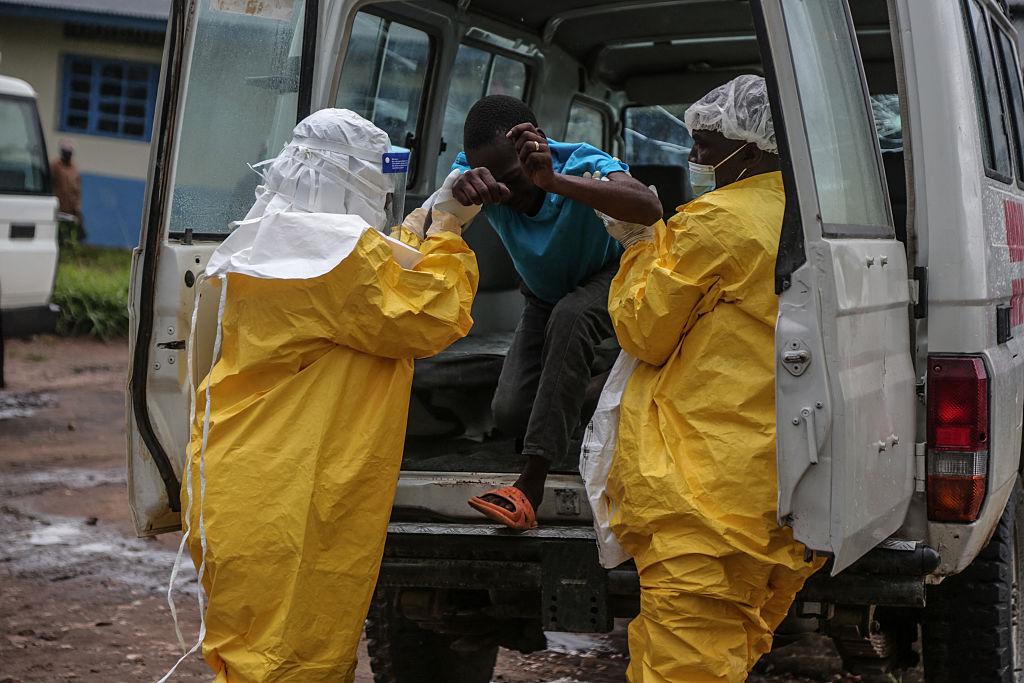
A clinical trial of potential treatments for the Ebola strain driving the current outbreak in the Democratic Republic of Congo has begun, the World Health Organization said Thursday, offering fresh hope as the country battles a fast-spreading and deadly epidemic.
WHO Director-General Tedros Adhanom Ghebreyesus said the first patient had been enrolled in the trial in DR Congo.
The outbreak, which began in May, has infected more than 1,400 people and killed more than 438, according to WHO figures. The agency said that as of July 1, DR Congo had recorded 1,460 confirmed cases, 150 suspected cases and 452 deaths, while 213 people had recovered.
The trial targets the Bundibugyo species of the Ebola virus, for which there are currently no approved vaccines or treatments. Ebola has several species, and vaccines or treatments must be developed for specific strains.
The WHO-sponsored trial is being coordinated by scientists at DR Congo’s Institut National de Recherche Biomédicale, Belgium’s Institute of Tropical Medicine and the University of Oxford. Patients will be treated with two antiviral drugs as researchers assess their safety and effectiveness.
“Even without approved therapeutics, people are recovering from this disease, but of course, we could save many more lives with safe and effective therapeutics in our toolkit,” Tedros told reporters in Geneva.
DR Congo’s Health Minister Samuel Roger Kamba said the launch of the trial marked “a significant step forward,” offering renewed hope to patients, families and affected communities.
Congolese health authorities say the outbreak is currently concentrated in three eastern provinces: South Kivu, North Kivu and Ituri. However, Reuters and AFP reported that a pregnant woman who died in Ituri later tested positive after her body was transported by motorbike to Kisangani, the main city of neighbouring Tshopo province.
Another suspected Ebola patient reportedly fled an isolation unit in Ituri and later tested positive in Haut-Uele province, raising concerns about further spread.
Authorities have launched contact-tracing operations in Tshopo and Haut-Uele. Public gatherings have also been banned in Tshopo, Haut-Uele, Bas-Uele and the capital, Kinshasa, as officials try to contain the outbreak.
The virus has also crossed borders. As of July 1, Uganda had reported 20 confirmed cases and two deaths, while France had recorded one confirmed case.
Ebola is a highly infectious disease that attacks the immune system and internal organs. It is usually transmitted to humans through infected animals, including fruit bats, and then spreads between people through bodily fluids such as blood.
Symptoms can appear between two and 21 days after exposure and often begin suddenly with fever, headache, fatigue and other signs that can resemble flu or malaria.
DR Congo’s Health Ministry said it has expanded diagnostic capacity in affected areas, increasing the number of laboratories testing for Ebola from four to 10.
Africa CDC and US public health authorities have warned that the current outbreak could become one of the largest ever, partly because the virus is believed to have spread for weeks before it was confirmed as Ebola.
Aid agencies say insecurity in eastern DR Congo is further complicating the response, with the M23 rebel group controlling large parts of North Kivu and South Kivu.