
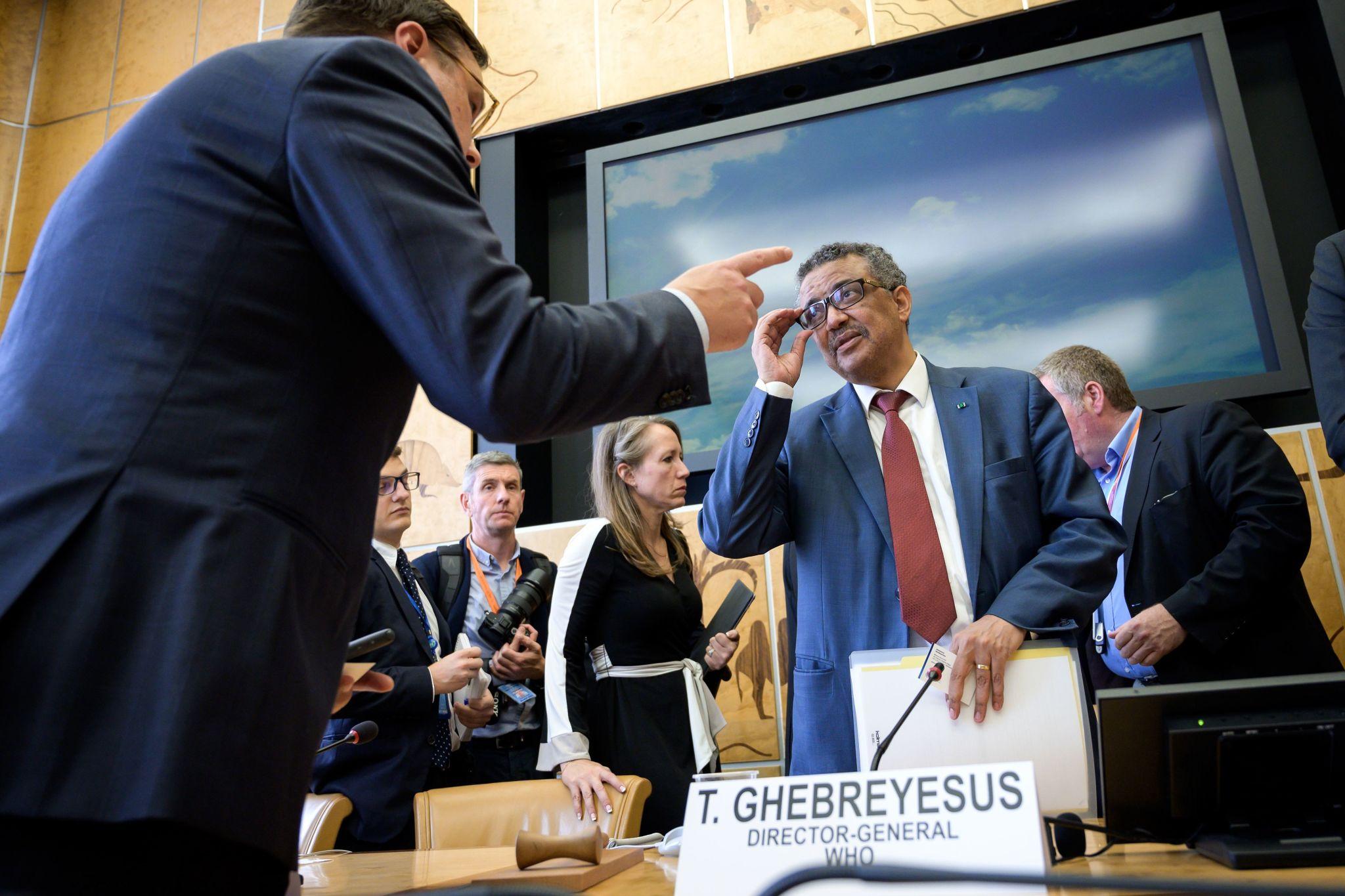
The World Health Organization said on Wednesday that efforts to contain the Ebola outbreak in the Democratic Republic of Congo are beginning to catch up, despite major gaps in contact tracing, testing and community trust.
WHO Director-General Tedros Adhanom Ghebreyesus said the outbreak had gained significant ground before the response could be fully mobilised, but said authorities and health workers were now making progress.
“The outbreak had a big head start, and we’re still behind, but under the leadership of the government, we are catching up,” Tedros told reporters in Geneva after visiting Ituri province, the centre of the outbreak.
The WHO said 344 confirmed Ebola cases, including 60 deaths, had been reported across 24 health zones in three Congolese provinces. Uganda has reported 15 confirmed cases and one death.
Tedros said the number of suspected cases in Congo had fallen sharply to 116, down from more than 1,000 a week earlier, as authorities worked through a backlog of investigations.
He said six people had recovered in Congo and two others in Uganda, showing that survival is possible when patients seek treatment early and have access to proper care.
But the WHO chief warned that several serious challenges remain. Only about 45 percent of identified contacts are currently being followed up, far below the more than 90 percent needed to get ahead of the outbreak.
The agency said its risk assessment remains very high at the national level, high at the regional level and low globally.
Tedros urged countries that have imposed blanket travel restrictions to lift them, warning that such measures disrupt supply chains and hamper the outbreak response. He said exit screening at airports, ports and border crossings was a better way to reduce the risk of cases spreading internationally.
The WHO also called for stronger community engagement, saying mistrust and misinformation were still undermining the response. Tedros said some community leaders he met continued to believe that “Ebola is not real.”
He said vaccines and treatments remain important, but stressed that the response also depends on leadership, local ownership, partnership and public trust.
Tedros added that Ebola is only one of several threats facing communities in eastern Congo, warning that people who survive the virus remain vulnerable to malaria, malnutrition, pneumonia, diarrhoeal disease, HIV and diabetes.
“If the people of Ituri survive Ebola only to die from malaria or malnutrition, or pneumonia or diarrhoeal disease or HIV or diabetes, we have not really helped them,” he said.